
Identifying the Source of Mystery Basement Odors When the Heat Kicks On

Identifying the Source of Mystery Basement Odors When the Heat Kicks On — featured image

The Unwelcome November Surprise: Why Your Basement Smells Like Sewage

You turn on your furnace for the first time this season, expecting cozy warmth, but instead, you are hit with a foul, rotten-egg stench, leaving you urgently identifying the source of mystery basement odors when the heat kicks on. That smell is jarring, especially when you realize it is not coming from the heater itself, but rather a hidden plumbing issue exposed by your HVAC system. At Sewer Surgeons, our team fields a surge of calls about this exact phenomenon every November. Before you panic, it helps to consult a homeowner’s guide to plumbing basics to understand how your home’s systems interact and why these two seemingly unrelated systems are suddenly clashing.

As the November heating season onset arrives, the sudden drop in temperatures forces your heating system into extended, continuous cycles. Your furnace is working overtime to pull cold air in, heat it up, and push it throughout your living spaces. This sudden, intense mechanical activity changes the indoor air pressure of your home entirely. When this happens in an enclosed space like a basement, it creates a powerful vacuum effect.

Most homeowners immediately assume something has died inside their ductwork or that the furnace itself is leaking dangerous gases. However, the HVAC system is usually just the messenger. The real culprits are almost always dried-out plumbing traps combined with fluctuating indoor air pressure. During the warmer months, certain drains in your home sit unused. By the time the cold weather hits, the protective water barrier inside those drains has vanished.

The Connection Between Air and Plumbing

Your plumbing system does not exist in a vacuum, but your furnace can certainly create one. When the heater kicks on, it alters how air flows through every crack, crevice, and pipe in the lower levels of your house. Understanding this relationship is the first step in diagnosing whether you are dealing with a harmless, five-minute maintenance task or a hazardous sewer gas leak that requires professional intervention.

The Physics of Heating Systems and Indoor Air Pressure

To understand why a plumbing smell appears when your furnace runs, you have to look at the specific mechanics of how a furnace breathes. Heating systems require a significant amount of air to function. Furnace blowers and combustion processes constantly draw ambient air from the surrounding environment to heat and distribute it throughout the house. If your furnace is located in an unfinished basement, it is pulling a massive volume of air directly from that space.

When a furnace pulls more air out of a room than is being replaced, it creates what is known as “negative pressure.” In simple, jargon-free terms, negative pressure means the room is starving for air. Nature abhors a vacuum, so the room will attempt to pull replacement air—makeup air—from absolutely anywhere it can. It will always seek the path of least resistance. If the basement is tightly sealed against the cold winter weather, the system cannot pull fresh air from outside.

This vacuum effect interacts directly with your home’s plumbing vents and basement spaces. If there is an unsealed opening in your plumbing system, the negative pressure will treat that pipe like a fresh air intake, actively sucking air out of the sewer lines and blowing it into your basement. The Environmental Protection Agency (EPA) frequently highlights how pressure differentials heavily impact indoor air quality, noting that negative pressure zones are a primary driver of unwanted soil and sewer gases entering residential spaces.

Comparing Indoor Air Pressure States

Pressure State What It Means Impact on Basement Plumbing
Neutral Pressure Air entering the home equals air leaving. Plumbing traps function normally; sewer gases remain safely contained within the pipes.
Positive Pressure More air is pushed into the room than is leaving. Air is forced outward through gaps and cracks; no sewer gas is pulled inward.
Negative Pressure More air is pulled out of the room than enters. The room acts as a vacuum, actively pulling sewer gas up through dried-out floor drains or cracked pipes.

In our years servicing older Chatham NJ homes, the Sewer Surgeons crew has noticed that basements constructed long before modern HVAC makeup air standards were established are highly susceptible to negative pressure issues. Understanding this connection between drains and indoor air quality clarifies why the smell only happens when the blower motor is running at full speed.

The Role of the Forgotten Basement Floor Drain

Now that we understand the vacuum effect created by the furnace, we have to look at the weakest link in the basement: the forgotten floor drain. Every drain in your home is equipped with a P-trap. A P-trap is a U-shaped bend in the pipe located just below the drain opening. Its sole function is to hold a small amount of water at all times. This standing water creates a physical, airtight seal that prevents noxious sewer gases from rising out of the municipal sewer lines and into your living space.

During the humid summer months, you likely ignore the floor drain next to your water heater or furnace. Because it goes unused, the water sitting inside that P-trap slowly evaporates. By the time late fall arrives and the dry, cold winter onset begins, that trap is often completely bone dry. The physical water barrier is gone, leaving an open, direct tunnel straight down into the sewer system.

The Exact Moment of Failure

Here is the exact sequence of events that leads to the foul odor:

  • The Setup: Summer evaporation leaves the basement floor drain completely dry, removing the protective water seal.
  • The Trigger: The thermostat drops, and the heating system kicks on for its first major cycle of the season.
  • The Vacuum: The furnace blower creates negative pressure in the enclosed basement space.
  • The Result: The negative pressure actively pulls sewer gas up through the dry, unsealed drain and circulates it throughout the house.

Just like you might notice your toilet bubbling when the washing machine runs due to displaced air seeking an exit, the negative pressure in your basement seeks the easiest entry point for replacement air. An empty floor drain provides zero resistance. It is a pattern we see often during our late fall maintenance visits: this scenario is incredibly common in historic or older Chatham NJ homes that feature traditional basement plumbing layouts where floor drains are tied directly into the main sanitary sewer line without secondary venting.

How Winter Heating Creates Negative Pressure and Exposes Dry Traps

Understanding the Risks of Sewer Gas Exposure

When your basement suddenly smells like a sewer, it is entirely normal to feel alarmed. Sewer gas is a complex mixture of toxic and non-toxic gases, primarily consisting of methane, ammonia, carbon dioxide, and hydrogen sulfide. Hydrogen sulfide is the specific component responsible for that heavy, unmistakable rotten-egg odor. While the smell is highly unpleasant, understanding the actual risks empowers you to handle the situation with factual safety information rather than panic.

According to data from the Centers for Disease Control and Prevention (CDC), human noses are incredibly sensitive to hydrogen sulfide. We can detect this gas at incredibly low concentrations—as low as 0.00047 parts per million (ppm). This biological warning system is highly effective. It means that a very strong smell does not always equal an immediate, lethal danger. You can smell the gas long before it reaches highly toxic levels, giving you ample time to take corrective action.

Common Symptoms of Mild Exposure

Even at lower concentrations, continuous exposure to sewer gas circulating through your HVAC system can cause noticeable physical reactions. Validating these symptoms is important for protecting your family’s health in Chatham NJ homes. Mild exposure symptoms often include:

  • Persistent headaches: Often dull and throbbing, worsening when the heat runs.
  • Nausea or dizziness: A general feeling of sickness or lightheadedness when spending time in the lower levels of the home.
  • Eye and throat irritation: Scratchy throats and watering eyes caused by the ammonia and hydrogen sulfide compounds.
  • Fatigue: Feeling unusually tired due to the displacement of oxygen and poor indoor air quality.

While a dry trap is usually a simple fix, ignoring the continuous presence of sewer gas is a serious health hazard. Prolonged exposure can lead to olfactory fatigue—a dangerous condition where your nose simply stops registering the smell, tricking you into thinking the problem has resolved itself while the gas continues to build up. Prioritizing family safety and peace of mind means addressing the odor the very first time you notice it, utilizing a practical, calm approach.

Safe, Simple Steps to Prime a Dry Floor Drain

If you suspect that a dried-out P-trap is the source of the odor, resolving it is a safe, homeowner-approved maintenance task. You do not need specialized tools or plumbing experience to prime a standard floor drain. Restoring the water barrier is the fastest way to confirm whether the issue is a simple maintenance oversight or a more complex structural failure.

Because the November heating season onset brings incredibly dry indoor air, you need to ensure the trap is filled deeply enough to withstand the winter. Follow these simple steps to safely prime your basement drains:

  1. Locate the floor drain: Find the grate on your basement floor, usually located near the water heater, furnace, or laundry basin.
  2. Prepare the water: Fill a standard bucket with about one gallon of tap water.
  3. Pour slowly: Pour the water very slowly down the drain grate. Pouring too quickly can cause the water to splash past the trap without properly filling the U-bend.
  4. Add a vapor barrier: Once the water is poured, add two to three tablespoons of mineral oil or cooking oil directly into the drain. The oil is lighter than water, so it will float on top, creating a protective layer that slows future evaporation during the dry winter months.
  5. Ventilate the space: Open a basement window if possible, or run an exhaust fan to clear out the existing trapped gas.
  6. Monitor the results: Wait 24 hours and monitor the basement the next time the heat runs. If the smell dissipates and does not return, the dry trap was the sole culprit.

Establishing a Maintenance Routine

To prevent this issue from recurring, make priming your basement floor drains a part of your regular seasonal home maintenance. Pouring a bucket of water down the drain at the start of fall, and perhaps once midway through the winter, is usually enough to keep the P-trap fully functional and your indoor air smelling fresh.

When the Odor Persists: Signs of Hidden Vent or Line Failures

If you have primed the floor drains, aired out the basement, and waited a full day, but the rotten-egg smell still blasts through the house when the furnace kicks on, the situation changes. At this point, the issue is likely structural rather than a simple dry trap. This is where safe DIY maintenance ends and professional intervention is required to protect your home and health.

One of the most common structural failures involves cracked or disconnected plumbing vent pipes. Your plumbing system uses vertical vent pipes that run up through the walls and out the roof to safely exhaust sewer gases outdoors. Over time, as houses settle, these PVC or cast-iron pipes can crack, or the joints can separate. When a vent pipe breaks inside a wall cavity near the furnace’s return air duct, the heating system will actively pull those trapped gases out of the wall and distribute them into your living space.

Identifying Structural Plumbing Failures

In older Chatham NJ homes, the underground infrastructure itself may be failing. Broken, collapsed, or deteriorating main sewer lines beneath the basement slab can allow raw sewage and gas to seep into the surrounding soil. The negative pressure from the furnace will pull these gases up through the concrete slab’s microscopic cracks. You should look out for warning signs your sewer line needs professional attention, such as:

  • Unexplained damp spots: Moisture pooling on the basement floor without a visible source.
  • Slow draining fixtures: Multiple sinks or toilets draining slowly across the entire lower level of the house.
  • Gurgling sounds: Noises coming from the drains when the plumbing is not actively being used.
  • Persistent odors: A heavy sewage smell that remains constant, regardless of whether the traps are full of water.

Under no circumstances should you attempt to dismantle pipes, cut into drywall, or open your HVAC ductwork to find the leak. Sewer gas leaks are invisible and can travel far from their original source. Tearing into your home’s infrastructure based on guesswork will only cause expensive damage without solving the root problem. Diagnosing these hidden structural failures requires specialized, professional equipment.

Professional Diagnostics for Hidden Plumbing Hazards

When DIY methods fail, our team at Sewer Surgeons steps in with advanced diagnostic tools to safely and accurately locate hidden sewer gas leaks without invasive guesswork. The goal is to provide an honest diagnosis that gives you definitive answers and restores your peace of mind regarding the safety of your home’s air quality.

One of the most effective methods we use is smoke testing. During a smoke test, a technician pumps a specialized, harmless, non-toxic smoke into your home’s plumbing system. Because the smoke is under slight pressure, it will travel through the pipes and escape through any cracks, broken seals, or disconnected joints. By simply watching to see where the smoke emerges—whether it is from behind a wall, under the slab, or near the furnace intake—we can trace exactly where the hazardous sewer gas is escaping into the home.

The Value of Internal Inspections

In addition to smoke testing, professionals often utilize a sewer video inspection to assess the internal condition of your pipes. A high-definition camera is navigated through the sewer lines to visually identify cracks, aggressive tree root intrusions, or “bellied” lines where the pipe has sunken and is holding stagnant waste.

Honest, jargon-free diagnostics save homeowners in Chatham NJ homes from unnecessary stress and costly exploratory demolition. As local experts, we ensure that instead of tearing up a basement floor on a hunch, professional testing pinpoints the exact location of the failure. By addressing the actual source of the leak, professional intervention ensures that your home’s air quality is definitively safe, allowing you to run your heating system with complete confidence throughout the winter.

Frequently Asked Questions

Why does my house smell like sewage when the heat comes on?

The smell occurs because your heating system creates negative air pressure in the basement, which acts like a vacuum. This vacuum effect pulls hazardous sewer gases up through plumbing traps that have dried out over the summer. Because the furnace blower distributes air throughout the house, the foul odor is quickly circulated into your living spaces. Restoring the water barrier in your floor drains is usually the fastest way to resolve the issue.

Can a furnace cause a sewer smell in the basement?

A furnace itself does not produce a sewer smell, but its mechanical operation can expose hidden plumbing issues. When the blower motor pulls ambient air from an enclosed basement, it changes the indoor air pressure. If there are dry floor drains or cracked plumbing vents nearby, the furnace will pull the sewer gas from those leaks and blow it into the room. The furnace is simply the mechanism moving the gas, not the source of it.

How do you fix a dried out P-trap?

Fixing a dried-out P-trap is a simple process that involves pouring about one gallon of water slowly down the affected floor drain. This restores the physical water barrier that blocks sewer gases from rising into the home. To make the fix last longer during dry winter months, you can pour a few tablespoons of mineral oil down the drain after the water. The oil floats on top of the water, creating a seal that drastically slows down future evaporation.

Is sewer gas in the house dangerous?

Yes, prolonged exposure to sewer gas in the house is a serious health hazard. The gas contains hydrogen sulfide, which can cause headaches, nausea, dizziness, and eye irritation even at relatively low concentrations. While human noses can detect the rotten-egg smell long before it becomes immediately lethal, ignoring the odor can lead to olfactory fatigue, where you stop noticing the smell while the toxic gas continues to accumulate.

How can I tell if a basement odor is sewer gas or a dead animal in the ductwork?

Sewer gas has a very distinct, heavy rotten-egg or sulfur smell due to the presence of hydrogen sulfide. A dead animal in the ductwork will typically produce a sharp, rancid, rotting meat odor that grows progressively worse over several days before slowly fading. If the smell instantly disappears after you pour a bucket of water down the basement floor drain, you can be certain it was sewer gas from a dry trap rather than a pest issue.

Wrapping Up Your Winter Home Prep

Discovering a foul odor when you turn on your heater can be alarming, but understanding the pressure changes in your home is the key to solving it. By checking your floor drains and priming dry traps, you can quickly eliminate the most common cause of the smell. If the odor persists, rely on honest, professional diagnostics to locate hidden leaks, ensuring your home’s air quality remains safe and comfortable all winter long.
Spot Repair vs. Full Sewer Line Replacement After Root Intrusion

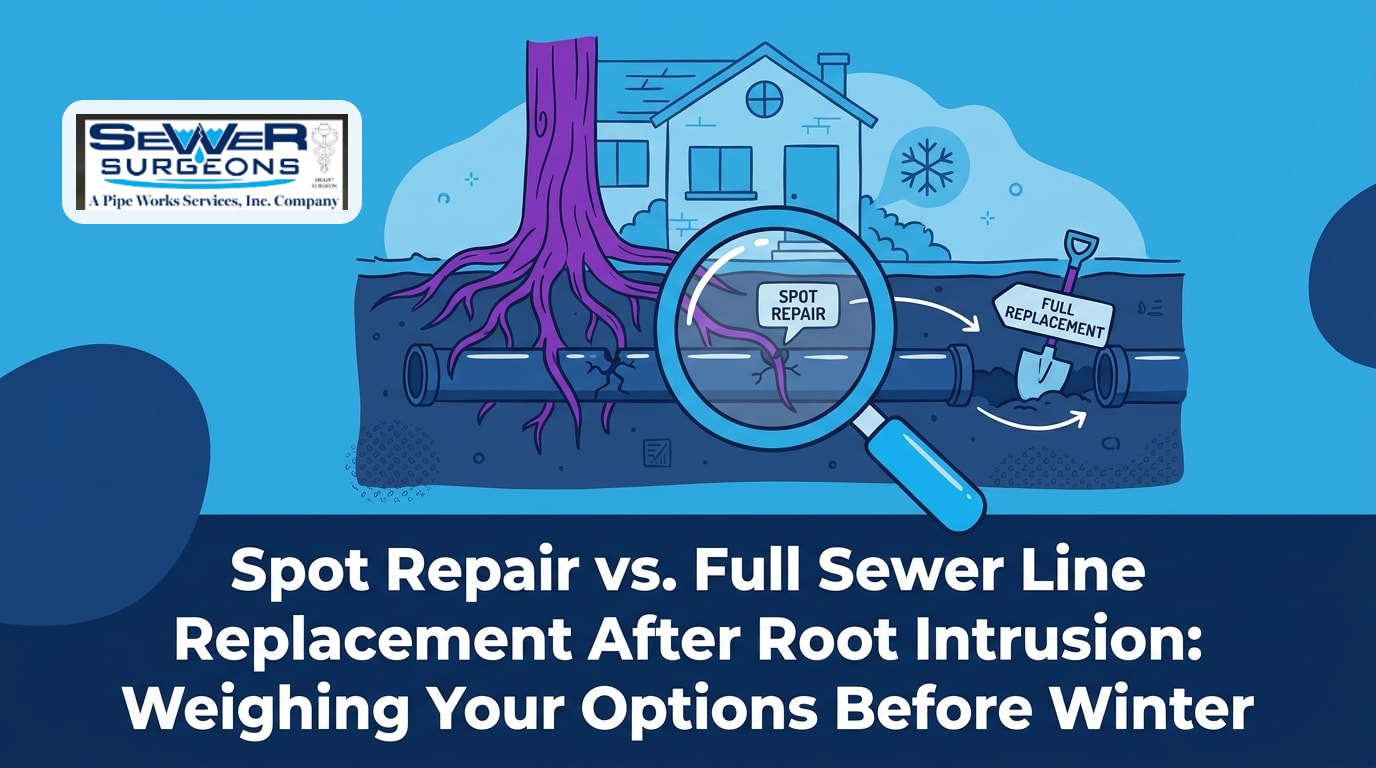
Spot Repair vs. Full Sewer Line Replacement After Root Intrusion: Weighing Your Options Before Winter — featured image

The November Urgency: Facing a Collapsed Pipe Before Winter

Before the first hard freeze hits the Northeast, our team at Sewer Surgeons knows there is a narrow window to secure your home’s critical plumbing infrastructure. If you are weighing Spot Repair vs. Full Sewer Line Replacement After Root Intrusion, the impending late fall and November pre-winter ground freeze makes this decision incredibly time-sensitive. Discovering a collapsed pipe section during a late fall camera inspection is a stressful experience for any homeowner. The immediate instinct is often to patch the problem as quickly as possible, but understanding the long-term implications of that choice is vital.

The core decision comes down to choosing between a localized spot repair—which addresses only the immediate break—and a comprehensive full replacement that upgrades the entire system. Because the ground is about to freeze solid, the risk profile of this decision shifts dramatically. A temporary fix that fails in January is a much larger crisis than a proactive replacement in November. To help you make the best choice for your property, our experts want to help you decide between spot repair and full sewer line replacement based on an objective look at long-term reliability versus short-term fixes.

How Mature Roots Target Weak Points in Vintage Pipes

To understand why sewer lines fail, you have to look at the relentless mechanics of nature. Tree roots are highly efficient seekers of moisture, oxygen, and nutrients—all of which flow abundantly through your underground plumbing. Through a process called hydrotropism, roots naturally grow toward the condensation escaping from microscopic cracks in older pipes. Once they find a way in, these roots can exert hundreds of pounds of pressure per square inch, easily crushing weakened or aging pipe walls.

In our years of inspecting underground utilities, we’ve found this is a particularly common issue in older Chatham NJ tree-lined properties. Many homes built in the 1940s and 1950s still rely on their original plumbing infrastructure. Chatham’s mature, tree-lined neighborhoods, combined with seasonal weather shifts, encourage aggressive spring and fall root growth. As the trees prepare for dormancy, their root systems expand aggressively in search of water. When these mature roots encounter aging cast iron pipes or older clay systems, they target the degrading joints. A single collapsed section is rarely an isolated incident; our crews almost always find it to be an indicator of systemic weakness throughout the entire line.

The Lifespan Reality of Clay and Cast Iron

According to EPA guidelines regarding aging water infrastructure, materials like vitrified clay and cast iron have an expected functional lifespan of about 50 to 75 years. If your home was built in the mid-20th century, your original sewer line has already exceeded this window. The joints connecting these pipe segments degrade over time, crumbling away and creating wide-open doors for root systems. Patching a 70-year-old pipe is often a temporary bridge rather than a permanent cure, as the remaining sections of the pipe are just as frail as the section that just collapsed.

Spot Repair: Understanding the Scope of a Localized Patch

A spot repair is exactly what it sounds like: excavating and replacing only the specific segment of the pipe that has collapsed or suffered severe root damage. This method is designed to restore flow quickly by cutting out the worst of the damage and splicing in a new piece of modern pipe, usually PVC, to bridge the gap. While it is a valid plumbing technique, our technicians want you to understand its precise scope and inherent limitations when dealing with aggressive root systems.

When performed by licensed professionals, the spot repair process generally follows these specific steps:

  1. Camera Isolation: A technician runs a specialized fiber-optic camera down the line to pinpoint the exact location and depth of the collapsed section.
  2. Targeted Excavation: A crew digs a focused hole in the yard directly above the broken pipe, minimizing the immediate digging footprint.
  3. Section Removal: The shattered clay or rusted cast iron segment is carefully cut out of the line.
  4. Patch Installation: A new section of PVC pipe is inserted and secured to the old, existing pipe using heavy-duty rubber couplings (often called Ferncos) tightened with stainless steel bands.
  5. Backfilling: The hole is filled back in, and the immediate blockage is resolved.

While this process solves the immediate crisis, it carries a significant limitation: a spot repair does not prevent roots from finding the next weakest joint in the remaining old pipe. A recurring pattern we see at Sewer Surgeons is that homeowners who opt for a spot repair often face identical issues just a few feet down the line shortly after the patch is completed. The roots simply migrate to the next vulnerable seam, leading to recurring root intrusion backups that require another round of excavation.

Full Sewer Line Replacement: The Path to Permanent Peace of Mind

When our experts evaluate a sewer system fundamentally compromised by age and systemic root invasion, we almost always recommend a full sewer line replacement as the most definitive solution. This process involves the complete removal or bypassing of the vulnerable, aging pipe system, replacing it entirely from the house foundation out to the municipal connection at the street. Rather than playing a game of whack-a-mole with failing joints, a full replacement upgrades the entire infrastructure to modern standards.

Today’s full replacements utilize modern, seamless materials like High-Density Polyethylene (HDPE). HDPE pipes are often fused together using thermal welding, creating a single, continuous pipe with absolutely no joints or seams for roots to exploit. Because the material is highly resistant to root penetration and structural shifting, addressing the entire line eliminates the anxiety of waiting for the next joint to fail in older Chatham NJ tree-lined properties.

Furthermore, upgrading the entire line does not necessarily mean destroying your entire landscape. Homeowners can often choose between trenchless vs traditional excavation methods. Trenchless techniques, such as pipe bursting or slip lining, require only small access pits rather than a massive trench across your lawn. This significantly reduces the excavation footprint while still delivering a brand-new, root-proof system that will last for decades.

Head-to-Head Comparison: Weighing Risks, Longevity, and Disruption

When deciding how to handle a collapsed pipe, looking at a side-by-side comparison helps clarify the long-term value of each option. The goal is to evaluate reliability, risk, and property disruption objectively, keeping in mind that the cheapest immediate option is not always the most cost-effective solution over a ten-year horizon.

Decision Factor Localized Spot Repair Full Sewer Line Replacement
Expected Longevity The new patch will last, but the surrounding old pipe remains past its lifespan and highly vulnerable. Provides a brand-new system designed to last 50 to 100 years without structural degradation.
Risk of Future Roots High. Roots will naturally migrate to the next failing joint in the vintage pipe. Virtually zero. Seamless HDPE materials eliminate the joints that roots use to enter the system.
Property Disruption Requires a single, localized hole, but may require repeated digging as other sections fail. Comprehensive initial work, but modern trenchless methods keep surface disruption to a minimum.
Peace of Mind Low. Homeowners often worry about when the next section of old pipe will collapse. High. The entire line is secured, eliminating the anxiety of unexpected sewage backups.

When Does a Spot Repair Make Sense?

Our team finds that a spot repair is a highly effective solution under specific circumstances. If the rest of your sewer line is relatively new or made of modern materials (like PVC installed in the last 20 years), and the damage was caused by a distinct, isolated physical impact—such as a utility company accidentally striking the pipe during digging—a spot repair is the logical choice. It is also viable if a single joint failed due to ground settling while the rest of the line remains structurally sound.

When is Full Replacement the Clear Choice?

Full replacement becomes the clear, objective choice when the pipe is past its 50-year lifespan and made of obsolete materials like clay, Orangeburg, or cast iron. If our camera inspection reveals severe, recurring root intrusion visible throughout multiple joints, or if the pipe has lost its structural integrity and is beginning to belly or collapse in several areas, patching one spot is merely delaying the inevitable. Securing the entire line is the only way to permanently stop recurring root intrusion backups.

Spot Repair vs. Full Sewer Line Replacement: A Pre-Winter Comparison

The Frost Line Threat: Why January Emergency Excavations Are a Nightmare

In Northern New Jersey, our crews know firsthand how the changing seasons dictate how and when home maintenance should be performed. The late fall and November pre-winter ground freeze is a hard deadline for major exterior plumbing work. During the peak of winter, ground frost lines in Northern NJ can reach up to 36 inches deep. This means the top three feet of soil turn into a solid, concrete-like barrier of ice and dirt.

Frozen ground severely complicates excavation. Digging through a 36-inch frost line requires specialized heavy machinery equipped with frost teeth, or the use of ground-thawing blankets that take days to work. This makes emergency repairs exponentially more disruptive, time-consuming, and difficult to execute. If you opt for a spot repair in November and the remaining old pipe suffers a new root blockage or collapse in January, you are facing a massive logistical nightmare.

Securing the plumbing infrastructure before the ground freezes prevents these mid-winter disasters. By choosing a permanent replacement while the soil is still workable, you eliminate the risk of a spot-repaired joint failing when the weather is at its most unforgiving. Proactive replacement is about controlling the environment and timing of the work, rather than letting a winter emergency dictate the terms.

Avoiding the Psychological Toll of Holiday Plumbing Emergencies

Beyond the physical mechanics of pipes and frozen dirt, there is a significant human element to plumbing failures. A heartbreaking pattern our emergency dispatchers see is a homeowner opting for a temporary patch in early fall, only for that patch to hold just long enough to fail during peak holiday hosting. The psychological toll of dealing with a major plumbing crisis when your home is full of family and friends cannot be overstated.

The stress of dealing with raw sewage backups when guests are visiting ruins holidays and creates massive sanitation hazards. When recurring tree root intrusion strikes on Thanksgiving morning or Christmas Eve, emergency service calls are necessary, and the disruption to your home is absolute. You cannot use the toilets, run the dishwasher, or take showers until the line is cleared or excavated.

True home comfort comes from knowing the infrastructure is sound and reliable. You should not have to cross your fingers every time someone flushes a toilet. Positioning a full replacement as an investment in a stress-free winter and holiday season allows you to host with confidence. Eliminating the threat of recurring root intrusion backups means you can focus on enjoying your home, rather than worrying about what is happening underground.

Frequently Asked Questions About Root Intrusion and Pipe Damage

Is spot repair for tree roots a permanent fix?

No, our team generally does not consider a spot repair to be a permanent fix for systemic tree root intrusion. While it permanently fixes the specific few feet of pipe that were replaced, it leaves the rest of the aging clay or cast iron pipe in the ground. Roots will simply continue to grow and seek out the next degrading joint in the old pipe, often leading to new blockages within a year or two.

When is full sewer replacement necessary?

Full sewer replacement is necessary when the existing pipe has exceeded its functional lifespan and exhibits multiple points of failure. If a camera inspection in older Chatham NJ tree-lined properties reveals severe root intrusion at multiple joints, widespread cracking, or significant bellies (sags) in the line, a full replacement is the only way to restore reliable flow. It is also highly recommended before major landscaping or driveway paving projects.

How do freezing temperatures affect damaged sewer lines?

Freezing temperatures cause the ground surrounding the sewer line to freeze, expand, and shift, a process known as frost heave. If a sewer line is already cracked or weakened by root intrusion, this shifting soil can put immense pressure on the pipe, causing it to collapse completely. Furthermore, if a backup occurs and water sits stagnant in a shallow pipe during a freeze, the water itself can freeze and shatter the line.

Can tree roots completely destroy an older sewer line?

Yes, mature tree roots can absolutely destroy older sewer lines. Roots exert tremendous hydrostatic pressure as they grow, easily crushing vitrified clay, Orangeburg, and even deteriorating cast iron pipes. Once inside, the root mass acts like a net, catching toilet paper and waste until the pipe is completely blocked and structurally compromised.

How long does a typical sewer spot repair last?

The materials used in a spot repair (typically PVC and heavy-duty Fernco couplings) can last for decades, but the repair is only as good as the pipe it attaches to. If a spot repair is grafted onto a 70-year-old crumbling clay pipe, the surrounding old pipe will likely fail long before the patched section does. Therefore, the effective lifespan of the repair is limited by the condition of the remaining vintage infrastructure.

Why are older cast iron and clay pipes so vulnerable to root intrusion?

Older cast iron and clay pipes are vulnerable primarily due to how they were joined together and their natural degradation over time. Clay pipes were often laid in short segments (usually 3 to 4 feet long) with joints packed with oakum and concrete, which crumbles over decades. Cast iron corrodes and scales, weakening the pipe walls. These deteriorating joints and weakened walls provide zero resistance to aggressive root systems seeking water.

Make a Confident, Long-Term Choice for Your Home’s Plumbing

Ultimately, while spot repairs offer immediate relief for a localized break, full replacements provide the permanent defense that older homes desperately need against aggressive root systems. Upgrading to a seamless system eliminates the weak points that roots exploit, protecting your property from the unsanitary and stressful reality of recurring backups.

With the late fall and November pre-winter ground freeze rapidly approaching, the urgency to secure your plumbing infrastructure has never been higher. Do not wait for a patched pipe to fail in the dead of winter when excavations are a logistical nightmare. Our team at Sewer Surgeons encourages you to schedule a professional consultation to review your camera inspection, explore options like trenchless pipe lining, and weigh your choices safely before the frost sets in.

Why Does My Toilet Bubble When the Washing Machine Runs?

Why Does My Toilet Bubble When the Washing Machine Runs? — featured image

Understanding the Connection Between Your Laundry and Bathroom

Why does my toilet bubble when the washing machine runs? It is a question that catches many homeowners off guard, usually accompanied by the unsettling sound of gurgling water echoing from the bathroom just as the laundry cycle finishes. When you hear this noise, your first instinct might be to grab a plunger, assuming there is a simple, localized clog in the toilet itself. However, this specific symptom is rarely an isolated issue. Instead, it is a clear indicator of a systemic drainage problem hidden deep within your home’s interconnected plumbing network.

Plumbing systems are designed to balance water flow and air pressure seamlessly. When a symptom in one room is triggered by an appliance in an entirely different part of the house, it means the shared hidden lines connecting them are compromised. Recognizing the early warning signs your sewer line needs attention is critical to preventing a much larger mess. Rather than relying on guesswork, securing a professional sewer video inspection provides the exact diagnostic clarity needed to address the root cause before a minor bubbling noise turns into a major property emergency.

The Hidden Mechanics: Shared Drain and Vent Lines

To understand why your washing machine affects your bathroom fixtures, you have to look behind the drywall and under the floorboards. Residential plumbing is not just a series of independent pipes; it is a carefully engineered network of shared drain lines and vent stacks. In most homes, the washing machine and the nearest bathroom typically share a common drain line that eventually leads out to the main sewer lateral in your yard.

Alongside the pipes that carry wastewater, your home also relies on a plumbing vent system. These vent pipes run vertically through your roof, allowing outside air to enter the plumbing system. This air pressure is what allows wastewater to flow smoothly down to the sewer without creating a vacuum. When the shared drain line or the vent stack is compromised by a partial blockage, the air pressure dynamics shift dramatically. The water has nowhere to go, and the air is forced to find a new escape route.

How Wet Venting Works in Residential Plumbing

Many homes utilize a concept known as wet venting. A wet vent is simply a pipe that is designed to carry both water and air simultaneously. For this system to work, the pipes must be properly sized and completely clear of debris.

Proper venting prevents the water seal in your toilet trap—the curved section of porcelain that holds water in the bowl—from being siphoned away or pushed out by displaced air. When a wet vent is functioning correctly, you will never hear a sound from your toilet while other appliances are running. The moment a blockage begins to form, that delicate balance of air and water is destroyed.

  • The role of the trap: The water in your toilet bowl acts as a barrier, keeping hazardous sewer gases from entering your home.
  • The role of the vent: The vent equalizes pressure so that rushing wastewater does not create a vacuum that sucks the trap dry.
  • The point of failure: When a blockage restricts the pipe, trapped air is pushed backward, eventually breaking through the water seal in the toilet and causing the bubbling sound.

How the Washing Machine Acts as a Plumbing Stress Test

You might wonder why the bathroom sink or the shower does not cause the toilet to bubble, while the washing machine consistently triggers the issue. The answer lies in the sheer volume and speed of the water being discharged. Standard washing machines rapidly discharge 15 to 30 gallons of water during a single drain cycle. This massive, sudden influx of water acts as a high-intensity hydraulic stress test on your home’s drainage capacity.

Your toilet bubbles when the washing machine runs because they share a drain or vent line. When a partial blockage in the main sewer line restricts water flow, the rapid discharge of water from the washing machine pushes air back up through the plumbing system. This trapped air escapes through the path of least resistance: the toilet trap, causing the water to gurgle or bubble.

Lower-volume fixtures, like a bathroom faucet, simply do not produce enough water fast enough to overwhelm a partially blocked pipe. The washing machine’s heavy load exposes the vulnerability that other fixtures mask.

The Physics of Air Displacement

Water and air cannot occupy the same space at the same time. When 30 gallons of laundry water rushes into a drain pipe, it must displace an equal volume of air. In a healthy plumbing system, that air is pushed harmlessly down the sewer line or up through the roof vent.

If a partial blockage is acting like a dam inside the pipe, the water slows down, and the air is trapped. Because air is lighter than water, it travels backward up the pipe, seeking any available exit. The toilet bowl, with its relatively shallow water seal, offers the easiest escape route. The bubbling you see and hear is literally trapped sewer air forcing its way into your bathroom.

The Mechanics of a Bubbling Toilet During a Laundry Cycle

Why This Symptom Points to a Main Sewer Line Blockage

A bubbling toilet is rarely an isolated event; it is almost always a precursor to a much larger systemic failure. The main sewer line is the single exit point for all household wastewater. Every sink, shower, toilet, and washing machine ultimately feeds into this one central pipe. When you start noticing interactive symptoms between different rooms, it means the bottleneck is located in that shared main line.

It is important to clarify the difference between a total blockage and a partial blockage. A total blockage causes immediate, messy backups every time you run water. A partial blockage, however, is more deceptive. It allows a small amount of water to trickle through, which is why your daily showers might seem fine. But when hit with the heavy load of a washing machine, the partial clog cannot keep up, resulting in gurgling and bubbling. If you are constantly wondering why your toilet keeps clogging despite your best efforts with a plunger, a hidden main line restriction is the most likely culprit.

Recognizing a Partial vs. Full Blockage

Ignoring a partial blockage is a risky gamble. Over time, the debris causing the restriction will continue to accumulate until the pipe is completely sealed off. Understanding the progression can help you take action before a minor annoyance becomes a major disaster.

  • Stage 1 – Slow Drains: Water takes slightly longer to empty from sinks and tubs.
  • Stage 2 – Interactive Symptoms: High-volume appliances (like the washer) cause other fixtures (like the toilet) to gurgle.
  • Stage 3 – Localized Backups: Water begins to back up into the lowest point of the house, usually a basement floor drain or ground-floor shower.
  • Stage 4 – Full System Failure: No wastewater can exit the home, resulting in raw sewage backing up into multiple fixtures.

The Impact of Aging Cast-Iron Pipes and Tree Roots

The age and location of your home play a massive role in the health of your main sewer line. For example, in our years of experience serving Chatham, NJ, our team at Sewer Surgeons frequently encounters older colonial homes, particularly those built in the 1940s and 1950s, that still rely on their original cast-iron sewer laterals. Cast iron was the standard material for decades, but it has a functional lifespan of roughly 50 to 70 years. Today, we see these aging pipes acting highly susceptible to structural degradation, channeling, and cracking.

As cast-iron pipes corrode and crack, they create the perfect entry points for aggressive tree root intrusions. Tree roots are biologically driven to seek out moisture, oxygen, and nutrients—all of which are abundant inside a sewer line. Once a tiny root hair breaches a crack in the aging pipe, it quickly grows into a dense, net-like mass. This root mass catches toilet paper, grease, and soap scum, creating the exact type of partial blockage that causes a toilet to bubble during a laundry cycle. Addressing these deteriorating pipes through modern methods like trenchless pipe lining can restore the structural integrity of the line without destroying your landscaping.

How Roots Compromise Drainage Capacity

Even a relatively small root intrusion can severely impact your home’s drainage capacity. When preparing for November holiday-season home prep, increased household water usage from guests and cooking can quickly overwhelm a root-choked pipe.

The roots act as a biological filter, trapping solid waste while allowing liquid to slowly seep through. When the washing machine dumps 30 gallons of water in a matter of minutes, the root mass acts as a solid wall. The water rapidly backs up behind the roots, compressing the air in the pipe and forcing it up into your bathroom.

Professional Diagnostics vs. Temporary DIY Fixes

When faced with a bubbling toilet, the temptation to try a quick, inexpensive fix is high. However, DIY methods are not only ineffective for main sewer line issues, but they can also cause significant damage to your property. At Sewer Surgeons, we believe in providing straightforward, jargon-free explanations that prioritize your family’s safety and the long-term value of your home. In our daily field work, we have seen the disastrous results of DIY plumbing attempts, which is why our team always emphasizes reliable camera diagnostics over blind guesswork.

Pouring harsh chemical drain cleaners down your pipes is one of the worst things you can do for a main line partial clog. Chemicals cannot dissolve tree roots, and the caustic heat they generate can severely corrode and weaken aging cast-iron pipes. Similarly, renting a heavy-duty drain snake from a hardware store is incredibly risky. Without knowing exactly what is inside the pipe, a DIY snake can easily punch through the side of a degraded cast-iron lateral, turning a manageable clog into a catastrophic pipe collapse. Instead, professionals utilize advanced techniques like hydro jet drain cleaning, which safely scours the inside of the pipe using high-pressure water after a thorough visual inspection.

The Value of Seeing Inside the Pipe

Professional camera inspections eliminate the guesswork that leads to repeated, frustrating service calls. By sending a high-definition camera down the lateral, professionals can map the exact depth, location, and nature of the intrusion.

Approach Diagnostic Accuracy Safety for Aging Pipes Long-Term Reliability
Chemical Cleaners Zero (Blind application) Very Low (Causes corrosion) Ineffective on roots and scale
DIY Snaking Low (Relies on feel) Low (Risk of pipe puncture) Temporary (Leaves root mass behind)
Professional Camera Inspection 100% Visual Confirmation Completely Safe Allows for permanent, targeted solutions

Frequently Asked Questions About Gurgling Toilets and Drains

Why does my toilet gurgle when the washer drains?

Your toilet gurgles because the washing machine and the bathroom share a drain or vent line that has developed a partial blockage. When the washing machine rapidly discharges water, the blockage forces air backward through the pipes. This displaced air escapes through the water in your toilet trap, creating the gurgling sound.

Is a bubbling toilet a sign of a main line clog?

Yes, a bubbling toilet is one of the most common early warning signs of a partial main sewer line clog. Because the main line is the single exit route for all wastewater, a restriction there causes high-volume appliances to push air back into other fixtures. Ignoring this symptom often leads to a complete blockage over time.

Can a washing machine cause a toilet to back up?

Absolutely. If the partial clog in your main sewer line turns into a full blockage, the massive volume of water from the washing machine will have nowhere to go. It will seek the lowest open point in your plumbing system, which is frequently a ground-floor toilet or a basement shower drain, causing raw sewage to back up into your home.

How do you fix a gurgling toilet?

Fixing a gurgling toilet requires addressing the hidden blockage in the shared drain or vent line, not plunging the toilet itself. The most reliable solution is to have a licensed professional perform a video camera inspection of the main sewer line. Once the blockage—often tree roots or scale—is identified, it can be safely cleared using professional-grade equipment.

Is a bubbling toilet considered a plumbing emergency?

While a bubbling toilet might not be flooding your bathroom at this exact moment, it is an urgent warning sign that precedes a true plumbing emergency. It indicates that your drainage capacity is severely restricted. Continuing to use high-volume appliances while this symptom is present greatly increases the risk of an imminent sewage backup.

Why shouldn’t I just use a chemical drain cleaner for a bubbling toilet?

Chemical drain cleaners are entirely ineffective against the most common causes of main line blockages, such as tree root intrusions or heavy scale buildup. Furthermore, the harsh, caustic chemicals sit in the pipe and generate intense heat, which can rapidly accelerate the corrosion and failure of aging cast-iron sewer lines.

Secure Your Plumbing System Before Holiday Hosting

A bubbling toilet is not a random quirk of an old house; it is a mechanical cry for help from a plumbing system that is struggling to breathe. When you hear that gurgling sound during a laundry cycle, your home is warning you that the main sewer line is partially blocked and operating on borrowed time.

As we approach November holiday-season home prep, your household water usage is guaranteed to spike with extra guests, cooking, and cleaning. Our team at Sewer Surgeons frequently sees this added stress become the tipping point that turns a partial blockage into a devastating raw sewage backup. Do not wait for a complete system failure to take action. Scheduling a professional diagnostic camera inspection now will give you the peace of mind that your plumbing system is clear, secure, and ready to handle whatever the season brings.

Why We Never Recommend Chemical Drain Cleaners for Stubborn Holiday Clogs

Why We Never Recommend Chemical Drain Cleaners for Stubborn Holiday Clogs — featured image

The Thanksgiving Kitchen Crisis: When Grease Meets Cold Pipes

Your kitchen sink is backing up, dirty water is pooling around the dishes, and the meal prep has suddenly ground to a halt. If you are standing over a clogged drain right now, you might be wondering exactly why we never recommend chemical drain cleaners for stubborn holiday clogs. During the peak of November/Thanksgiving holiday cooking, a blocked sink is incredibly stressful, and the immediate temptation is to reach for a store-bought jug of liquid drain cleaner to quickly force the plumbing back into action.

However, pouring harsh commercial chemicals into a heavy grease clog creates a highly dangerous environment inside your plumbing infrastructure. These caustic substances do not simply dissolve a dense blockage and wash away. Instead, they become trapped against the impenetrable wall of congealed food waste, initiating a violent reaction that can severely damage both modern and historic pipe materials.

Understanding home plumbing basics is the first step in protecting your pipes from irreversible damage when holiday cooking overwhelms your system.

The Anatomy of a November Grease Clog

Holiday cooking generates plumbing challenges that standard daily maintenance simply cannot handle. The sheer volume of fats, oils, and grease (often referred to in the plumbing industry as FOG) produced by roasting turkeys, simmering gravies, and preparing heavy, butter-laden side dishes is staggering. When these warm liquids are poured down the kitchen sink, they may initially flow smoothly through the drain assembly. However, that liquid state is highly temporary.

In Chatham, NJ, late fall and winter temperatures cause the ambient temperature of exterior or poorly insulated pipes to drop significantly. When warm liquid grease travels down the drain and encounters these freezing pipes, it undergoes a rapid phase change. The fats instantly solidify, binding with food scraps, coffee grounds, and other debris to create an exceptionally stubborn, impenetrable wall.

Key differences between holiday grease clogs and standard blockages:

  • Density: Unlike hair or soap scum, which remains somewhat porous, congealed animal fat forms a solid, watertight seal across the entire diameter of the pipe.
  • Temperature sensitivity: Grease clogs are highly reactive to ambient temperatures, hardening further as the surrounding soil or crawlspace air cools.
  • Length of blockage: FOG can coat the interior walls of a pipe for several feet before finally closing off completely, meaning the clog is not just a localized plug, but a long stretch of restricted flow.

Knowing where drain clogs typically start helps clarify why a massive influx of November/Thanksgiving holiday cooking grease overwhelms the system so quickly.

How Exothermic Heat Warps Modern PVC Plumbing

The Problem: When a homeowner pours a commercial drain cleaner into a completely blocked sink, the chemical cannot flow through the system. It sits directly on top of the solid grease plug, filling the pipe with highly concentrated, caustic liquid.

The Cause: The active ingredients in most store-bought drain cleaners, such as sodium hydroxide (lye) and sometimes shards of aluminum, are designed to create an intense exothermic chemical heat reaction when they interact with water and organic matter. This reaction is intended to burn through the blockage. However, this exothermic chemical heat reaction frequently generates internal pipe temperatures exceeding 200 degrees Fahrenheit. Standard modern PVC plumbing pipes, which are used in the majority of contemporary residential drainage systems, have a maximum recommended operating temperature of only 140 degrees Fahrenheit.

The Solution: Because the chemical is trapped by the grease clog, this extreme heat is sustained in one localized area of the PVC pipe for an extended period. The plastic quickly softens, warps, and loses its structural integrity. The glued joints holding the pipe sections together begin to melt and fail, causing toxic leaks inside walls or under cabinets. The only way to prevent this specific type of thermal damage is to completely avoid introducing exothermic chemicals into a blocked PVC system.

The Dangers of Chemical Drain Cleaners on Holiday Grease Clogs

The Hidden Corrosion Risk for Older Cast Iron Systems

While modern homes face the risk of melting PVC, older properties face an entirely different, yet equally destructive, threat from chemical drain cleaners. Many older homes rely on cast iron plumbing systems for their main drainage lines. Cast iron is incredibly durable under normal conditions, but it reacts very poorly to stagnant, highly concentrated acids or bases.

When a heavy grease clog stops the flow of water, the chemical drain cleaner pools at the bottom of the horizontal pipe. Because the dense liquid is heavier than water, it settles directly against the cast iron surface. The same exothermic chemical heat reaction that melts plastic will aggressively accelerate the oxidation and degradation of the metal.

The stages of localized cast iron corrosion:

  1. Pooling: The caustic liquid settles against the bottom channel of the pipe, trapped by the grease.
  2. Chemical etching: The intense pH levels strip away any protective oxidized layers, exposing raw iron.
  3. Accelerated deterioration: The sustained presence of the chemical slowly eats away at the metal, thinning the pipe wall.
  4. Structural failure: The bottom of the pipe eventually rots out completely, allowing raw sewage and wastewater to leak directly into the soil or crawlspace.

What began as a routine kitchen backup can quickly escalate into a catastrophic structural failure requiring extensive pipe replacement, trenching, and environmental cleanup.

The Illusion of a Clear Drain: Why Melting Grease Fails

One of the most frustrating aspects of using chemical drain cleaners on heavy fats is the false hope they provide. A typical pattern we see is a homeowner pouring a bottle of gel cleaner down the drain, waiting an hour, and noticing that the standing water slowly begins to recede. It appears as though the problem is solved, but the reality is much worse.

The intense heat generated by the chemical often manages to temporarily melt just the very top layer of the grease clog, or it burns a tiny, narrow channel through the center of the blockage. This allows the backed-up water to slowly drain away. However, the melted, liquefied grease simply moves a few feet further down the plumbing system, moving further away from the warm interior of the house.

Once that liquid fat reaches an even colder section of the main sewer line, it rapidly cools and re-solidifies. The grease has not been removed from the system; it has merely been relocated to a harder-to-reach area. This newly formed blockage is often much denser, mixed with the caustic chemicals, and located deep underground where it is significantly harder to clear. This cycle of temporary melting and deep re-solidification is exactly what turns minor sink backups into massive kitchen sink slowdowns during Thanksgiving.

A Surgical Approach to Drain Cleaning

When dealing with dense, cold-weather blockages, blunt chemical damage is never the answer. Instead, the situation requires a precise, surgical approach. At Sewer Surgeons, our brand philosophy is built on contrasting the destructive, unpredictable nature of chemical acids with the precision of surgical mechanical interventions. We focus on diagnosing the exact location and composition of the clog, and then physically removing it without causing collateral damage to the home’s infrastructure.

Mechanical drain cleaning involves the use of specialized physical tools to break apart, scrape away, and extract the blockage. By physically removing the hardened fats and food scraps from the system entirely, we eliminate the root cause of the backup. There is no extreme heat, no toxic fumes venting into your kitchen, and absolutely no risk of chemical burns to your plumbing joints.

Feature Chemical Drain Cleaners Surgical Mechanical Cleaning
Mechanism of Action Relies on an unpredictable exothermic chemical heat reaction. Physical extraction and targeted scraping of pipe walls.
Effect on Grease Temporarily melts grease, pushing it deeper into the system. Completely removes fats, oils, and food waste from the pipe.
Impact on Pipes High risk of warped PVC, melted joints, and corroded cast iron. Safe for all pipe materials; protects structural integrity.
Safety Profile Generates toxic fumes and poses severe burn risks. No harsh chemicals, fumes, or thermal dangers.

For severe grease buildup that has coated the entire interior of the pipe, professional hydro jet drain cleaning offers an advanced surgical solution, using highly pressurized water to scour the pipe walls clean and flush the debris safely into the municipal sewer.

Safely Resolving the Blockage Without Chemical Damage

When a heavy grease clog forms during the peak of November/Thanksgiving holiday cooking, physical extraction is the only permanent, safe fix. The very first step you should take when you notice a backup is to completely shut off water usage to the affected sink. Do not run the dishwasher, and do not attempt to flush the drain with more hot water, as this will only increase the volume of standing water and potential overflow.

Professional intervention typically involves two primary mechanical methods. Simple mechanical snaking utilizes a flexible steel cable with a specialized cutting head to physically bore through the clog, breaking up the dense fat and retrieving food debris. For older pipes heavily coated in years of grease, advanced high-pressure water clearing (hydro jetting) may be required to restore the pipe to its original diameter.

When to Call in the Experts

It is time to call a professional when standard household methods fail. If a basic sink plunger is no longer effective at moving the water, the clog has likely solidified deep within the line. Professional-grade tools are strictly required for dense, cold-weather grease blockages. Because improper use of mechanical augers can damage pipe traps or push a clog tighter, this work requires a licensed professional. Attempting risky DIY methods or pouring chemicals into the standing water will only complicate the eventual repair.

Understanding the difference between mechanical snaking and hydro jetting ensures you get the right surgical solution for your specific plumbing architecture.

Protect Your Plumbing This Holiday Season

Avoiding store-bought chemical cleaners is the single most important decision you can make to save your pipes from severe heat warping and corrosive damage. When the stress of November/Thanksgiving holiday cooking leads to a sudden kitchen backup, relying on a scientifically grounded, mechanical approach ensures the problem is permanently resolved without destroying your home’s infrastructure.

By opting for professional, surgical extraction of grease and food waste, you keep your kitchen running smoothly and safely. If your sink is slowing down or completely blocked, reach out to schedule a precise, mechanical clearing service to restore your plumbing before the next holiday gathering.

Frequently Asked Questions

Why do plumbers advise against chemical drain cleaners?
Plumbers advise against chemical drain cleaners because they rely on violent exothermic reactions that can severely damage pipes. These caustic liquids generate extreme heat that warps modern PVC pipes and causes localized, rapid corrosion in older cast iron lines. Furthermore, they are highly toxic, posing a severe chemical burn risk to any professional who later has to open the pipe to clear the remaining blockage.

Do chemical cleaners melt PVC pipes?
Yes, chemical cleaners can easily melt and warp standard PVC pipes. The active ingredients, such as sodium hydroxide, create an exothermic chemical heat reaction that frequently exceeds 200 degrees Fahrenheit when trapped against a clog. Because standard residential PVC has a maximum safe operating temperature of around 140 degrees Fahrenheit, this sustained heat softens the plastic and degrades the glued joints, leading to leaks.

How do you clear a grease clog safely?
The only safe way to clear a solid grease clog is through physical, mechanical extraction. This involves using professional plumbing augers (snakes) to bore through and pull out the dense fats, or utilizing high-pressure hydro jetting to scour the pipe walls clean. These mechanical methods remove the blockage entirely without introducing dangerous heat or corrosive acids into your plumbing system.

Can I use chemical drain cleaner in a kitchen sink?
It is highly discouraged to use chemical drain cleaners in a kitchen sink, especially for food and grease blockages. Kitchen clogs are primarily composed of fats, oils, and grease (FOG) which do not dissolve well in chemicals; instead, the heat often just temporarily melts the grease, pushing it deeper into the cold pipes where it re-solidifies into a much harder, inaccessible clog.

Why do holiday cooking clogs seem harder to clear than normal blockages?
Holiday cooking clogs are exceptionally difficult because they involve massive volumes of dense animal fats and heavy food scraps entering the system all at once. During the late fall and winter, exterior pipes are cold, causing these large volumes of warm liquid grease to instantly flash-freeze into a solid, concrete-like wall that standard plunging cannot break.

What should I do if I already poured a chemical cleaner down my clogged drain?
If you have already poured a chemical cleaner and the drain is still blocked, stop using the sink immediately and do not pour any additional products, including boiling water, into the drain. Call a licensed plumber and explicitly inform them that chemicals are present in the standing water. This allows the technician to bring the proper protective safety gear to prevent severe chemical burns when they open the pipe to perform a mechanical extraction.

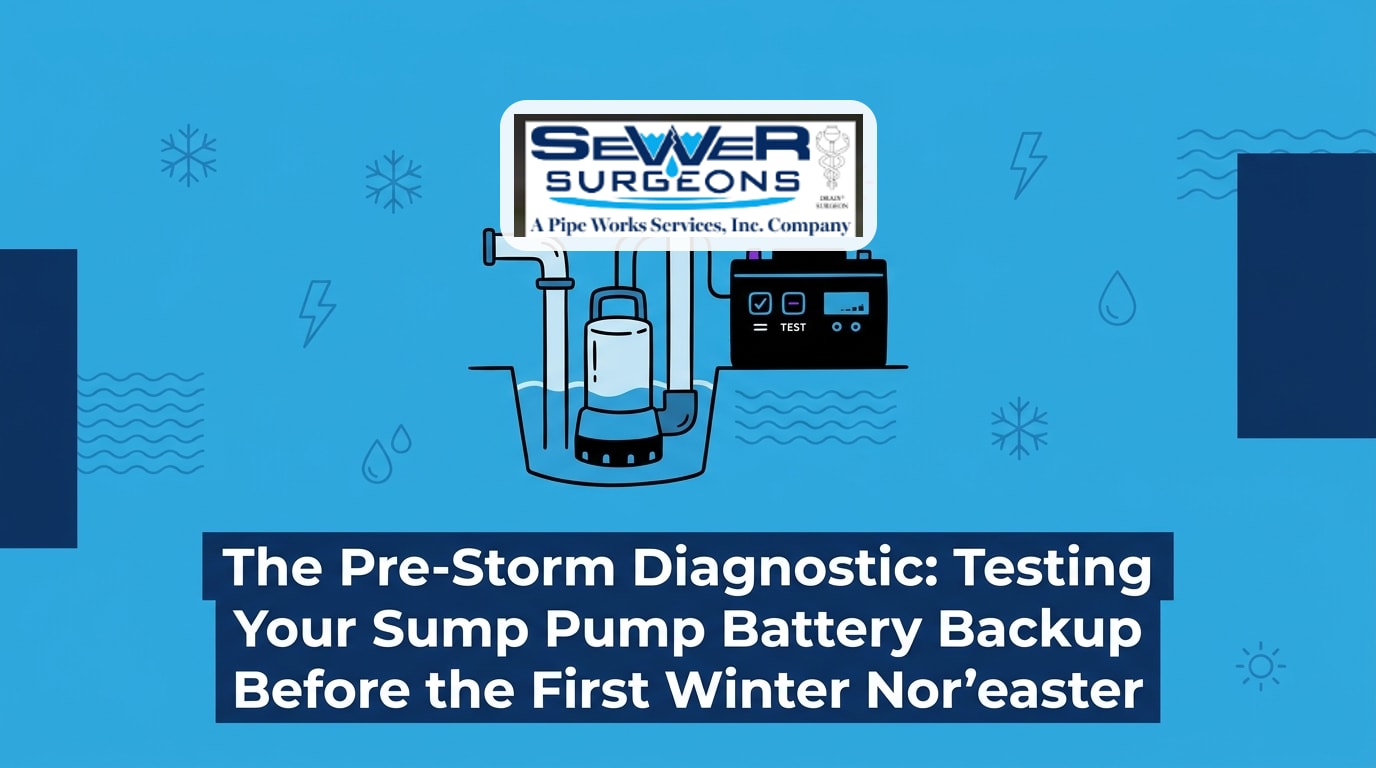
Testing Your Sump Pump Battery Backup Before the First Winter Nor’easter

The Pre-Storm Diagnostic: Testing Your Sump Pump Battery Backup Before the First Winter Nor'easter — featured image

The Dual Threat of Winter Storms and Power Grid Failures

November marks the beginning of peak Nor’easter season, and your home is about to face one of the most severe weather combinations nature can throw at it. As temperatures drop and the first winter storms begin brewing off the coast, the threat to your home shifts dramatically. Heavy freezing rain and high, grid-stressing winds create a dual threat that targets the most vulnerable parts of your property. If your primary sump pump loses power during a torrential downpour, the water does not simply stop rising. For homeowners relying on a dependable system, navigating these seasonal shifts means understanding when a simple tune-up is enough, or when you might need a sump pump replacement before disaster strikes.

A November pre-winter Nor’easter brings intense precipitation that rapidly saturates the ground around your foundation. At the exact moment your primary pump is working its hardest to keep that water at bay, ice accumulation and gale-force winds frequently snap power lines. This leaves your home completely dependent on its battery backup system. Without a functional backup, the lowest levels of your home are left entirely defenseless against rising groundwater.

The vulnerability of finished basements during these events cannot be overstated. A primary pump failing during a freezing rain power outage is a concrete problem that leads to thousands of dollars in ruined drywall, destroyed flooring, and lost personal items. The critical decision point for any homeowner is to proactively test and verify the backup system right now, before the storm hits. The goal is a safe, non-DIY-violating verification process that gives you absolute confidence in your home’s defenses.

Why Freezing Rain Makes Battery Backups Non-Negotiable

Many homeowners mistakenly associate sump pump failures exclusively with spring thaws and heavy summer thunderstorms. However, winter storms present a uniquely dangerous environment. When a November pre-winter Nor’easter hits Chatham NJ and the broader Northeast, it brings a punishing mix of freezing rain and heavy, wet snow. This specific type of precipitation doesn’t just sit on the surface; it melts, runs off, and forcefully saturates the soil directly against your foundation.

As the premier plumbing and sewer experts in the region, we see the aftermath of these winter grid failures firsthand. Winter storms often bring simultaneous power loss and aggressive water intrusion. Unlike a summer thunderstorm where power might flicker and return in an hour, winter outages caused by downed, ice-covered lines can last for days. This makes a reliable battery backup not just a luxury, but a non-negotiable insurance policy for your home.

The Anatomy of a Winter Grid Failure

Understanding how freezing rain impacts the power grid helps explain why backup systems are so vital. When freezing rain falls, it coats power lines, tree branches, and transformers in a thick layer of heavy ice. Just a half-inch of ice accumulation can add hundreds of pounds of extra weight to a single span of power line. When high winds from a Nor’easter hit these weighted lines, they snap.

Utility companies face massive hurdles during these events. Icy roads, reduced visibility, and widespread damage mean that utility response times are severely delayed. You cannot count on the grid coming back online before your sump pit overflows. Your backup battery is the only thing standing between the rising water and your Chatham NJ finished basements.

Protecting the Finished Basement Environment

The rate at which a sump pit fills during heavy winter precipitation is staggering. Depending on your home’s footprint and the local water table, a pit can overflow in less than thirty minutes once the primary pump stops ejecting water. The resulting damage is rapid and extensive.

Water intrusion in a finished space destroys baseboards, warps laminate and hardwood flooring, and wicks upward into drywall. Beyond the immediate structural damage, the lingering moisture creates an environment ripe for mold growth. A fully charged, functionally tested battery backup system ensures that even when the neighborhood goes dark, your foundation remains dry and secure.

Weather Event Primary Risk Factor Power Grid Threat Level Sump Pump Impact
Spring Thaw Rapid snowmelt and saturated ground Low (Outages are rare) High volume, continuous cycling
Summer Thunderstorm Flash flooding and heavy downpours Moderate (Lightning strikes) Sudden spikes in water volume
Winter Nor’easter Freezing rain, snowmelt, and high winds Severe (Ice accumulation snaps lines) High volume combined with prolonged power loss

Safe, Homeowner-Approved Visual Inspections

Before you even think about pressing buttons or handling equipment, you must start with a visual inspection. Water and electricity are a dangerous combination, and observing your system requires surgical precision—looking closely for subtle signs of wear without engaging in risky DIY meddling. You should never touch exposed wires, attempt to dismantle the pump housing, or open sealed electrical boxes.

Your visual diagnostic is about gathering information safely. By checking the physical condition of the backup system, you can identify obvious red flags before a November pre-winter Nor’easter puts the system to the ultimate test. Follow this safe, homeowner-approved checklist to evaluate your equipment’s readiness.

  • Check the indicator lights: Look at the control panel on your backup system. You want to see a solid green light, which typically indicates the battery is fully charged and ready. Flashing lights, red lights, or yellow warning indicators mean the system requires attention.
  • Inspect the battery terminals visually: Shine a flashlight on the top of the battery where the cables connect. Look for white, crusty acid corrosion or buildup around the posts. Do this without touching the terminals. Heavy corrosion restricts electrical flow and can prevent the pump from drawing power when it needs it most.
  • Verify the battery box placement: Ensure the protective box housing the battery is clean, entirely dry, and securely positioned above the floor level. It should never sit directly on a damp basement floor where ambient moisture can degrade the connections.
  • Examine the wiring exterior: Look at the protective sheathing on the cables running from the battery to the pump and the control unit. Ensure there are no visible frays, bite marks from pests, or pinch points.
  • Check the discharge pipe: Follow the pipe visually from the pump to the wall exit. Ensure the check valve (the inline device that stops water from flowing backward into the pit) looks physically intact with no signs of leaking or weeping at the joints.
Sump Pump Battery Backup Safe Visual Inspection Checklist

How to Safely Run a Backup System Test Cycle

Once your visual inspection is clear, the next diagnostic step is verifying that the mechanical components actually work. Most modern systems are designed with user-friendly testing features that allow you to confirm operation without touching live electrical parts. Running a controlled test cycle is the best way to stop flooding with sump pumps before an emergency actually happens.

This process simulates a power outage and forces the backup pump to engage. It is crucial to run this test when you can actively monitor the results, rather than waiting for Chatham NJ finished basements to flood during a midnight storm.

  1. Locate the dedicated ‘Test’ button: Find the control panel for your backup system. There should be a clearly marked button labeled “Test” or “System Test.” Do not unplug the primary pump from the wall to simulate an outage, as handling high-voltage cords near a water pit carries unnecessary risk.
  2. Press and hold the button: Follow the manufacturer’s guidelines printed on the control box. Usually, this requires holding the button down for three to five seconds to initiate the brief test cycle.
  3. Observe the water discharge: As the backup pump engages, watch the water level in the pit. You should see the water level drop as the backup pump successfully ejects the water through the discharge pipe.
  4. Confirm the system resets: Once you release the button (or the automated test cycle ends), ensure the backup pump shuts off completely. The indicator lights should return to their normal, solid green standby status.

Listening for Mechanical Readiness

The sound of success: When the backup pump kicks on, listen closely to the motor. You want to hear a smooth, consistent humming sound. This indicates that the impeller is spinning freely and the motor is receiving adequate voltage from the battery.

The sound of trouble: If you hear a grinding noise, a struggling low-pitched hum, or a rattling sound, the pump is in distress. This could mean debris is caught in the impeller, the bearings are failing, or the battery is not delivering enough amperage to turn the motor under load. A swift, quiet water discharge is the hallmark of a healthy system ready to face a winter grid failure.

Understanding Battery Lifespan and Outage Capacity

One of the most common misconceptions homeowners have is that a backup battery will last forever as long as it stays plugged into the wall. In reality, the power source is the most vulnerable component of your entire flood prevention strategy. Exploring battery backup systems for sump pumps requires a clear understanding of chemical degradation and lifespan limits.

Marine deep-cycle or AGM (Absorbent Glass Mat) backup batteries typically require replacement every 3 to 5 years. Even if the battery has never been used during an actual outage, the constant trickle-charging process slowly degrades its internal lead plates. Over time, the battery loses its ability to hold a deep charge.

The age of the battery directly impacts its charge capacity and run time during an outage. A brand-new battery might run your backup pump continuously for several hours, or intermittently for a few days. However, a battery that is four years old might only hold enough capacity to run the pump for thirty minutes before dying completely. When a November pre-winter Nor’easter knocks out the power for 48 hours, that diminished capacity is a recipe for disaster.

Variables that affect run time:

  • Cycle frequency: How often the pump needs to turn on. Heavy freezing rain will cause the pit to fill faster, forcing the pump to cycle more frequently and draining the battery quicker.
  • Head height: The vertical distance the pump must push the water to exit the house. A higher lift requires more electrical energy per cycle.
  • Battery age: Older batteries deplete exponentially faster under heavy loads.

Always check the date code sticker on your battery. If the battery is approaching its fourth birthday, it is nearing the end of its reliable life. Proactive replacement is drastically cheaper than repairing a flooded basement.

Red Flags That Require a Professional Diagnostic

While visual checks and pressing the test button are perfectly safe for homeowners, there is a strict boundary you must respect. Attempting DIY electrical repairs on a system that mixes high voltage, standing water, and DC battery current is incredibly dangerous. When your diagnostic checks uncover a problem, it is time to call in a licensed professional.

Treating the system with surgical precision means knowing when to step back. The goal is to ensure the equipment performs flawlessly when the grid drops, and that requires expert diagnostic care. If you spot any of the following red flags, professional intervention is the safest way to guarantee readiness before a major storm threatens your Chatham NJ finished basements.

  • Flashing red indicator lights: This usually means the battery is failing to hold a charge, the charging circuit is broken, or there is a fault in the pump motor.
  • Persistent beeping alarms: A continuous or rhythmic beep from the control panel is a universal distress signal. It often indicates low battery voltage or a blown internal fuse.
  • Failure to engage during a test: If you press the test button and nothing happens, or you hear a click but the pump does not run, the system is fundamentally compromised.

When to Call for Expert Help

Do not attempt to rewire the system. Never try to replace corroded battery terminals yourself, splice cables, or open the pump housing. Handling live electrical components in a damp environment is a severe safety hazard.

A professional diagnostic goes far beyond a visual check. A licensed expert will perform a true load-test on the battery to measure its exact remaining capacity under stress. They will check the float switch calibration to ensure it activates at the precise water level required. Finally, they will inspect the check valve and discharge line for hidden blockages. If your battery is older than 5 years, regardless of what the current indicator lights say, schedule a professional replacement to secure your home.

Frequently Asked Questions About Winter Sump Pump Readiness

How do I know if my sump pump battery backup is working?

The safest way to know is by checking the control panel for a solid green status light and running a manual test cycle. Press and hold the dedicated test button on your control unit until the backup pump engages. You should hear the motor run smoothly and see the water level in the pit drop rapidly. If the test button yields no response or the pump sounds like it is grinding, the system requires professional attention before a November pre-winter Nor’easter arrives.

How long does a sump pump battery backup last in an outage?

A healthy, fully charged battery backup typically lasts for several days of intermittent cycling, or roughly 5 to 7 hours of continuous pumping. The exact duration depends heavily on how fast the freezing rain is filling your pit and the age of the battery itself. Older batteries lose their charge capacity quickly, which is why monitoring the age of your power source is critical during winter storm season.

Will a sump pump work without power?

A standard primary sump pump will not work without grid power, leaving your basement completely unprotected during an outage. This is why a dedicated battery backup system is essential. The backup system features its own separate pump and DC power supply, automatically taking over the moment the main power fails to keep the pit empty.

How often should a sump pump battery be replaced?

Industry standards recommend replacing your backup battery every 3 to 5 years to guarantee reliable performance. Even if the battery has never been drained during an actual power outage, the constant trickle-charging process degrades its internal components over time. Checking the date code on the battery casing is the best way to track its lifespan.

Can freezing rain cause my sump pump discharge pipe to freeze?

Yes, prolonged freezing rain and dropping temperatures can cause the water inside an improperly sloped discharge pipe to freeze solid. When this happens, the pump will run continuously but cannot push water out, leading to motor burnout and basement flooding. Ensuring the exterior pipe has a proper downward slope and is clear of snow drifts is a vital part of winter readiness.

Secure Your Finished Basement Before the Grid Goes Down

The dual threat of heavy freezing precipitation and severe, wind-driven power grid failures makes winter an incredibly high-risk season for your home. Safe, proactive testing of your backup system is the absolute best defense against catastrophic water damage. By performing a visual inspection and running a basic test cycle, you can catch glaring issues before the storm hits.

However, if your battery is aging, your indicator lights are flashing, or you simply want absolute peace of mind, do not leave it to chance. Protect your Chatham NJ finished basements by scheduling a professional diagnostic today. Ensure your system has the surgical precision required to perform flawlessly when the power goes out.

Navigating Sump Pump Discharge Regulations in Morristown

Navigating Sump Pump Discharge Regulations in Morristown, NJ: Preventing Winter Liabilities — featured image

The Hidden Liability of Sump Pump Discharge in Freezing Weather

That steady flow of water exiting your house means your equipment is doing its job to keep your basement dry, but it might be creating a massive problem right outside your front door. Navigating Sump Pump Discharge Regulations in Morristown is critical right now, because an improperly routed discharge line quickly transforms from a minor yard nuisance into a serious public safety hazard. If you want to stop basement flooding with a reliable sump pump, you also need to ensure that the expelled water has a legal, safe place to go. At Sewer Surgeons, we constantly remind our clients that consulting with Morristown plumbing experts ensures your entire system protects your property without creating unexpected municipal liabilities.

The Shift from Fall Rain to Winter Ice

Managing groundwater is a year-round responsibility, but the stakes rise significantly as the seasons change. During the spring and summer, a poorly placed discharge pipe might just leave a muddy patch on the edge of your lawn or send a harmless trickle of water down the street gutter. However, as the weather shifts into late fall, the physical properties of that water change dramatically.

In North Jersey, November pre-winter freezing temperatures arrive quickly, often dropping below freezing overnight even when daytime temperatures remain mild. When this happens, the active water flow from your pump doesn’t have time to evaporate or absorb into the saturated soil. Instead, it flows over hardscapes and freezes solid. What was once a simple drainage issue instantly becomes a sheet of dangerous black ice.

This seasonal transition requires homeowners to be proactive. Municipalities do not offer leniency for ice hazards created by private property drainage. By the time the first deep freeze sets in, a discharge pipe pointing toward a public walkway is a liability waiting to happen. Addressing your routing before the ground freezes completely is the only way to ensure your home remains safe, compliant, and hazard-free throughout the winter months.

Understanding the Strict Separation of Sanitary and Storm Sewers

To fully grasp why local regulations dictate where your water can go, you have to understand the foundational plumbing codes that govern municipal infrastructure. In Morristown, NJ, and throughout the surrounding region, there is a strict legal separation between the sanitary sewer system and the storm sewer system. Mixing the two is a severe violation of local ordinances.

The Difference Between the Two Systems

The sanitary sewer is designed exclusively for wastewater. This is the water that leaves your toilets, showers, sinks, and washing machines. Sanitary sewer lines carry this contaminated water directly to a municipal wastewater treatment plant, where it undergoes extensive chemical and biological processing before being released back into the environment.

The storm sewer, on the other hand, is designed to manage untreated environmental water. This includes rain, snowmelt, and the groundwater collected by your foundation drains. Storm sewers typically route this water directly into local rivers, streams, and retention basins without any chemical treatment.

Why Groundwater Cannot Enter the Sanitary Sewer

A common misconception our plumbers encounter on service calls throughout Chatham and Morristown is that a drain is just a drain, leading some homeowners to route their discharge lines directly into a basement floor drain or a sanitary cleanout pipe. Local authorities strictly prohibit discharging groundwater into the sanitary sewer for one primary reason: volume capacity.

Wastewater treatment plants are engineered to handle a very specific daily volume of sewage based on the local population. A single residential sump system can pump thousands of gallons of groundwater during a heavy rainstorm. If multiple homes route this water into the sanitary sewer, the massive influx of clean groundwater completely overwhelms the treatment plant’s capacity.

When a wastewater facility reaches maximum capacity, the excess volume has nowhere to go. This leads to raw, untreated sewage backing up into residential basements or overflowing directly into local waterways. To prevent these environmental and infrastructural disasters, municipal codes make it entirely illegal to connect a groundwater pump to any sanitary plumbing line.

Prohibited vs. Legal Discharge Locations in New Jersey

Knowing where your water cannot go is just the first step; you also need to know exactly where local codes permit you to route it. Property maintenance codes dictate how water runoff must be managed to protect neighboring properties and public right-of-ways.

Here is a clear breakdown of where groundwater can and cannot legally be discharged under typical New Jersey municipal guidelines, based on the compliance issues our crew corrects most often:

  • Prohibited: Public streets and gutters. Discharging directly into the street creates hazardous driving conditions when temperatures drop, leading to ice patches that disrupt traffic and endanger drivers.
  • Prohibited: Public sidewalks. Routing water over a pedestrian walkway is a direct violation of property maintenance codes, as it creates immediate slip-and-fall hazards.
  • Prohibited: Sanitary sewer cleanouts. As discussed, introducing groundwater to the wastewater system causes treatment plant overflows and is strictly forbidden.
  • Prohibited: Directly onto neighboring property lines. You cannot solve your water problem by flooding your neighbor’s yard. Discharge points must be set back significantly from property boundaries.
  • Legal: Permeable exterior surfaces. Discharging onto your own lawn, planting beds, or wooded areas is generally accepted, provided the water absorbs into the ground before reaching public property.
  • Legal: Dedicated dry wells. These underground structures are engineered to safely collect and slowly percolate groundwater back into the soil deep below the surface.
  • Legal: Approved storm drain connections. In some specific municipalities, you may be permitted to tie directly into the municipal storm sewer, though this usually requires special permits and professional installation.

Visualizing Discharge Regulations

To help clarify these municipal requirements, the table below outlines common discharge scenarios and their regulatory status:

Discharge Location Regulatory Status Primary Reason
Basement Floor Drain Strictly Prohibited Overwhelms local wastewater treatment facilities.
Driveway Sloping to Street Prohibited Creates black ice hazards on public roadways.
Open Lawn (15+ ft from property line) Legal / Recommended Allows natural soil absorption on private property.
Underground Dry Well Legal / Highly Recommended Safely manages large volumes of water below the frost line.
Over Public Sidewalk Strictly Prohibited Causes severe pedestrian slip-and-fall liabilities.
Legal vs. Illegal Sump Pump Discharge Locations in NJ

The Dangers of Sidewalk Black Ice and Property Violations

The rules governing water discharge are not just bureaucratic red tape; they exist to prevent very real, very dangerous scenarios in your community. When late fall arrives, the urgency to correct illegal discharge setups becomes a matter of public safety and personal liability.

The Mechanics of Black Ice Formation

Black ice is notoriously dangerous because it is virtually invisible on dark asphalt and concrete. When a discharge pipe empties onto a driveway that slopes toward a public sidewalk, the water spreads out into a thin, continuous sheet. During the day, it looks like a harmless, wet patch of pavement. But when November pre-winter freezing temperatures hit overnight, that thin sheet freezes completely clear.

Pedestrians walking their dogs, children heading to the bus stop, and delivery drivers approaching your home cannot see the ice until they are already stepping on it. This creates a severe slip-and-fall hazard directly adjacent to your property.

Homeowner Liability and Code Enforcement

If a pedestrian slips and injures themselves on ice formed by your property’s drainage, the liability often falls squarely on your shoulders. Homeowners are legally responsible for maintaining a safe environment and ensuring their property does not create hazards on public right-of-ways. A poorly routed pipe is considered negligence in many local jurisdictions.

Beyond personal injury liability, municipalities actively enforce property maintenance codes regarding water runoff during the winter months. Code enforcement officers patrolling neighborhoods look for artificial ice patches extending from residential yards into the street. Routing water over public right-of-ways constitutes a nuisance violation. If cited, you will be required to immediately rectify the plumbing issue and may face penalties until the hazard is removed.

This is why spotting hidden water leaks before winter freezes and ensuring your mechanical discharge lines are properly routed is so critical. As we tell our customers every fall, waiting until the ice forms means you are already too late.

Professional Solutions for Code-Compliant Water Routing

Correcting an illegal or dangerous discharge setup is not a simple weekend project. Rerouting water lines requires a deep understanding of local frost lines, soil percolation rates, and municipal zoning codes. Working with deep local regulatory experts ensures your home remains in full compliance and protects you from unexpected municipal violations.

Here are the primary professional methods our Sewer Surgeons team uses to safely and legally route groundwater away from your foundation:

  1. Subterranean Dry Wells: A dry well is an underground structure that collects discharged water and allows it to slowly dissipate into the surrounding soil. Professionals excavate a large pit well away from your foundation and property lines, fill it with crushed stone, and install a perforated collection basin. Because this system is buried below the frost line, it prevents surface freezing entirely and completely eliminates the risk of sidewalk ice.
  2. Underground Discharge Extensions: If your yard has the appropriate slope and permeable surface area, professionals can bury the discharge line and route it to a safe pop-up emitter far away from public walkways. The pipe is pitched precisely to ensure water drains completely after each pump cycle, preventing the line itself from freezing and bursting underground.
  3. French Drains and Yard Grading: Sometimes the issue isn’t just the pump, but how the surrounding landscape handles the expelled water. Professional grading ensures that once the water exits the pipe, it flows naturally into swales or wooded areas rather than pooling near the foundation or running down the driveway.

Why DIY Routing is a Mistake

Attempting to reroute these lines yourself often leads to bigger problems. We’ve seen countless DIY jobs where a pipe is buried above the local frost line without the correct downward pitch, causing standing water inside the pipe to freeze solid. This ice blockage forces the pump to run continuously against a closed pipe, eventually burning out the motor and flooding your basement. Furthermore, digging in your yard requires professional utility marking and an understanding of right-of-way easements. Relying on licensed professionals guarantees the job is done safely, legally, and permanently.

Evaluating Your Equipment Before the First Freeze

A perfectly routed, code-compliant discharge line is completely useless if the mechanical equipment pushing the water fails. As our technicians help prepare local properties for the freezing months ahead, we find that evaluating the health of your pumping equipment is just as important as checking the exterior pipes.

Mechanical Checks for Winter Readiness

Your system works incredibly hard during the rainy fall season. By the time winter arrives, the components may be experiencing significant wear and tear. One of the most critical components to inspect is the check valve. This valve prevents water in the vertical discharge pipe from flowing backward into the pit after the motor turns off. If the check valve fails, the pump will short-cycle, turning on and off rapidly as the same water repeatedly fills the basin. This constant strain will quickly burn out the motor.

You should also have the pit inspected for debris. Silt, gravel, and mud can accumulate in the bottom of the basin over time. If this debris gets sucked into the intake screen, it can jam the impeller, rendering the system inoperable right when you need it most.

Knowing When It’s Time to Upgrade

Pumps have a finite lifespan. In our experience, if your unit is heavily rusted, makes loud grinding noises during operation, or struggles to keep up with moderate rainfall, it is likely nearing the end of its functional life. A comprehensive system inspection will check both the mechanical components and the exterior discharge routing. If the motor is showing signs of imminent failure, scheduling a sump pump replacement before the ground freezes ensures your basement remains dry and protected all winter long.

Ensure Your Property is Winter-Ready and Fully Compliant

The transition into winter brings unique challenges for homeowners in Morristown, NJ. Addressing your groundwater discharge now prevents minor drainage issues from turning into severe public safety hazards and costly municipal code violations. A legally routed system protects pedestrians from black ice and keeps your property in good standing with local authorities.

Don’t wait for the first deep freeze to find out your discharge line is creating a hazard on the sidewalk. Working with professionals who deeply understand local plumbing codes guarantees your setup is safe, efficient, and fully compliant. Schedule a comprehensive inspection today to verify your system’s readiness, correct any routing issues, and enjoy a safe, dry winter season.

Frequently Asked Questions

Is it illegal to discharge a sump pump into the street in NJ?

Yes, discharging groundwater directly into public streets is generally prohibited by local property maintenance codes. When water flows into the street during colder months, it creates hazardous black ice patches that endanger drivers and pedestrians. Municipalities require water to be routed to permeable surfaces or dedicated drainage structures on your own property.

Can a sump pump drain into the sewer?

No, you cannot drain groundwater into the sanitary sewer system under any circumstances. Sanitary sewers are designed exclusively for wastewater from plumbing fixtures, and introducing massive volumes of groundwater overwhelms local treatment plants. This illegal connection can lead to severe municipal fines and cause raw sewage to back up into residential homes.

Where should a sump pump discharge be located to comply with local codes?

To comply with most local codes, the discharge should be located on a permeable exterior surface, such as a lawn or planting bed, where the water can naturally absorb into the soil. Dedicated underground dry wells are also highly recommended for safely managing large volumes of water. The key is ensuring the water stays on your property and does not flow over public walkways.

How far from the property line must a sump pump discharge?

While specific setbacks vary by municipality, most local codes require the discharge point to be at least 10 to 20 feet away from any neighboring property line. This setback ensures that the expelled water has enough space to absorb into your own soil rather than flooding your neighbor’s yard or foundation.

What happens if my sump pump discharge freezes on a public sidewalk?

If your discharge freezes on a public sidewalk, you face immediate liability for any slip-and-fall injuries that occur as a result. Additionally, local code enforcement can issue nuisance violations, requiring you to immediately rectify the plumbing issue while potentially facing penalties for creating a public safety hazard.

Hidden Water Leaks: Spotting the Subtle Signs Before Winter Freezes

Hidden Water Leaks: Spotting the Subtle Signs Before Winter Freezes — featured image

The 10,000-Gallon Problem Hiding Behind Your Walls

The Environmental Protection Agency estimates that average household leaks waste nearly 10,000 gallons of water every year, making reliable water leak detection a critical priority for homeowners. Ten percent of properties have hidden flaws wasting 90 gallons or more per day, often completely unnoticed behind drywall or beneath floorboards. The real danger isn’t just the wasted resources—it is what happens to that trapped moisture when the October pre-winter freeze arrives. Undetected slow water leaks quickly threaten to turn into catastrophic burst pipes once temperatures drop. Deciding to proactively investigate subtle signs of water damage during your fall maintenance routine can save your home from severe structural damage before the harsh weather hits.

Ready to secure your plumbing before the freeze? Explore our plumbing repair specials or reach out directly to our Chatham plumbing and sewer professionals for immediate assistance.

The Silent Drain: Top Signs You Have a Hidden Water Leak

Water always follows the path of least resistance, which means a plumbing failure rarely announces itself where the actual breach occurred. Instead, the water travels along pipes, framing, and drywall until it pools or evaporates. Because these issues happen out of sight, homeowners must rely on secondary symptoms to identify a problem. Learning to read these subtle signs is the foundation of early intervention.

Here are the primary indicators that water is escaping your plumbing system:

  • Unexplained spikes in water usage: If your daily habits haven’t changed but your utility statement has jumped significantly, you are likely paying for water that is draining directly into your walls or soil. Understanding the case for professional water leak detection starts with monitoring these sudden usage spikes.
  • Persistent musty odors: When water saturates wood framing or drywall in dark, unventilated spaces, mildew begins to grow within 24 to 48 hours. A localized earthy or damp smell in a basement, bathroom, or utility closet is a strong indicator of hidden moisture.
  • Discoloration and bubbling paint: As drywall absorbs moisture from behind, it swells and degrades. You might notice faint brown or yellow water stains on ceilings, or paint that begins to bubble and peel away from the wall surface.
  • Warm spots on the floor: If you feel an unusually warm patch on your basement floor or lower-level tile, this often points to a hot water line leaking beneath the concrete foundation—a condition known as a slab leak.
  • The sound of running water: Hearing a faint hissing or rushing sound when all faucets and appliances are turned off is a clear sign that water is actively flowing under pressure inside your walls.

To help you distinguish between normal household wear and active plumbing failures, consider this quick reference guide:

Symptom Normal Household Condition Hidden Leak Indicator
Drywall Appearance Minor scuffs, nail pops, or natural settling cracks Soft spots, bubbling paint, or expanding brown stains
Indoor Odors Stale air in closed rooms that clears with ventilation Persistent, localized musty smells that never fade
Flooring Changes Natural expansion/contraction of hardwood in summer Cupping floorboards, damp carpets, or warm tile spots
Water Pressure Slight drop when multiple fixtures run simultaneously Constant low pressure at a single isolated fixture
Top Signs of a Hidden Water Leak

Safe At-Home Diagnostics: The Water Meter and Dye Tests

If you notice any of the symptoms listed above, your next step is to confirm whether a leak actually exists. Fortunately, you can perform basic diagnostic checks without any specialized tools or plumbing experience. These safe, non-invasive DIY methods empower you to verify the problem before you call for backup.

The Water Meter Test

Your municipal water meter is the most accurate tool you have for detecting unauthorized water flow. Because it measures every drop entering your property, it will expose even the smallest continuous drip.

  1. Shut off all water sources: Ensure every faucet is closed. Turn off the washing machine, dishwasher, and any automated irrigation systems. Inform everyone in the house not to flush toilets or use water.
  2. Locate and read your meter: Find your water meter (usually located in the basement, utility closet, or a street-level pit). Write down the exact numbers on the display. If your meter has a small triangular or star-shaped “leak indicator” dial, note if it is spinning.
  3. Wait two hours: Leave the water completely off for at least 120 minutes to allow slow drips to register on the meter.
  4. Check the reading again: Return to the meter and check the numbers. If the display has increased—or if the leak indicator dial is moving—you have confirmed an active leak somewhere in the system.

The Toilet Dye Test

Toilets are notorious for silent leaks. A degraded rubber flapper can allow water to seep from the tank into the bowl continuously, wasting hundreds of gallons a week without making a sound. You can test this easily using food coloring.

  1. Remove the tank lid: Carefully lift the heavy ceramic lid off the back of the toilet.
  2. Add the dye: Drop 5 to 10 drops of dark food coloring (blue or red works best) directly into the tank water. Do not flush the toilet.
  3. Wait 30 minutes: Let the water sit undisturbed.
  4. Check the bowl: Look at the water inside the toilet bowl. If the colored water has seeped into the bowl, your flapper valve is failing and needs replacement.

The boundary of safe DIY: It is crucial to remember that these tests only confirm that water is escaping. They do not pinpoint the exact location behind walls, under floors, or beneath the soil. Once you confirm a leak exists, you cross the boundary from safe DIY testing into the need for professional diagnostics. Attempting to cut into drywall or excavate soil to find the source yourself often leads to unnecessary property damage.

The October Window: Why Fall is Critical for Leak Detection

In the Northeast, the transition from mild autumn weather to freezing winter temperatures creates a unique and severe threat for residential plumbing. The window between late summer and the first hard freeze is the most critical time for preventative maintenance in Chatham NJ residential properties.

The Science of Freeze-Thaw Damage

When a hidden pipe has a micro-fracture or a loose fitting, it releases a slow, continuous supply of moisture into the surrounding wall cavity or soil. During the warmer spring and summer months, this moisture might simply cause localized mildew or slowly evaporate, masking the true severity of the problem. However, the physics of water change drastically when the seasons turn.

Water expands by approximately nine percent when it freezes. If a hidden leak has saturated the insulation, wood framing, or the immediate soil around a foundation, that trapped moisture turns into solid ice. This expansion exerts immense pressure on the already compromised plumbing materials. An existing micro-fracture that was only dripping in September becomes highly susceptible to splitting wide open under the crushing force of expanding ice in November.

Protecting Structural Integrity

Beyond the pipes themselves, hidden fall moisture destroys structural integrity. When wet drywall and saturated wooden joists freeze and thaw repeatedly, the materials break down, lose their load-bearing strength, and become breeding grounds for extensive mold colonies once the home’s heating system warms the interior air.

This is why the October pre-winter freeze is your ultimate deadline. Utilizing this crucial window to identify and repair hidden vulnerabilities ensures your pipes are structurally sound before the harsh weather arrives. Waiting until January to address a suspected issue usually means you will be dealing with a catastrophic burst pipe, flooded living spaces, and emergency restoration rather than a simple, controlled repair.

How Professionals Find Hidden Leaks Without Breaking Walls

A common fear among homeowners is that finding a hidden plumbing issue will require exploratory demolition. You might picture technicians smashing holes in your drywall or tearing up your expensive hardwood floors just to locate the source of a drip. Decades ago, this “search and destroy” method was standard practice. Today, guessing is recognized as a costly and unnecessary mistake.

Modern plumbing diagnostics rely on advanced, non-destructive testing. By systematically mapping the plumbing system, specialists can narrow down the search area without swinging a single hammer. This approach aligns perfectly with the Sewer Surgeons brand philosophy: we approach plumbing diagnostics with surgical precision to minimize invasiveness, protect your home’s aesthetic, and solve the problem efficiently. Relying on an expert plumbing team who understands the specific architecture and plumbing layouts of local homes ensures the job is done right.

The Role of Acoustic Sensor Technology

When water escapes from a pressurized pipe, it creates a distinct acoustic frequency. The sound of water spraying against the inside of a wall cavity or bubbling into the soil is entirely different from the ambient noise of a house.

Professionals use highly sensitive acoustic listening devices—essentially high-tech stethoscopes—to “listen” through solid surfaces. These sensors are equipped with advanced filters that block out background noise (like traffic or HVAC systems) and isolate the exact frequency of escaping water. By moving the sensor along the known path of the plumbing line, a technician can pinpoint the exact origin of the leak underground or behind drywall, completely eliminating the need for blind digging or exploratory demolition.

Thermal Imaging and Moisture Mapping

While acoustic sensors listen for leaks, thermal imaging cameras allow technicians to “see” them. When water leaks into a wall or under a floor, it changes the temperature of the surrounding building materials. As the moisture evaporates, it creates a localized cooling effect.

Infrared cameras detect these minute temperature anomalies, displaying them as dark blue or purple spots on a digital screen. This visualizes the exact spread of a leak inside a wall cavity. Combined with digital moisture meters that measure the precise water content of drywall or wood without penetrating the surface, professionals can map the entire affected area. This surgical approach means that if a repair requires opening a wall, the technician cuts one precise access panel directly over the faulty joint, rather than tearing down the entire room.

Frequently Asked Questions About Water Leak Detection

How do plumbers detect leaks underground?

They use specialized acoustic listening devices, ground-penetrating radar, and sometimes harmless tracer gases. These non-invasive tools allow technicians to pinpoint the exact location of the leak beneath soil or concrete without digging blind trenches or destroying your landscaping.

Can a plumber find a leak behind a wall without breaking it?

Yes. Using thermal imaging cameras and digital moisture meters, professionals can “see” temperature changes and moisture patterns through drywall. This technology allows them to locate the leak precisely before any cutting or exploratory demolition occurs.

What is the best water leak detector for a home?

For homeowners, smart water monitors that attach to the main water line and send smartphone alerts are excellent for early warning. However, once a leak is alerted, professional acoustic and thermal equipment is always best for locating the exact source.

How long does it take to find a hidden water leak?

With advanced diagnostic equipment, a trained professional can typically locate a hidden water leak within one to two hours. The exact timeframe depends on the size of the property, the complexity of the plumbing system, and the severity of the issue.

Does homeowners insurance cover water leak detection?

While policies vary, many homeowners insurance plans cover the cost of locating a leak (tear-out and detection) if the leak caused sudden, accidental damage. It is always best to review your specific policy details with your provider directly.

Protect Your Home’s Plumbing Before Winter Arrives

Catching plumbing vulnerabilities early is the most effective way to save water, reduce utility costs, and prevent the devastating consequences of winter pipe bursts. As the October pre-winter freeze approaches, taking a few minutes to perform a simple DIY water meter test can provide immense peace of mind. If you spot any subtle symptoms or if your meter reveals an unexplained drain on your system, do not wait for the freezing temperatures to turn a minor drip into a major emergency.

Proactive water leak detection protects the structural integrity of your home. If you suspect an issue hiding behind your walls or beneath your foundation, our team is ready to deploy non-invasive, surgical diagnostics to find it. Schedule your seasonal assessment today and let our experts secure your plumbing for the months ahead.

Trenchless Pipe Lining vs. Traditional Excavation for Deep Sewer Lines

Decision Framework: Trenchless Pipe Lining vs. Traditional Excavation for Deep Sewer Lines — featured image

Facing a Deep Sewer Line Failure Under Established Landscaping?

Is your property facing a critical decision between Trenchless Pipe Lining vs. Traditional Excavation for Deep Sewer Lines? When a main sewer line fails beneath a beloved custom patio, an expansive driveway, or the root system of a century-old tree, the stress of the repair goes far beyond the plumbing itself. At Sewer Surgeons, we frequently see homeowners forced to weigh the mechanical reality of fixing a buried pipe against the devastating surface-level destruction required to reach it. This choice becomes even more urgent as the October pre-winter ground freeze approaches, drastically shrinking the window for extensive soil work. Understanding the fundamental differences in these approaches is essential before heavy machinery arrives on your lawn. To make the best choice for your property, you need to understand how trenchless pipe repair works compared to conventional digging, and whether modern structural pipe lining services are the right fit for your situation.

The Physical Reality of Traditional Deep Excavation

When a sewer line sits just below the surface, digging it up is a relatively straightforward, albeit messy, process. However, when dealing with deep sewer lines—those buried six, eight, or even ten feet underground—the physical reality of traditional excavation changes dramatically. The process shifts from a simple trench to a major earth-moving operation that impacts the entire surrounding environment.

The OSHA Shoring Requirement

Safety regulations mandate wider trenches: Once an excavation reaches a depth of five feet, OSHA regulations require specialized protective systems, such as trench boxes or extensive shoring, to prevent fatal cave-ins. To accommodate this safety equipment, the trench cannot simply be the width of the pipe. Excavators must dig a significantly wider and longer hole, removing massive volumes of soil. This requirement exponentially increases the physical footprint of the workspace, turning a localized plumbing issue into a major construction zone.

The Footprint of Heavy Machinery

Blunt destruction is unavoidable: Moving that volume of earth requires heavy-duty excavators, backhoes, and dump trucks. These machines need wide access paths, a staging area for removed soil, and room to maneuver. On Chatham NJ properties with mature landscaping, our crews know firsthand that finding this space without causing collateral damage is nearly impossible. The sheer weight of the machinery can crack adjacent sidewalks, compact delicate topsoil, and crush shallow irrigation lines that aren’t even near the actual dig site.

Extended Project Timelines

A compounding schedule of delays: Because of the extensive digging, shoring, and soil management required, deep excavations take significantly longer than shallow digs. What might be a one-day job for a surface line can easily stretch into a multi-week ordeal. If you are researching the differences between trenchless and traditional sewer repairs, the timeline is often the most striking contrast. The longer the trench remains open, the higher the risk of weather delays, wall collapses, and prolonged disruption to your daily life.

Surgical Precision: The Mechanics of Trenchless Repair

Modern sewer rehabilitation offers an alternative to blunt destruction. Rather than tearing open the earth to reach the pipe, trenchless technology uses the existing pipeline as a conduit for its own repair. This approach acts as a surgical intervention—aligning perfectly with our methodology here at Sewer Surgeons—that precisely targets the pipe failure while sparing the host property’s anatomy from unnecessary trauma.

How the Trenchless Process Works

When executing a trenchless sewer repair nj homeowners can rely on, our technicians follow a highly controlled procedure that requires only a small access point, such as an existing cleanout or a minor entry pit.

  1. High-Definition Camera Inspection: The process begins with a robotic camera navigating the deep line to pinpoint the exact location and severity of the damage, ensuring the pipe is a viable candidate for lining.
  2. Hydro-Jetting and Descaling: The interior of the old pipe is thoroughly cleaned. High-pressure water and specialized mechanical chains strip away roots, scale, and buildup, restoring the pipe to its original diameter.
  3. Liner Preparation: A flexible, felt-like tube is custom-measured and saturated (wet out) with a specialized two-part epoxy resin.
  4. Inversion or Pull-in: The resin-soaked liner is inserted into the damaged pipe. Using air or water pressure, the liner is inverted (turned inside out) so the epoxy firmly presses against the inner walls of the old pipe.
  5. Curing and Final Inspection: The epoxy cures over several hours, hardening into a structural, jointless pipe within a pipe. A final camera inspection verifies the integrity of the new installation.

Long-Term Structural Integrity

Built to last for decades: One common misconception we hear is that a liner is merely a temporary patch. In reality, trenchless epoxy liners offer a 50-year design life. Once cured, the new inner pipe is highly resistant to chemical erosion, temperature fluctuations, and future root intrusion, matching or even exceeding the lifespan of traditional replacement materials.

Protecting Mature Oak Trees and Expensive Hardscaping

When evaluating repair methods for deep lines, the conversation must extend beyond the pipe itself. The secondary impacts of the project—what must be destroyed and rebuilt to access the plumbing—often outweigh the complexity of the repair. For Chatham NJ properties with mature landscaping, preserving the surface environment is a primary concern.

The Threat to Old-Growth Root Systems

Why trenching kills mature trees: A mature oak tree’s root system extends far beyond its canopy drip line. In our years of repairing lines across Chatham, we’ve seen how a backhoe cutting a deep trench through a yard severs major structural and feeder roots. Even if the tree doesn’t immediately fall, this blunt trauma can destabilize the tree and lead to a slow, irreversible decline over the following years. Trenchless methods bypass these obstacles entirely. By navigating beneath the root systems through the existing pipe, the technology clears out intrusive roots from the inside without harming the tree’s vital underground network.

The Hidden Costs of Surface Restoration

Calculating the holistic impact: The true burden of traditional excavation is often realized after the plumbing contractor leaves. Homeowners are left to manage the restoration of their property, which can be extensive and highly disruptive.

  • Custom Patios and Walkways: Stamped concrete, intricate paver designs, and natural stone walkways cannot simply be patched. They often require complete replacement to ensure matching aesthetics and proper grading.
  • Driveway Repaving: Cutting through an asphalt or concrete driveway leaves a permanent scar. Over time, the disturbed soil beneath the patch will settle, leading to sinkholes and structural cracking.
  • Specialized Landscaping: Replacing retaining walls, custom garden beds, and mature shrubs requires specialized contractors and significant time to re-establish.

Conceptual cost savings: While the specialized equipment and epoxy materials make trenchless technology a significant upfront investment, avoiding surface destruction conceptually offsets these costs. When you factor in the expense of hiring masons, landscapers, and paving companies to rebuild your yard, we consistently find that trenchless lining emerges as the more economical holistic choice.

Seasonal Timelines: Beating the Ground Freeze

The local climate plays a massive, often underappreciated role in the feasibility of deep sewer repairs. In northern climates, the transition from fall to winter dictates strict construction schedules, making the method of repair highly dependent on the calendar.

The Fall Window for Excavation

Racing against the frost line: Every October, our team races against the frost line, as it marks a critical window for deep sewer repairs. As late autumn progresses, the October pre-winter ground freeze begins to set in. Once the ground hardens, traditional excavation becomes exponentially more difficult, time-consuming, and disruptive. Heavy machinery must break through the frost layer, and the excavated soil often freezes into unusable boulders. Furthermore, proper soil compaction—essential for preventing future sinkholes—is nearly impossible with frozen earth.

The Spring Thaw Complication

Mud and severe delays: Delaying a traditional dig until the spring thaw presents its own set of severe challenges. Wet spring conditions turn deep excavations into muddy, unstable hazards. Trench walls become highly susceptible to collapse, and heavy machinery sinks into the saturated lawn, causing even more collateral damage to the property.

Year-Round Viability of Trenchless Methods

Bypassing weather delays: Trenchless lining is highly advantageous year-round precisely because it bypasses the need for massive soil removal and replacement. Since the work is contained within the existing pipe and accessed via small entry points, our technicians can successfully rehabilitate deep lines regardless of frozen topsoil or wet spring mud. Contrast the holistic timeline: a trenchless project finishes in days, allowing you to return to normal life immediately, whereas traditional excavation restoration can easily be delayed until the spring thaw allows for proper landscaping.

Decision Factors: Trenchless Pipe Lining vs. Traditional Excavation for Deep Sewer Lines Side-by-Side

Making the right choice for your property requires an objective look at how these two methods stack up against each other. While trenchless technology is generally superior for preserving landscapes, there are specific scenarios where traditional digging is the only viable path forward.

When Excavation is Mandatory

Recognizing structural limits: A pattern we see often is that trenchless technology requires a host pipe to act as a mold for the new epoxy liner. If a deep sewer line has completely collapsed, is severely crushed, or has a massive belly (sag) that holds standing water, a liner cannot fix the structural geometry. In these extreme cases of total failure, our team must recommend a full sewer line replacement via traditional excavation to restore proper slope and function.

Objective Comparison Table

For standard deep-line deterioration—such as root intrusion, cracking, and minor offsets—the comparison heavily favors minimally invasive methods. Here is how a trenchless sewer line replacement compares to traditional digging across key project metrics:

Decision Factor Trenchless Pipe Lining Traditional Excavation
Project Duration Typically completed in 1 to 2 days. Can take several weeks, including restoration.
Landscape Impact Minimal; requires only small access pits or existing cleanouts. Total removal of soil, plants, and hardscaping along the pipe path.
Weather Dependency Year-round viability; unaffected by frozen ground. Highly delayed by frozen winter soil or wet spring mud.
Root System Preservation Keeps mature tree roots intact by working inside the pipe. Severs roots, often destabilizing or killing mature trees.
Material Lifespan 50-year design life for the cured epoxy liner. 50+ years for new PVC or high-density polyethylene piping.
Decision Factors for Deep Sewer Lines: Trenchless vs. Excavation

Common Questions About Deep Sewer Line Repairs

How deep can trenchless pipe lining go?

Trenchless technology can rehabilitate pipes at virtually any standard residential depth. Because the equipment is fed through the interior of the pipe rather than dug from above, the depth of the line does not restrict the repair process. This eliminates the need for the dangerous, deep trench shoring that makes traditional excavation so disruptive.

Can trenchless repair save tree roots?

Yes, by utilizing the existing pipe as a host, trenchless repair completely avoids slicing through mature root systems in your yard. Before the new liner is installed, specialized cutting tools are sent through the pipe to clear out any internal root intrusion. The resulting jointless epoxy liner then prevents those roots from ever penetrating the pipe again, all while leaving the tree’s vital underground network unharmed.

Is trenchless sewer repair better than traditional?

For deep lines located under valuable hardscaping or mature landscaping, we generally recommend trenchless repair as the superior option due to preserved property features and exponentially faster timelines. It allows homeowners to bypass the massive secondary costs of rebuilding patios and driveways. Traditional excavation is only considered “better”—or rather, necessary—when the pipe has physically collapsed and lost all structural integrity.

What are the disadvantages of trenchless sewer repair?

The primary disadvantage of trenchless sewer repair is that it requires the host pipe to be somewhat intact to serve as a mold for the epoxy. It cannot fix severe bellies (sags) where the ground has sunk, nor can it repair a line that has completely collapsed. Additionally, if the pipe has lost its proper downward slope, a liner will simply conform to that improper slope, meaning traditional excavation would be required to physically realign the pipe.

Does cold weather prevent sewer repairs?

Traditional excavation becomes highly difficult and disruptive as the ground freezes, often forcing delays or resulting in poorly compacted soil during the backfill process. Trenchless methods, however, are far more adaptable to cold-weather schedules. Since they require minimal digging and utilize localized heating methods to cure the epoxy, our team successfully executes trenchless repairs year-round, even in the dead of winter.

Make an Informed Decision for Your Property

Navigating a major plumbing failure is stressful, but understanding your options empowers you to protect your home’s exterior. Preserving mature landscaping, avoiding the destruction of custom hardscaping, and bypassing severe winter weather delays makes minimally invasive technology the ideal choice for most deep lines. A professional camera inspection can quickly confirm if your system is a viable candidate for this surgical approach. If you are currently evaluating Trenchless Pipe Lining vs. Traditional Excavation for Deep Sewer Lines, reach out to our team to schedule an objective assessment. Explore how our structural pipe lining services can deliver a clear, objective solution that addresses your timeline and landscape-preservation goals, enabling you to make an informed decision with complete confidence.

The Mechanics of Hydro Jetting Cast Iron Pipes Without Causing Damage

The Mechanics of Hydro Jetting Cast Iron Pipes Without Causing Damage — featured image

The Dilemma of Clearing Blockages in Aging Plumbing

Your sinks are draining sluggishly, the toilets are gurgling, and you know there is a stubborn blockage deep within your main sewer line. The mechanics of hydro jetting cast iron pipes without causing damage is the exact solution you need, but the idea of shooting highly pressurized water into decades-old plumbing can feel incredibly risky. For many homeowners, the immediate fear is that the intense water pressure will shatter fragile, aging pipes, turning a routine drain cleaning into a catastrophic plumbing failure.

In our years serving the community, our team at Sewer Surgeons hears this anxiety constantly. This fear creates a difficult decision point. Do you settle for temporary fixes, like running a mechanical snake down the line, knowing it will only punch a small hole through the blockage and leave the bulk of the debris behind? Or do you authorize hydro jetting, hoping the technicians know how to handle delicate infrastructure? For owners of Chatham NJ historic homes, this hesitation is incredibly common, as the original plumbing systems have often been in the ground for generations.

The reality we demonstrate to our clients every day is that professional hydro jetting does not rely on brute force. It is a highly calculated process governed by fluid dynamics, specialized equipment, and careful mechanical adjustments. When executed correctly by our trained technicians, it is entirely possible to clear out severe blockages, heavy scale, and dense root masses without compromising the structural integrity of the pipe. Understanding how this process works—and the specific safeguards professionals use—can help you make an informed decision about maintaining your home’s aging wastewater system.

Why Aging Cast Iron Systems Become Uniquely Vulnerable

To understand why specialized cleaning techniques are necessary, we first have to look at the material itself. Cast iron was the gold standard for residential sewer lines for most of the 20th century, prized for its durability and excellent sound-deadening properties. However, these systems were generally designed with a functional lifespan of 50 to 100 years. If your home was built before the 1980s, our team typically sees that your plumbing is likely reaching a critical aging milestone where the metal behaves very differently than it did when it was newly installed.

The Internal Chemistry of Pipe Degradation

Over decades of constant use, cast iron undergoes a chemical and physical transformation. As wastewater flows through the line, hydrogen sulfide gases naturally form. When these gases mix with moisture on the upper walls of the pipe, they create a mild sulfuric acid that slowly eats away at the metal. Simultaneously, a process called tuberculation occurs. This is where rust and hard water minerals build up on the interior walls, creating jagged, uneven scaling that catches debris and narrows the pipe’s diameter. Over time, the pipe walls thin out, particularly along the bottom channel where water constantly flows, making the metal highly fragile and susceptible to cracking under stress.

Environmental Pressures and Climate Factors

The vulnerability of aging cast iron is not just an internal issue; external environmental factors play a massive role. In regions like ours that experience distinct seasonal changes, the ground is rarely static. Freeze-thaw cycles cause significant ground shifting throughout the year. As the soil freezes and expands, then thaws and contracts, it exerts immense pressure on the rigid hub-and-spigot joints of older cast iron pipes. This shifting makes the already aged metal more brittle and prone to micro-fractures.

These micro-fractures act as an open invitation to the surrounding landscape. Tree roots are incredibly opportunistic, and as the weather cools, trees aggressively seek out moisture and nutrients to sustain themselves before winter dormancy. They are naturally drawn to the warm, nutrient-rich vapor escaping from compromised pipe joints. This combination makes the system highly susceptible to a mid-fall root intrusion and pre-winter plumbing inspection discoveries. A pattern we see often during our October service calls is that once roots breach the pipe, they multiply rapidly, forming dense, net-like blockages that trap solid waste and cause severe backups.

The Crucial First Step: Comprehensive Video Diagnostics

Because older cast iron is so structurally complex, our professionals never apply water pressure blindly. The absolute most important phase of the hydro jetting process happens before a single drop of water is introduced into the line. A comprehensive video camera inspection is mandatory for older plumbing, serving as our primary safeguard against accidental damage.

Professionals use high-resolution, waterproof cameras attached to flexible fiber-optic push rods to navigate the entire length of the sewer line. This diagnostic phase allows technicians to assess the exact condition of the pipe walls and determine if the system is a safe candidate for high-pressure cleaning. The diagnostic process typically follows these strict criteria:

  1. Verifying Structural Integrity: The technician looks for signs of severe “channeling” (where the bottom of the pipe has completely rotted away) or longitudinal cracks. If the pipe has already collapsed or is missing significant sections of its floor, hydro jetting is contraindicated, and structural repairs are required.
  2. Identifying the Blockage Type: The camera reveals exactly what is causing the backup. Is it a dense web of tree roots, a buildup of solidified grease, heavy tuberculation (rust scale), or a combination of all three? Knowing the enemy dictates the equipment setup.
  3. Mapping the Root Zones: If roots are present, the technician notes their exact location, density, and how they have entered the pipe. This tells the operator exactly where to focus their efforts and what type of cutting power will be required.

When our technicians perform these evaluations for owners of Chatham NJ historic homes, this camera inspection is often the first time they see the true interior condition of their plumbing. By physically verifying that the pipe walls are intact enough to withstand cleaning, professionals eliminate the guesswork and ensure that hydro jetting will solve the problem rather than exacerbate it.

Hydro Jetting Safety Protocols for Cast Iron Pipes

Calibrating Water Pressure to Protect Fragile Walls

The term “high-pressure water jetting” sounds inherently aggressive, but the true mechanics of the process revolve around precise calibration. Standard hydro jetting for commercial applications or modern PVC piping can easily exceed 4,000 PSI (Pounds per Square Inch). While that level of force is excellent for clearing industrial grease traps, applying 4,000 PSI to an 80-year-old cast iron pipe is a recipe for disaster.

The Physics of PSI vs. GPM

To protect fragile walls, professionals manipulate two distinct variables: PSI (pressure) and GPM (Gallons Per Minute, or volume). PSI provides the cutting force necessary to slice through roots and dislodge hard scale. GPM provides the flushing power necessary to carry that heavy debris down the line and into the municipal sewer.

When dealing with aging infrastructure, the goal is to lower the PSI to a safe threshold while maximizing the GPM. Instead of blasting the pipe with a concentrated, high-pressure needle of water, the technician uses a higher volume of water at a lower pressure—often calibrating the machine down to 1,500 or 2,000 PSI. This lower pressure is strong enough to cleanly sever tree roots and wash away loose rust, but it falls well below the threshold that would cause intact cast iron to fracture or split.

Monitoring the Process

At Sewer Surgeons, our specific pressure-adjustment process is tailored for historic homes, ensuring safe root and blockage removal without compromising aged cast iron. Our technicians monitor the pressure gauges continuously throughout the service. They start at the lowest effective pressure setting and only incrementally increase it if a particularly dense root mass refuses to clear. This patient, methodical approach ensures that the pipe is never subjected to unnecessary stress. Protecting the plumbing in Chatham NJ historic homes requires this exact calibration; we find it is the difference between a successfully restored sewer line and a costly excavation.

Specialized Nozzle Technology for Safe Root Removal

Calibrating the water pressure is only half of the mechanical equation. The other critical component is the nozzle attached to the end of the hydro jetting hose. The nozzle dictates how the water is dispersed, and choosing the wrong one can cause significant damage to older pipes, regardless of the pressure setting.

Standard penetrating nozzles are designed to blast a concentrated stream of water straight ahead to punch through soft blockages like grease or paper. However, firing a concentrated stream directly at a brittle cast iron wall or a compromised joint can cause immediate scoring or blowouts. To safely navigate older systems, professionals utilize specialized, multi-directional nozzles.

  • Rotating Root-Cutting Nozzles: These nozzles feature a rotating head that spins rapidly as water flows through it. Instead of a single forward blast, they distribute water in a 360-degree arc, creating a high-speed, liquid blade. This lateral water distribution slices through roots cleanly and evenly without focusing destructive force on any single point of the pipe wall.
  • Descaling Nozzles: Cast iron pipes often suffer from heavy tuberculation (rust buildup). Descaling nozzles use a combination of forward and rear-facing jets that operate at specific angles to gently knock loose the jagged rust scale. The rear-facing jets also provide the thrust needed to pull the hose down the line while simultaneously flushing the heavy rust flakes backward out of the pipe.
  • Low-Impact Flounder Nozzles: Designed for pipes with heavy debris lying on the bottom channel, these nozzles direct water downward and backward, sweeping the floor of the pipe without blasting the more fragile upper walls.

The correct nozzle choice acts as a precision tool rather than a blunt instrument. Knowing when hydro jetting is ideal for older pipes often comes down to matching the exact nozzle configuration to the specific type of blockage identified during the camera inspection. Based on the seasonal trends our team handles, when dealing with a mid-fall root intrusion and pre-winter plumbing inspection, utilizing a rotating nozzle allows our technicians to clear the entire diameter of the pipe, gently removing rust buildup alongside the roots without scoring the aged metal.

Comparing Jetting to Mechanical Snaking in Older Systems

When faced with a severe backup, we notice many homeowners initially lean toward mechanical snaking (using a plumbing auger) because it seems less intimidating than pressurized water. However, when evaluating the long-term health of an aging sewer system, a pattern we see often is that relying on a mechanical snake can carry more physical risks and offer fewer benefits than calibrated hydro jetting.

The Limitations of the Auger

A mechanical snake uses a flexible metal cable with a cutting blade attached to the end. The technician feeds the cable down the line and a motor spins the blade to chop up the blockage. While this is highly effective for soft clogs in indoor drains, it has severe limitations when dealing with dense root intrusions in main sewer lines. The snake typically only punches a hole through the center of the root mass—a hole exactly the size of the blade. It leaves the vast majority of the roots attached to the pipe walls, meaning the blockage will quickly regrow and cause another backup.

Physical Risks to Brittle Pipes

Furthermore, mechanical snaking relies on violent friction. As the heavy metal cable spins, it slaps and scrapes against the interior walls of the pipe. In a new PVC pipe, this is fine. In an 80-year-old cast iron pipe suffering from tuberculation and thinning walls, the aggressive scraping of a metal blade can easily catch on a jagged piece of rust, torque the pipe, and cause a crack or joint separation.

Properly calibrated hydro jetting, by contrast, uses water as the cutting medium. There are no metal blades scraping against the fragile walls. It cleans the entire 360-degree diameter of the pipe, removing the roots down to the joint and washing away the rust scale that causes future snags. For Chatham NJ historic homes, we recommend calibrated jetting over repetitive snaking because it is a safer and far more comprehensive long-term solution.

Feature Mechanical Snaking (Auger) Calibrated Hydro Jetting
Root Removal Efficiency Low; punches a hole through the center, leaving roots on walls. High; cleans the entire 360-degree diameter of the pipe.
Impact on Pipe Walls High friction; metal cables and blades scrape against brittle cast iron. Low friction; uses calibrated water pressure and multi-directional nozzles.
Scale & Rust Removal Ineffective; cannot remove tuberculation or hard scale buildup. Highly effective; gently descales rust and washes it out of the system.
Long-Term Effectiveness Temporary; roots regrow quickly, requiring frequent repeat service. Long-lasting; thoroughly restores the pipe’s internal diameter.

Frequently Asked Questions About Servicing Old Pipes

Can hydro jetting damage cast iron pipes?

Yes, if performed incorrectly by an untrained operator using uncalibrated equipment, hydro jetting can damage cast iron pipes. However, when performed by a professional who first conducts a video inspection and lowers the PSI to safe thresholds, it is an incredibly safe and effective cleaning method. The risk comes from blind application of maximum pressure, not from the technology itself.

How do plumbers adjust hydro jetting for old pipes?

Plumbers adjust the process by manipulating the balance between pressure (PSI) and volume (GPM). For older, fragile pipes, they significantly lower the PSI to prevent cutting into the metal while maintaining a high GPM to ensure heavy debris is still flushed away. They also swap out aggressive forward-penetrating nozzles for multi-directional, rotating nozzles that distribute the water evenly.

What is the safest way to remove roots from cast iron sewer lines?

The safest way to remove roots from cast iron is a multi-step professional process. It begins with a video camera inspection to ensure the pipe has not already collapsed. Once structural integrity is confirmed, the technician uses calibrated, low-pressure hydro jetting with a specialized root-cutting nozzle to cleanly slice the roots away from the joints without scraping the pipe walls with metal blades.

What PSI is safe for cast iron?

There is no single universal number, as the safe PSI depends entirely on the current condition of the specific pipe being serviced. However, professionals typically calibrate their machines down to between 1,500 and 2,000 PSI for aging cast iron. This is significantly lower than the 4,000+ PSI used for commercial lines, providing enough force to cut roots without stressing the metal.

Does hydro jetting damage old pipes?

Hydro jetting does not inherently damage old pipes; it damages structurally compromised pipes. If a pipe is old but still structurally sound, calibrated jetting is perfectly safe. If a pipe is old and actively crumbling, collapsing, or suffering from severe channel rot, the pressure can cause it to fail completely. This is why the pre-jetting camera inspection is an absolute requirement.

How often should a historic home’s sewer line be inspected for root intrusion?

Historic homes with original cast iron plumbing and mature landscaping should have their sewer lines inspected by a professional annually. Scheduling a mid-fall root intrusion and pre-winter plumbing inspection is highly recommended, as tree roots grow most aggressively in the fall as they seek out moisture before the ground freezes for the winter.

Securing Your Historic Plumbing for the Season Ahead

The age of your plumbing does not automatically disqualify your home from receiving thorough, effective drain cleaning. While it is natural to fear that high-pressure water might destroy your aging cast iron, understanding the mechanics behind professional hydro jetting should provide peace of mind. By relying on mandatory camera diagnostics, carefully calibrating the water pressure, and utilizing specialized multi-directional nozzles, technicians can safely clear out severe blockages without putting undue stress on fragile pipe walls.

As the weather cools and tree roots become more aggressive, the team at Sewer Surgeons typically sees the risk of a severe sewer backup increase dramatically. Do not wait for a mid-fall root intrusion and pre-winter plumbing inspection to turn into an emergency raw sewage backup in your basement. If your drains are slowing down or you suspect roots have breached your older system, seek a professional evaluation today to safely restore your home’s wastewater flow before winter weather complicates the situation.

How a Minor Kitchen Sink Slowdown Turns Into a Thanksgiving Plumbing Emergency

How a Minor Kitchen Sink Slowdown Turns Into a Thanksgiving Plumbing Emergency — featured image

The Hidden Threat Beneath a Sluggish Autumn Drain

Mid-fall is officially here, and if you are wondering how a minor kitchen sink slowdown turns into a Thanksgiving plumbing emergency, the answer lies just out of sight beneath your floorboards. At Sewer Surgeons, our team typically sees a massive spike in emergency calls right as the holidays hit, and it almost always starts with a drain that was ignored in October. A drain that takes a few extra seconds to empty is easy to brush off as a minor annoyance. Water still goes down eventually, so you assume the pipes are functioning fine. However, as the season progresses, what seems like a small snag is actually the early warning sign of a severe main-line restriction. Ignoring this subtle warning sets the stage for a catastrophic backup when your plumbing system faces its highest stress test of the year. Understanding the hidden mechanics inside the pipes can help you make the right proactive decision before the holiday rush.

If you need professional help right now, explore our comprehensive plumbing services.

The Psychology of the “Good Enough” Drain

In our years of servicing plumbing systems across Chatham, we’ve noticed most homeowners fall into a predictable pattern during mid-fall. The days are getting shorter, holiday planning is beginning, and a slightly sluggish kitchen sink simply does not register as a priority. Because the sink is not completely stopped up, the problem feels manageable. You might run the garbage disposal a bit longer or run hot water for a few extra minutes, hoping the issue resolves itself.

This “out of sight, out of mind” mentality is exactly why autumn drain issues escalate so predictably. The symptoms are easily ignored, but the physical changes happening inside your plumbing infrastructure are compounding daily. A slow drain is never a static condition; it is always a progressive failure. By the time mid-fall rolls around, that minor delay in drainage is a direct indicator that the interior diameter of your pipe has been significantly compromised.

  • Extended drainage times: What used to take five seconds now takes fifteen.
  • Unusual noises: A faint gurgling sound after the water finally clears the basin.
  • Lingering odors: A sour or organic smell that persists even after running the disposal.
  • Intermittent backups: Water briefly pooling around the drain before slowly receding.

Recognizing these early warning signs in October is the key to preventing a full-scale disaster during Thanksgiving.

The Mechanics of FOG: Why Fats, Oils, and Grease Destroy Drainage

To understand why drains fail, you have to understand the primary enemy of residential plumbing: FOG (Fats, Oils, and Grease). FOG is a leading cause of residential drain blockages and sanitary sewer backups across the country. The danger of FOG lies in its deceptive nature. Cooking oils, bacon grease, and meat fats enter your drain as hot, free-flowing liquids. Because they pour so easily, it is incredibly common for homeowners to assume they will wash away just like water.

The Physical State Change

The problem begins the moment those hot liquids leave the heated environment of your kitchen sink and enter the cooler environment of your plumbing pipes. As these substances cool, they undergo a rapid physical change out of sight. The liquid fats coagulate, turning from a free-flowing substance into a dense, sticky paste. This paste clings stubbornly to the interior walls of the plumbing lines.

Once a foundational layer of grease coats the pipe, it acts like a sticky trap for everything else that goes down the drain. Coffee grounds, eggshells, fibrous vegetable scraps, and starchy food particles get caught in the grease matrix. This process gradually chokes off the pipe’s interior diameter. What was once a wide-open, three-inch channel slowly turns into a narrow, restricted pathway barely wide enough for a pencil.

The Thanksgiving Catalyst

This progressive narrowing explains why Thanksgiving is such a dangerous time for residential plumbing. For months, the pipe has been slowly closing up. Then, the holiday arrives. Heavy cooking volume introduces an overwhelming amount of butter, turkey fat, gravy remnants, and potato starch into a system that is already hanging by a thread. The restricted pipe simply cannot handle the sudden influx of debris and liquid, leading to an immediate and messy backup.

Substance Type Behavior in Pipes Impact on Drainage
Liquid Cooking Oils Coats walls and remains sticky Traps lightweight food particles
Animal Fats (Butter, Lard) Solidifies into hard, waxy blocks Creates rigid structural blockages
Starches (Pasta, Potatoes) Swells when exposed to water Expands to fill the remaining pipe diameter
Fibrous Foods (Celery, Onion Skins) Tangles around disposal blades and grease Creates a net that catches other debris

How Dropping Ground Temperatures Accelerate Subsurface Blockages

The Problem: You may notice that your kitchen sink seems to slow down much more noticeably in late autumn than it does during the summer months. This is not a coincidence; it is a direct result of seasonal climate changes affecting your home’s infrastructure. Exterior-facing and underground pipes are highly sensitive to seasonal temperature shifts.

The Cause: As average low temperatures in our Chatham NJ service area drop into the 30s, our technicians find that the ground surrounding your home’s subsurface plumbing cools rapidly. During the summer, the soil stays relatively warm, which means the pipes buried within it also retain some residual heat. This allows liquid grease to travel further down the line before it begins to coagulate. However, once the late autumn chill sets in, the thermal dynamics change completely. The chilled ground acts as a massive heat sink, pulling warmth away from the pipes. When warm liquid grease hits these newly chilled pipes, it flash-freezes and solidifies much faster than it does during the summer months.

The Solution: This rapid cooling effect transforms a slow, gradual buildup into a solid, impenetrable wall of grease in a matter of weeks. The grease does not even make it to the municipal sewer line; it hardens mere feet away from your kitchen sink, right where the pipe exits the conditioned space of your home. To combat this, homeowners must be hyper-vigilant about keeping FOG out of the drains as the weather cools, and seek professional scouring if the pipes have already been compromised by the dropping temperatures.

The Timeline: From a Minor Snag to a ‘Brown Friday’ Disaster

Understanding the progression of a clog can help you intervene before the situation requires emergency service. A main-line backup rarely happens overnight; it follows a predictable, escalating timeline that begins in mid-fall or October and culminates during the holiday season.

  1. Early Fall (The Warning Phase): The drain takes a few extra seconds to empty. You might notice that water pools slightly around the drain cover while washing dishes, but it still goes down. This is the stage where the initial layers of grease are coating the pipe walls, reducing the diameter by perhaps twenty to thirty percent.
  2. Mid-Season (The Symptom Phase): As November approaches, dropping temperatures accelerate the grease hardening. Bubbling sounds or foul, swampy odors begin to emerge from the drain. These gurgling sounds happen because air is trapped behind the narrowing blockage and is forced to bubble up through the standing water in the sink trap. At this point, the pipe’s capacity is severely restricted.
  3. The Holiday Catalyst (The Tipping Point): Thanksgiving arrives. The kitchen is in overdrive. Guests are helping clean up, and a massive volume of food scraps, turkey drippings, and dishwater is sent down the sink. The compromised system, which was barely handling normal daily use, is completely overwhelmed. The final layer of debris plugs the remaining narrow opening.
  4. The Aftermath (The Emergency Phase): The system completely fails. Water backs up into the sink, and in severe cases, running the dishwasher might cause dirty water to overflow onto the kitchen floor. The day after the holiday, famously known in the plumbing industry as “Brown Friday,” is consistently the busiest day of the year for our Sewer Surgeons emergency dispatch team.

By learning the secrets of keeping kitchen drains healthy, you can interrupt this timeline and keep your system flowing smoothly through the heaviest usage days of the year.

The Timeline of a Kitchen Drain Clog

Why Superficial Fixes Fail Against Hardened Grease

When faced with a slow drain, the instinct for many homeowners is to reach for a bottle of liquid drain cleaner or a plunger. While these tools might seem like a quick fix, they are entirely ineffective against deep, hardened FOG blockages and can often make the situation worse.

The Danger of Chemical Cleaners

Chemical drain cleaners rely on caustic reactions to generate heat and dissolve organic matter. However, they often glide right over solidified grease, pooling at the bottom of the pipe without addressing the buildup on the walls. In best-case scenarios, they might burn a small, temporary hole through the center of the blockage, allowing water to drain slowly for a few days before the hole collapses in on itself again. In worst-case scenarios, the highly corrosive chemicals sit trapped against your pipe walls, generating intense heat that can warp PVC pipes or accelerate corrosion in older metal lines.

The Pitfalls of Plunging

Plunging is designed to dislodge simple, localized clogs (like a piece of food stuck in the P-trap). But when you are dealing with a massive grease restriction further down the line, plunging can actually push the solidified mass deeper into the main line. This compacts the grease, turning a partial restriction into a solid, impenetrable plug that is much harder—and more time-consuming—to reach.

The Need for Precision

Without visually inspecting the interior of the pipe, it is impossible to know how far the grease layer extends or how thick it has become. This is where professional intervention is required. At Sewer Surgeons, our technicians use surgical precision to diagnose exactly where the grease has solidified deep in the line. Using advanced camera inspections, we can pinpoint the exact location and severity of the blockage. Permanent resolution requires the physical removal of the buildup from the pipe walls, ensuring the entire diameter is restored, rather than just forcing a temporary bypass.

Proactive Drain Clearing: Securing Your System Before the Rush

The most effective way to handle a mid-fall or October drain slowdown is to address it before the holiday pressure hits. Scheduling a thorough drain cleaning before the holiday season ensures the pipes are restored to their full diameter, giving you peace of mind when hosting family and friends.

Professional Scouring Techniques

Unlike superficial DIY methods, professional equipment is designed to scour the interior walls of the plumbing, removing years of accumulated FOG. Techniques like hydro-jetting use high-pressure water streams to slice through hardened grease, emulsify the fats, and wash the debris completely out of the system. Professional-grade snaking tools can also scrape the pipe walls clean, ensuring that no sticky residue is left behind to catch future food scraps.

The Benefits of Early Action

Addressing the issue early eliminates the stress of potential backups while hosting guests. There is nothing more disruptive to a holiday gathering than a kitchen that is out of commission due to a flooded sink. Furthermore, taking action now means avoiding the premium emergency service rushes associated with holiday weekends. By relying on trusted local plumbers to inspect and clear your lines proactively, you secure your home’s infrastructure against the heaviest usage days of the year.

Frequently Asked Questions About Kitchen Drain Emergencies

Why does grease clog pipes faster in the winter?

Cold ground temperatures rapidly cool the pipes beneath the home, fundamentally changing how liquids behave inside the plumbing. Liquid fats and cooking oils solidify almost immediately upon contact with these cold surfaces, rather than flowing smoothly to the municipal sewer. This rapid coagulation creates a sticky foundation that traps other food debris, accelerating the formation of a severe blockage during the colder months.

How do you prevent a holiday plumbing emergency?

The most important rule is to never pour cooking oils, butter, or animal fats down the drain, regardless of how much hot water you run alongside them. Always scrape all plates, pots, and pans directly into the trash before washing or rinsing them in the sink. Finally, if you notice that your sinks are draining slowly in the weeks leading up to a major holiday, schedule proactive drain maintenance immediately rather than waiting for the system to fail.

What causes a slow kitchen drain in the fall?

A slow drain in the fall is typically caused by a combination of accumulated food debris and rapidly solidifying grease. Over months of heavy use, layers of FOG coat the interior of the pipes, causing a gradual narrowing of the pipe diameter. When the weather cools, this sticky layer hardens, catching passing debris more easily and turning what was once a minor restriction into a noticeable drainage delay.

What should you not put down a garbage disposal?

You should completely avoid putting fibrous vegetables (like celery and onion skins), coffee grounds, eggshells, and liquid fats into your disposal. Fibrous materials can tangle in the blades and slip past the grinding mechanism intact, while grounds and shells act like sand, building up heavy sediment in the P-trap. When these items combine with liquid fats, they create a dense, concrete-like sludge that contributes heavily to FOG buildup.

Can hot water melt grease in a drain?

Hot water may temporarily soften grease near the surface of the drain or inside the immediate P-trap. However, as the water travels deeper into the subsurface plumbing system, it rapidly loses its heat to the surrounding cold pipes. Once the water cools, the melted grease simply hardens further down the line, often relocating the blockage to a deeper, more difficult-to-reach section of your plumbing system.

Ensure a Stress-Free Holiday with Clear Drains

Don’t let a sluggish drain turn into a major disruption during your family gatherings this Thanksgiving. A sink that is slow to empty today is a warning sign that your plumbing system is struggling to keep up with daily demands. Take proactive steps now to ensure your plumbing system is fully prepared for the increased workload of the holiday season.

By addressing the hidden buildup of fats, oils, and grease before the rush, you protect your home from messy, stressful backups. Explore professional options to restore your pipes to peak condition, and be sure to check out our plumbing specials and coupons to get your system holiday-ready with confidence.