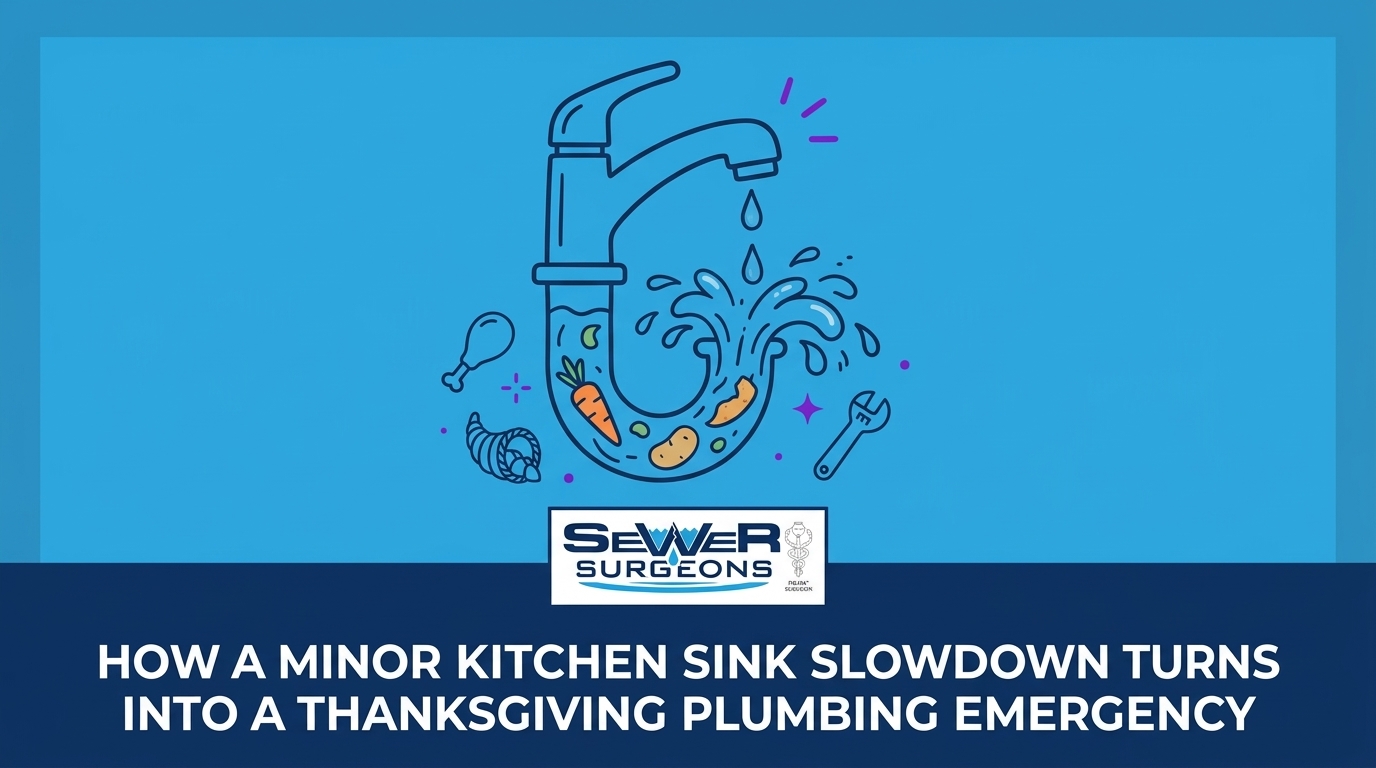
The Hidden Threat Beneath a Sluggish Autumn Drain
Mid-fall is officially here, and if you are wondering how a minor kitchen sink slowdown turns into a Thanksgiving plumbing emergency, the answer lies just out of sight beneath your floorboards. At Sewer Surgeons, our team typically sees a massive spike in emergency calls right as the holidays hit, and it almost always starts with a drain that was ignored in October. A drain that takes a few extra seconds to empty is easy to brush off as a minor annoyance. Water still goes down eventually, so you assume the pipes are functioning fine. However, as the season progresses, what seems like a small snag is actually the early warning sign of a severe main-line restriction. Ignoring this subtle warning sets the stage for a catastrophic backup when your plumbing system faces its highest stress test of the year. Understanding the hidden mechanics inside the pipes can help you make the right proactive decision before the holiday rush.
If you need professional help right now, explore our comprehensive plumbing services.
The Psychology of the “Good Enough” Drain
In our years of servicing plumbing systems across Chatham, we’ve noticed most homeowners fall into a predictable pattern during mid-fall. The days are getting shorter, holiday planning is beginning, and a slightly sluggish kitchen sink simply does not register as a priority. Because the sink is not completely stopped up, the problem feels manageable. You might run the garbage disposal a bit longer or run hot water for a few extra minutes, hoping the issue resolves itself.
This “out of sight, out of mind” mentality is exactly why autumn drain issues escalate so predictably. The symptoms are easily ignored, but the physical changes happening inside your plumbing infrastructure are compounding daily. A slow drain is never a static condition; it is always a progressive failure. By the time mid-fall rolls around, that minor delay in drainage is a direct indicator that the interior diameter of your pipe has been significantly compromised.
- Extended drainage times: What used to take five seconds now takes fifteen.
- Unusual noises: A faint gurgling sound after the water finally clears the basin.
- Lingering odors: A sour or organic smell that persists even after running the disposal.
- Intermittent backups: Water briefly pooling around the drain before slowly receding.
Recognizing these early warning signs in October is the key to preventing a full-scale disaster during Thanksgiving.
The Mechanics of FOG: Why Fats, Oils, and Grease Destroy Drainage
To understand why drains fail, you have to understand the primary enemy of residential plumbing: FOG (Fats, Oils, and Grease). FOG is a leading cause of residential drain blockages and sanitary sewer backups across the country. The danger of FOG lies in its deceptive nature. Cooking oils, bacon grease, and meat fats enter your drain as hot, free-flowing liquids. Because they pour so easily, it is incredibly common for homeowners to assume they will wash away just like water.
The Physical State Change
The problem begins the moment those hot liquids leave the heated environment of your kitchen sink and enter the cooler environment of your plumbing pipes. As these substances cool, they undergo a rapid physical change out of sight. The liquid fats coagulate, turning from a free-flowing substance into a dense, sticky paste. This paste clings stubbornly to the interior walls of the plumbing lines.
Once a foundational layer of grease coats the pipe, it acts like a sticky trap for everything else that goes down the drain. Coffee grounds, eggshells, fibrous vegetable scraps, and starchy food particles get caught in the grease matrix. This process gradually chokes off the pipe’s interior diameter. What was once a wide-open, three-inch channel slowly turns into a narrow, restricted pathway barely wide enough for a pencil.
The Thanksgiving Catalyst
This progressive narrowing explains why Thanksgiving is such a dangerous time for residential plumbing. For months, the pipe has been slowly closing up. Then, the holiday arrives. Heavy cooking volume introduces an overwhelming amount of butter, turkey fat, gravy remnants, and potato starch into a system that is already hanging by a thread. The restricted pipe simply cannot handle the sudden influx of debris and liquid, leading to an immediate and messy backup.
| Substance Type | Behavior in Pipes | Impact on Drainage |
|---|---|---|
| Liquid Cooking Oils | Coats walls and remains sticky | Traps lightweight food particles |
| Animal Fats (Butter, Lard) | Solidifies into hard, waxy blocks | Creates rigid structural blockages |
| Starches (Pasta, Potatoes) | Swells when exposed to water | Expands to fill the remaining pipe diameter |
| Fibrous Foods (Celery, Onion Skins) | Tangles around disposal blades and grease | Creates a net that catches other debris |
How Dropping Ground Temperatures Accelerate Subsurface Blockages
The Problem: You may notice that your kitchen sink seems to slow down much more noticeably in late autumn than it does during the summer months. This is not a coincidence; it is a direct result of seasonal climate changes affecting your home’s infrastructure. Exterior-facing and underground pipes are highly sensitive to seasonal temperature shifts.
The Cause: As average low temperatures in our Chatham NJ service area drop into the 30s, our technicians find that the ground surrounding your home’s subsurface plumbing cools rapidly. During the summer, the soil stays relatively warm, which means the pipes buried within it also retain some residual heat. This allows liquid grease to travel further down the line before it begins to coagulate. However, once the late autumn chill sets in, the thermal dynamics change completely. The chilled ground acts as a massive heat sink, pulling warmth away from the pipes. When warm liquid grease hits these newly chilled pipes, it flash-freezes and solidifies much faster than it does during the summer months.
The Solution: This rapid cooling effect transforms a slow, gradual buildup into a solid, impenetrable wall of grease in a matter of weeks. The grease does not even make it to the municipal sewer line; it hardens mere feet away from your kitchen sink, right where the pipe exits the conditioned space of your home. To combat this, homeowners must be hyper-vigilant about keeping FOG out of the drains as the weather cools, and seek professional scouring if the pipes have already been compromised by the dropping temperatures.
The Timeline: From a Minor Snag to a ‘Brown Friday’ Disaster
Understanding the progression of a clog can help you intervene before the situation requires emergency service. A main-line backup rarely happens overnight; it follows a predictable, escalating timeline that begins in mid-fall or October and culminates during the holiday season.
- Early Fall (The Warning Phase): The drain takes a few extra seconds to empty. You might notice that water pools slightly around the drain cover while washing dishes, but it still goes down. This is the stage where the initial layers of grease are coating the pipe walls, reducing the diameter by perhaps twenty to thirty percent.
- Mid-Season (The Symptom Phase): As November approaches, dropping temperatures accelerate the grease hardening. Bubbling sounds or foul, swampy odors begin to emerge from the drain. These gurgling sounds happen because air is trapped behind the narrowing blockage and is forced to bubble up through the standing water in the sink trap. At this point, the pipe’s capacity is severely restricted.
- The Holiday Catalyst (The Tipping Point): Thanksgiving arrives. The kitchen is in overdrive. Guests are helping clean up, and a massive volume of food scraps, turkey drippings, and dishwater is sent down the sink. The compromised system, which was barely handling normal daily use, is completely overwhelmed. The final layer of debris plugs the remaining narrow opening.
- The Aftermath (The Emergency Phase): The system completely fails. Water backs up into the sink, and in severe cases, running the dishwasher might cause dirty water to overflow onto the kitchen floor. The day after the holiday, famously known in the plumbing industry as “Brown Friday,” is consistently the busiest day of the year for our Sewer Surgeons emergency dispatch team.
By learning the secrets of keeping kitchen drains healthy, you can interrupt this timeline and keep your system flowing smoothly through the heaviest usage days of the year.

Why Superficial Fixes Fail Against Hardened Grease
When faced with a slow drain, the instinct for many homeowners is to reach for a bottle of liquid drain cleaner or a plunger. While these tools might seem like a quick fix, they are entirely ineffective against deep, hardened FOG blockages and can often make the situation worse.
The Danger of Chemical Cleaners
Chemical drain cleaners rely on caustic reactions to generate heat and dissolve organic matter. However, they often glide right over solidified grease, pooling at the bottom of the pipe without addressing the buildup on the walls. In best-case scenarios, they might burn a small, temporary hole through the center of the blockage, allowing water to drain slowly for a few days before the hole collapses in on itself again. In worst-case scenarios, the highly corrosive chemicals sit trapped against your pipe walls, generating intense heat that can warp PVC pipes or accelerate corrosion in older metal lines.
The Pitfalls of Plunging
Plunging is designed to dislodge simple, localized clogs (like a piece of food stuck in the P-trap). But when you are dealing with a massive grease restriction further down the line, plunging can actually push the solidified mass deeper into the main line. This compacts the grease, turning a partial restriction into a solid, impenetrable plug that is much harder—and more time-consuming—to reach.
The Need for Precision
Without visually inspecting the interior of the pipe, it is impossible to know how far the grease layer extends or how thick it has become. This is where professional intervention is required. At Sewer Surgeons, our technicians use surgical precision to diagnose exactly where the grease has solidified deep in the line. Using advanced camera inspections, we can pinpoint the exact location and severity of the blockage. Permanent resolution requires the physical removal of the buildup from the pipe walls, ensuring the entire diameter is restored, rather than just forcing a temporary bypass.
Proactive Drain Clearing: Securing Your System Before the Rush
The most effective way to handle a mid-fall or October drain slowdown is to address it before the holiday pressure hits. Scheduling a thorough drain cleaning before the holiday season ensures the pipes are restored to their full diameter, giving you peace of mind when hosting family and friends.
Professional Scouring Techniques
Unlike superficial DIY methods, professional equipment is designed to scour the interior walls of the plumbing, removing years of accumulated FOG. Techniques like hydro-jetting use high-pressure water streams to slice through hardened grease, emulsify the fats, and wash the debris completely out of the system. Professional-grade snaking tools can also scrape the pipe walls clean, ensuring that no sticky residue is left behind to catch future food scraps.
The Benefits of Early Action
Addressing the issue early eliminates the stress of potential backups while hosting guests. There is nothing more disruptive to a holiday gathering than a kitchen that is out of commission due to a flooded sink. Furthermore, taking action now means avoiding the premium emergency service rushes associated with holiday weekends. By relying on trusted local plumbers to inspect and clear your lines proactively, you secure your home’s infrastructure against the heaviest usage days of the year.
Frequently Asked Questions About Kitchen Drain Emergencies
Why does grease clog pipes faster in the winter?
Cold ground temperatures rapidly cool the pipes beneath the home, fundamentally changing how liquids behave inside the plumbing. Liquid fats and cooking oils solidify almost immediately upon contact with these cold surfaces, rather than flowing smoothly to the municipal sewer. This rapid coagulation creates a sticky foundation that traps other food debris, accelerating the formation of a severe blockage during the colder months.
How do you prevent a holiday plumbing emergency?
The most important rule is to never pour cooking oils, butter, or animal fats down the drain, regardless of how much hot water you run alongside them. Always scrape all plates, pots, and pans directly into the trash before washing or rinsing them in the sink. Finally, if you notice that your sinks are draining slowly in the weeks leading up to a major holiday, schedule proactive drain maintenance immediately rather than waiting for the system to fail.
What causes a slow kitchen drain in the fall?
A slow drain in the fall is typically caused by a combination of accumulated food debris and rapidly solidifying grease. Over months of heavy use, layers of FOG coat the interior of the pipes, causing a gradual narrowing of the pipe diameter. When the weather cools, this sticky layer hardens, catching passing debris more easily and turning what was once a minor restriction into a noticeable drainage delay.
What should you not put down a garbage disposal?
You should completely avoid putting fibrous vegetables (like celery and onion skins), coffee grounds, eggshells, and liquid fats into your disposal. Fibrous materials can tangle in the blades and slip past the grinding mechanism intact, while grounds and shells act like sand, building up heavy sediment in the P-trap. When these items combine with liquid fats, they create a dense, concrete-like sludge that contributes heavily to FOG buildup.
Can hot water melt grease in a drain?
Hot water may temporarily soften grease near the surface of the drain or inside the immediate P-trap. However, as the water travels deeper into the subsurface plumbing system, it rapidly loses its heat to the surrounding cold pipes. Once the water cools, the melted grease simply hardens further down the line, often relocating the blockage to a deeper, more difficult-to-reach section of your plumbing system.
Ensure a Stress-Free Holiday with Clear Drains
Don’t let a sluggish drain turn into a major disruption during your family gatherings this Thanksgiving. A sink that is slow to empty today is a warning sign that your plumbing system is struggling to keep up with daily demands. Take proactive steps now to ensure your plumbing system is fully prepared for the increased workload of the holiday season.
By addressing the hidden buildup of fats, oils, and grease before the rush, you protect your home from messy, stressful backups. Explore professional options to restore your pipes to peak condition, and be sure to check out our plumbing specials and coupons to get your system holiday-ready with confidence.