Understanding the Connection Between Your Laundry and Bathroom
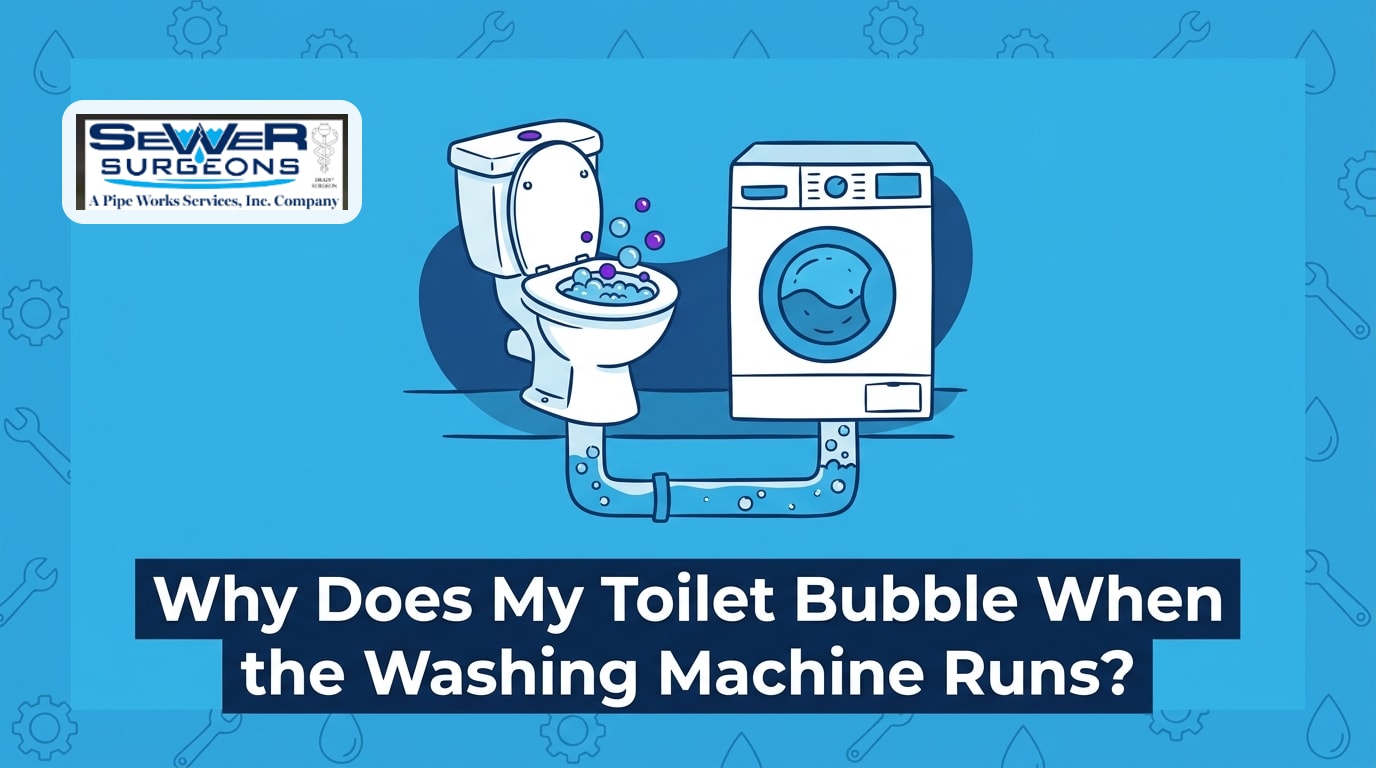
Why does my toilet bubble when the washing machine runs? It is a question that catches many homeowners off guard, usually accompanied by the unsettling sound of gurgling water echoing from the bathroom just as the laundry cycle finishes. When you hear this noise, your first instinct might be to grab a plunger, assuming there is a simple, localized clog in the toilet itself. However, this specific symptom is rarely an isolated issue. Instead, it is a clear indicator of a systemic drainage problem hidden deep within your home’s interconnected plumbing network.
Plumbing systems are designed to balance water flow and air pressure seamlessly. When a symptom in one room is triggered by an appliance in an entirely different part of the house, it means the shared hidden lines connecting them are compromised. Recognizing the early warning signs your sewer line needs attention is critical to preventing a much larger mess. Rather than relying on guesswork, securing a professional sewer video inspection provides the exact diagnostic clarity needed to address the root cause before a minor bubbling noise turns into a major property emergency.
The Hidden Mechanics: Shared Drain and Vent Lines
To understand why your washing machine affects your bathroom fixtures, you have to look behind the drywall and under the floorboards. Residential plumbing is not just a series of independent pipes; it is a carefully engineered network of shared drain lines and vent stacks. In most homes, the washing machine and the nearest bathroom typically share a common drain line that eventually leads out to the main sewer lateral in your yard.
Alongside the pipes that carry wastewater, your home also relies on a plumbing vent system. These vent pipes run vertically through your roof, allowing outside air to enter the plumbing system. This air pressure is what allows wastewater to flow smoothly down to the sewer without creating a vacuum. When the shared drain line or the vent stack is compromised by a partial blockage, the air pressure dynamics shift dramatically. The water has nowhere to go, and the air is forced to find a new escape route.
How Wet Venting Works in Residential Plumbing
Many homes utilize a concept known as wet venting. A wet vent is simply a pipe that is designed to carry both water and air simultaneously. For this system to work, the pipes must be properly sized and completely clear of debris.
Proper venting prevents the water seal in your toilet trap—the curved section of porcelain that holds water in the bowl—from being siphoned away or pushed out by displaced air. When a wet vent is functioning correctly, you will never hear a sound from your toilet while other appliances are running. The moment a blockage begins to form, that delicate balance of air and water is destroyed.
- The role of the trap: The water in your toilet bowl acts as a barrier, keeping hazardous sewer gases from entering your home.
- The role of the vent: The vent equalizes pressure so that rushing wastewater does not create a vacuum that sucks the trap dry.
- The point of failure: When a blockage restricts the pipe, trapped air is pushed backward, eventually breaking through the water seal in the toilet and causing the bubbling sound.
How the Washing Machine Acts as a Plumbing Stress Test
You might wonder why the bathroom sink or the shower does not cause the toilet to bubble, while the washing machine consistently triggers the issue. The answer lies in the sheer volume and speed of the water being discharged. Standard washing machines rapidly discharge 15 to 30 gallons of water during a single drain cycle. This massive, sudden influx of water acts as a high-intensity hydraulic stress test on your home’s drainage capacity.
Your toilet bubbles when the washing machine runs because they share a drain or vent line. When a partial blockage in the main sewer line restricts water flow, the rapid discharge of water from the washing machine pushes air back up through the plumbing system. This trapped air escapes through the path of least resistance: the toilet trap, causing the water to gurgle or bubble.
Lower-volume fixtures, like a bathroom faucet, simply do not produce enough water fast enough to overwhelm a partially blocked pipe. The washing machine’s heavy load exposes the vulnerability that other fixtures mask.
The Physics of Air Displacement
Water and air cannot occupy the same space at the same time. When 30 gallons of laundry water rushes into a drain pipe, it must displace an equal volume of air. In a healthy plumbing system, that air is pushed harmlessly down the sewer line or up through the roof vent.
If a partial blockage is acting like a dam inside the pipe, the water slows down, and the air is trapped. Because air is lighter than water, it travels backward up the pipe, seeking any available exit. The toilet bowl, with its relatively shallow water seal, offers the easiest escape route. The bubbling you see and hear is literally trapped sewer air forcing its way into your bathroom.

Why This Symptom Points to a Main Sewer Line Blockage
A bubbling toilet is rarely an isolated event; it is almost always a precursor to a much larger systemic failure. The main sewer line is the single exit point for all household wastewater. Every sink, shower, toilet, and washing machine ultimately feeds into this one central pipe. When you start noticing interactive symptoms between different rooms, it means the bottleneck is located in that shared main line.
It is important to clarify the difference between a total blockage and a partial blockage. A total blockage causes immediate, messy backups every time you run water. A partial blockage, however, is more deceptive. It allows a small amount of water to trickle through, which is why your daily showers might seem fine. But when hit with the heavy load of a washing machine, the partial clog cannot keep up, resulting in gurgling and bubbling. If you are constantly wondering why your toilet keeps clogging despite your best efforts with a plunger, a hidden main line restriction is the most likely culprit.
Recognizing a Partial vs. Full Blockage
Ignoring a partial blockage is a risky gamble. Over time, the debris causing the restriction will continue to accumulate until the pipe is completely sealed off. Understanding the progression can help you take action before a minor annoyance becomes a major disaster.
- Stage 1 – Slow Drains: Water takes slightly longer to empty from sinks and tubs.
- Stage 2 – Interactive Symptoms: High-volume appliances (like the washer) cause other fixtures (like the toilet) to gurgle.
- Stage 3 – Localized Backups: Water begins to back up into the lowest point of the house, usually a basement floor drain or ground-floor shower.
- Stage 4 – Full System Failure: No wastewater can exit the home, resulting in raw sewage backing up into multiple fixtures.
The Impact of Aging Cast-Iron Pipes and Tree Roots
The age and location of your home play a massive role in the health of your main sewer line. For example, in our years of experience serving Chatham, NJ, our team at Sewer Surgeons frequently encounters older colonial homes, particularly those built in the 1940s and 1950s, that still rely on their original cast-iron sewer laterals. Cast iron was the standard material for decades, but it has a functional lifespan of roughly 50 to 70 years. Today, we see these aging pipes acting highly susceptible to structural degradation, channeling, and cracking.
As cast-iron pipes corrode and crack, they create the perfect entry points for aggressive tree root intrusions. Tree roots are biologically driven to seek out moisture, oxygen, and nutrients—all of which are abundant inside a sewer line. Once a tiny root hair breaches a crack in the aging pipe, it quickly grows into a dense, net-like mass. This root mass catches toilet paper, grease, and soap scum, creating the exact type of partial blockage that causes a toilet to bubble during a laundry cycle. Addressing these deteriorating pipes through modern methods like trenchless pipe lining can restore the structural integrity of the line without destroying your landscaping.
How Roots Compromise Drainage Capacity
Even a relatively small root intrusion can severely impact your home’s drainage capacity. When preparing for November holiday-season home prep, increased household water usage from guests and cooking can quickly overwhelm a root-choked pipe.
The roots act as a biological filter, trapping solid waste while allowing liquid to slowly seep through. When the washing machine dumps 30 gallons of water in a matter of minutes, the root mass acts as a solid wall. The water rapidly backs up behind the roots, compressing the air in the pipe and forcing it up into your bathroom.
Professional Diagnostics vs. Temporary DIY Fixes
When faced with a bubbling toilet, the temptation to try a quick, inexpensive fix is high. However, DIY methods are not only ineffective for main sewer line issues, but they can also cause significant damage to your property. At Sewer Surgeons, we believe in providing straightforward, jargon-free explanations that prioritize your family’s safety and the long-term value of your home. In our daily field work, we have seen the disastrous results of DIY plumbing attempts, which is why our team always emphasizes reliable camera diagnostics over blind guesswork.
Pouring harsh chemical drain cleaners down your pipes is one of the worst things you can do for a main line partial clog. Chemicals cannot dissolve tree roots, and the caustic heat they generate can severely corrode and weaken aging cast-iron pipes. Similarly, renting a heavy-duty drain snake from a hardware store is incredibly risky. Without knowing exactly what is inside the pipe, a DIY snake can easily punch through the side of a degraded cast-iron lateral, turning a manageable clog into a catastrophic pipe collapse. Instead, professionals utilize advanced techniques like hydro jet drain cleaning, which safely scours the inside of the pipe using high-pressure water after a thorough visual inspection.
The Value of Seeing Inside the Pipe
Professional camera inspections eliminate the guesswork that leads to repeated, frustrating service calls. By sending a high-definition camera down the lateral, professionals can map the exact depth, location, and nature of the intrusion.
| Approach | Diagnostic Accuracy | Safety for Aging Pipes | Long-Term Reliability |
|---|---|---|---|
| Chemical Cleaners | Zero (Blind application) | Very Low (Causes corrosion) | Ineffective on roots and scale |
| DIY Snaking | Low (Relies on feel) | Low (Risk of pipe puncture) | Temporary (Leaves root mass behind) |
| Professional Camera Inspection | 100% Visual Confirmation | Completely Safe | Allows for permanent, targeted solutions |
Frequently Asked Questions About Gurgling Toilets and Drains
Why does my toilet gurgle when the washer drains?
Your toilet gurgles because the washing machine and the bathroom share a drain or vent line that has developed a partial blockage. When the washing machine rapidly discharges water, the blockage forces air backward through the pipes. This displaced air escapes through the water in your toilet trap, creating the gurgling sound.
Is a bubbling toilet a sign of a main line clog?
Yes, a bubbling toilet is one of the most common early warning signs of a partial main sewer line clog. Because the main line is the single exit route for all wastewater, a restriction there causes high-volume appliances to push air back into other fixtures. Ignoring this symptom often leads to a complete blockage over time.
Can a washing machine cause a toilet to back up?
Absolutely. If the partial clog in your main sewer line turns into a full blockage, the massive volume of water from the washing machine will have nowhere to go. It will seek the lowest open point in your plumbing system, which is frequently a ground-floor toilet or a basement shower drain, causing raw sewage to back up into your home.
How do you fix a gurgling toilet?
Fixing a gurgling toilet requires addressing the hidden blockage in the shared drain or vent line, not plunging the toilet itself. The most reliable solution is to have a licensed professional perform a video camera inspection of the main sewer line. Once the blockage—often tree roots or scale—is identified, it can be safely cleared using professional-grade equipment.
Is a bubbling toilet considered a plumbing emergency?
While a bubbling toilet might not be flooding your bathroom at this exact moment, it is an urgent warning sign that precedes a true plumbing emergency. It indicates that your drainage capacity is severely restricted. Continuing to use high-volume appliances while this symptom is present greatly increases the risk of an imminent sewage backup.
Why shouldn’t I just use a chemical drain cleaner for a bubbling toilet?
Chemical drain cleaners are entirely ineffective against the most common causes of main line blockages, such as tree root intrusions or heavy scale buildup. Furthermore, the harsh, caustic chemicals sit in the pipe and generate intense heat, which can rapidly accelerate the corrosion and failure of aging cast-iron sewer lines.
Secure Your Plumbing System Before Holiday Hosting
A bubbling toilet is not a random quirk of an old house; it is a mechanical cry for help from a plumbing system that is struggling to breathe. When you hear that gurgling sound during a laundry cycle, your home is warning you that the main sewer line is partially blocked and operating on borrowed time.
As we approach November holiday-season home prep, your household water usage is guaranteed to spike with extra guests, cooking, and cleaning. Our team at Sewer Surgeons frequently sees this added stress become the tipping point that turns a partial blockage into a devastating raw sewage backup. Do not wait for a complete system failure to take action. Scheduling a professional diagnostic camera inspection now will give you the peace of mind that your plumbing system is clear, secure, and ready to handle whatever the season brings.