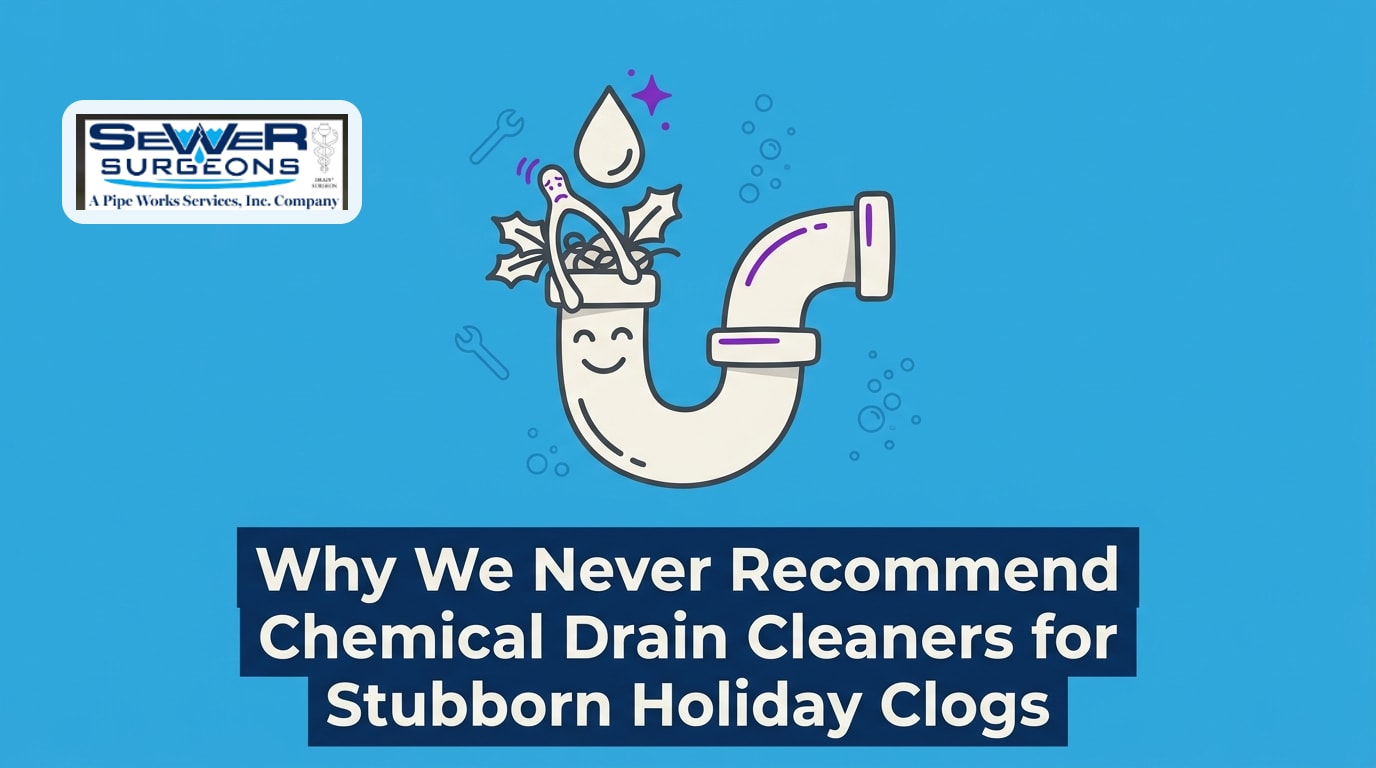
The Thanksgiving Kitchen Crisis: When Grease Meets Cold Pipes
Your kitchen sink is backing up, dirty water is pooling around the dishes, and the meal prep has suddenly ground to a halt. If you are standing over a clogged drain right now, you might be wondering exactly why we never recommend chemical drain cleaners for stubborn holiday clogs. During the peak of November/Thanksgiving holiday cooking, a blocked sink is incredibly stressful, and the immediate temptation is to reach for a store-bought jug of liquid drain cleaner to quickly force the plumbing back into action.
However, pouring harsh commercial chemicals into a heavy grease clog creates a highly dangerous environment inside your plumbing infrastructure. These caustic substances do not simply dissolve a dense blockage and wash away. Instead, they become trapped against the impenetrable wall of congealed food waste, initiating a violent reaction that can severely damage both modern and historic pipe materials.
Understanding home plumbing basics is the first step in protecting your pipes from irreversible damage when holiday cooking overwhelms your system.
The Anatomy of a November Grease Clog
Holiday cooking generates plumbing challenges that standard daily maintenance simply cannot handle. The sheer volume of fats, oils, and grease (often referred to in the plumbing industry as FOG) produced by roasting turkeys, simmering gravies, and preparing heavy, butter-laden side dishes is staggering. When these warm liquids are poured down the kitchen sink, they may initially flow smoothly through the drain assembly. However, that liquid state is highly temporary.
In Chatham, NJ, late fall and winter temperatures cause the ambient temperature of exterior or poorly insulated pipes to drop significantly. When warm liquid grease travels down the drain and encounters these freezing pipes, it undergoes a rapid phase change. The fats instantly solidify, binding with food scraps, coffee grounds, and other debris to create an exceptionally stubborn, impenetrable wall.
Key differences between holiday grease clogs and standard blockages:
- Density: Unlike hair or soap scum, which remains somewhat porous, congealed animal fat forms a solid, watertight seal across the entire diameter of the pipe.
- Temperature sensitivity: Grease clogs are highly reactive to ambient temperatures, hardening further as the surrounding soil or crawlspace air cools.
- Length of blockage: FOG can coat the interior walls of a pipe for several feet before finally closing off completely, meaning the clog is not just a localized plug, but a long stretch of restricted flow.
Knowing where drain clogs typically start helps clarify why a massive influx of November/Thanksgiving holiday cooking grease overwhelms the system so quickly.
How Exothermic Heat Warps Modern PVC Plumbing
The Problem: When a homeowner pours a commercial drain cleaner into a completely blocked sink, the chemical cannot flow through the system. It sits directly on top of the solid grease plug, filling the pipe with highly concentrated, caustic liquid.
The Cause: The active ingredients in most store-bought drain cleaners, such as sodium hydroxide (lye) and sometimes shards of aluminum, are designed to create an intense exothermic chemical heat reaction when they interact with water and organic matter. This reaction is intended to burn through the blockage. However, this exothermic chemical heat reaction frequently generates internal pipe temperatures exceeding 200 degrees Fahrenheit. Standard modern PVC plumbing pipes, which are used in the majority of contemporary residential drainage systems, have a maximum recommended operating temperature of only 140 degrees Fahrenheit.
The Solution: Because the chemical is trapped by the grease clog, this extreme heat is sustained in one localized area of the PVC pipe for an extended period. The plastic quickly softens, warps, and loses its structural integrity. The glued joints holding the pipe sections together begin to melt and fail, causing toxic leaks inside walls or under cabinets. The only way to prevent this specific type of thermal damage is to completely avoid introducing exothermic chemicals into a blocked PVC system.

The Hidden Corrosion Risk for Older Cast Iron Systems
While modern homes face the risk of melting PVC, older properties face an entirely different, yet equally destructive, threat from chemical drain cleaners. Many older homes rely on cast iron plumbing systems for their main drainage lines. Cast iron is incredibly durable under normal conditions, but it reacts very poorly to stagnant, highly concentrated acids or bases.
When a heavy grease clog stops the flow of water, the chemical drain cleaner pools at the bottom of the horizontal pipe. Because the dense liquid is heavier than water, it settles directly against the cast iron surface. The same exothermic chemical heat reaction that melts plastic will aggressively accelerate the oxidation and degradation of the metal.
The stages of localized cast iron corrosion:
- Pooling: The caustic liquid settles against the bottom channel of the pipe, trapped by the grease.
- Chemical etching: The intense pH levels strip away any protective oxidized layers, exposing raw iron.
- Accelerated deterioration: The sustained presence of the chemical slowly eats away at the metal, thinning the pipe wall.
- Structural failure: The bottom of the pipe eventually rots out completely, allowing raw sewage and wastewater to leak directly into the soil or crawlspace.
What began as a routine kitchen backup can quickly escalate into a catastrophic structural failure requiring extensive pipe replacement, trenching, and environmental cleanup.
The Illusion of a Clear Drain: Why Melting Grease Fails
One of the most frustrating aspects of using chemical drain cleaners on heavy fats is the false hope they provide. A typical pattern we see is a homeowner pouring a bottle of gel cleaner down the drain, waiting an hour, and noticing that the standing water slowly begins to recede. It appears as though the problem is solved, but the reality is much worse.
The intense heat generated by the chemical often manages to temporarily melt just the very top layer of the grease clog, or it burns a tiny, narrow channel through the center of the blockage. This allows the backed-up water to slowly drain away. However, the melted, liquefied grease simply moves a few feet further down the plumbing system, moving further away from the warm interior of the house.
Once that liquid fat reaches an even colder section of the main sewer line, it rapidly cools and re-solidifies. The grease has not been removed from the system; it has merely been relocated to a harder-to-reach area. This newly formed blockage is often much denser, mixed with the caustic chemicals, and located deep underground where it is significantly harder to clear. This cycle of temporary melting and deep re-solidification is exactly what turns minor sink backups into massive kitchen sink slowdowns during Thanksgiving.
A Surgical Approach to Drain Cleaning
When dealing with dense, cold-weather blockages, blunt chemical damage is never the answer. Instead, the situation requires a precise, surgical approach. At Sewer Surgeons, our brand philosophy is built on contrasting the destructive, unpredictable nature of chemical acids with the precision of surgical mechanical interventions. We focus on diagnosing the exact location and composition of the clog, and then physically removing it without causing collateral damage to the home’s infrastructure.
Mechanical drain cleaning involves the use of specialized physical tools to break apart, scrape away, and extract the blockage. By physically removing the hardened fats and food scraps from the system entirely, we eliminate the root cause of the backup. There is no extreme heat, no toxic fumes venting into your kitchen, and absolutely no risk of chemical burns to your plumbing joints.
| Feature | Chemical Drain Cleaners | Surgical Mechanical Cleaning |
|---|---|---|
| Mechanism of Action | Relies on an unpredictable exothermic chemical heat reaction. | Physical extraction and targeted scraping of pipe walls. |
| Effect on Grease | Temporarily melts grease, pushing it deeper into the system. | Completely removes fats, oils, and food waste from the pipe. |
| Impact on Pipes | High risk of warped PVC, melted joints, and corroded cast iron. | Safe for all pipe materials; protects structural integrity. |
| Safety Profile | Generates toxic fumes and poses severe burn risks. | No harsh chemicals, fumes, or thermal dangers. |
For severe grease buildup that has coated the entire interior of the pipe, professional hydro jet drain cleaning offers an advanced surgical solution, using highly pressurized water to scour the pipe walls clean and flush the debris safely into the municipal sewer.
Safely Resolving the Blockage Without Chemical Damage
When a heavy grease clog forms during the peak of November/Thanksgiving holiday cooking, physical extraction is the only permanent, safe fix. The very first step you should take when you notice a backup is to completely shut off water usage to the affected sink. Do not run the dishwasher, and do not attempt to flush the drain with more hot water, as this will only increase the volume of standing water and potential overflow.
Professional intervention typically involves two primary mechanical methods. Simple mechanical snaking utilizes a flexible steel cable with a specialized cutting head to physically bore through the clog, breaking up the dense fat and retrieving food debris. For older pipes heavily coated in years of grease, advanced high-pressure water clearing (hydro jetting) may be required to restore the pipe to its original diameter.
When to Call in the Experts
It is time to call a professional when standard household methods fail. If a basic sink plunger is no longer effective at moving the water, the clog has likely solidified deep within the line. Professional-grade tools are strictly required for dense, cold-weather grease blockages. Because improper use of mechanical augers can damage pipe traps or push a clog tighter, this work requires a licensed professional. Attempting risky DIY methods or pouring chemicals into the standing water will only complicate the eventual repair.
Understanding the difference between mechanical snaking and hydro jetting ensures you get the right surgical solution for your specific plumbing architecture.
Protect Your Plumbing This Holiday Season
Avoiding store-bought chemical cleaners is the single most important decision you can make to save your pipes from severe heat warping and corrosive damage. When the stress of November/Thanksgiving holiday cooking leads to a sudden kitchen backup, relying on a scientifically grounded, mechanical approach ensures the problem is permanently resolved without destroying your home’s infrastructure.
By opting for professional, surgical extraction of grease and food waste, you keep your kitchen running smoothly and safely. If your sink is slowing down or completely blocked, reach out to schedule a precise, mechanical clearing service to restore your plumbing before the next holiday gathering.
Frequently Asked Questions
Why do plumbers advise against chemical drain cleaners?
Plumbers advise against chemical drain cleaners because they rely on violent exothermic reactions that can severely damage pipes. These caustic liquids generate extreme heat that warps modern PVC pipes and causes localized, rapid corrosion in older cast iron lines. Furthermore, they are highly toxic, posing a severe chemical burn risk to any professional who later has to open the pipe to clear the remaining blockage.
Do chemical cleaners melt PVC pipes?
Yes, chemical cleaners can easily melt and warp standard PVC pipes. The active ingredients, such as sodium hydroxide, create an exothermic chemical heat reaction that frequently exceeds 200 degrees Fahrenheit when trapped against a clog. Because standard residential PVC has a maximum safe operating temperature of around 140 degrees Fahrenheit, this sustained heat softens the plastic and degrades the glued joints, leading to leaks.
How do you clear a grease clog safely?
The only safe way to clear a solid grease clog is through physical, mechanical extraction. This involves using professional plumbing augers (snakes) to bore through and pull out the dense fats, or utilizing high-pressure hydro jetting to scour the pipe walls clean. These mechanical methods remove the blockage entirely without introducing dangerous heat or corrosive acids into your plumbing system.
Can I use chemical drain cleaner in a kitchen sink?
It is highly discouraged to use chemical drain cleaners in a kitchen sink, especially for food and grease blockages. Kitchen clogs are primarily composed of fats, oils, and grease (FOG) which do not dissolve well in chemicals; instead, the heat often just temporarily melts the grease, pushing it deeper into the cold pipes where it re-solidifies into a much harder, inaccessible clog.
Why do holiday cooking clogs seem harder to clear than normal blockages?
Holiday cooking clogs are exceptionally difficult because they involve massive volumes of dense animal fats and heavy food scraps entering the system all at once. During the late fall and winter, exterior pipes are cold, causing these large volumes of warm liquid grease to instantly flash-freeze into a solid, concrete-like wall that standard plunging cannot break.
What should I do if I already poured a chemical cleaner down my clogged drain?
If you have already poured a chemical cleaner and the drain is still blocked, stop using the sink immediately and do not pour any additional products, including boiling water, into the drain. Call a licensed plumber and explicitly inform them that chemicals are present in the standing water. This allows the technician to bring the proper protective safety gear to prevent severe chemical burns when they open the pipe to perform a mechanical extraction.