
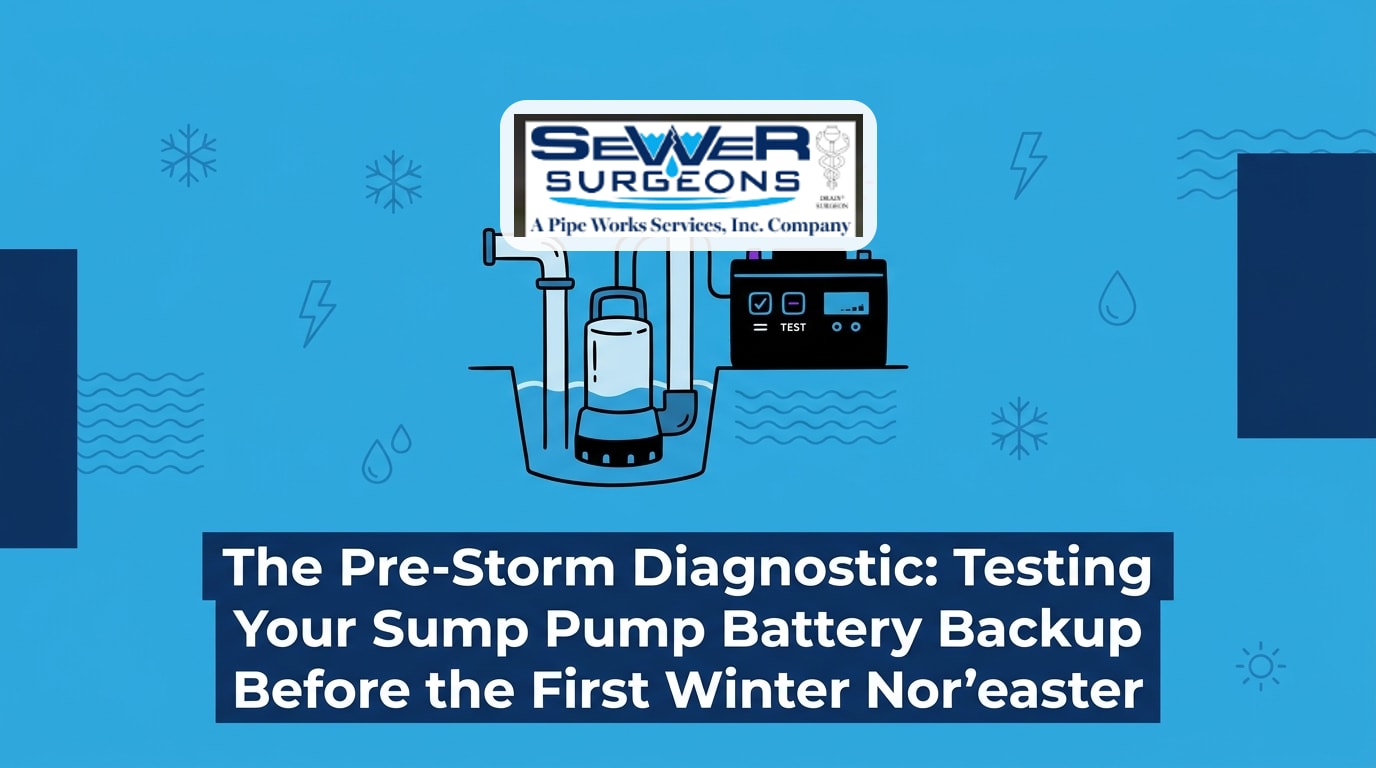
The Dual Threat of Winter Storms and Power Grid Failures
November marks the beginning of peak Nor’easter season, and your home is about to face one of the most severe weather combinations nature can throw at it. As temperatures drop and the first winter storms begin brewing off the coast, the threat to your home shifts dramatically. Heavy freezing rain and high, grid-stressing winds create a dual threat that targets the most vulnerable parts of your property. If your primary sump pump loses power during a torrential downpour, the water does not simply stop rising. For homeowners relying on a dependable system, navigating these seasonal shifts means understanding when a simple tune-up is enough, or when you might need a sump pump replacement before disaster strikes.
A November pre-winter Nor’easter brings intense precipitation that rapidly saturates the ground around your foundation. At the exact moment your primary pump is working its hardest to keep that water at bay, ice accumulation and gale-force winds frequently snap power lines. This leaves your home completely dependent on its battery backup system. Without a functional backup, the lowest levels of your home are left entirely defenseless against rising groundwater.
The vulnerability of finished basements during these events cannot be overstated. A primary pump failing during a freezing rain power outage is a concrete problem that leads to thousands of dollars in ruined drywall, destroyed flooring, and lost personal items. The critical decision point for any homeowner is to proactively test and verify the backup system right now, before the storm hits. The goal is a safe, non-DIY-violating verification process that gives you absolute confidence in your home’s defenses.
Why Freezing Rain Makes Battery Backups Non-Negotiable
Many homeowners mistakenly associate sump pump failures exclusively with spring thaws and heavy summer thunderstorms. However, winter storms present a uniquely dangerous environment. When a November pre-winter Nor’easter hits Chatham NJ and the broader Northeast, it brings a punishing mix of freezing rain and heavy, wet snow. This specific type of precipitation doesn’t just sit on the surface; it melts, runs off, and forcefully saturates the soil directly against your foundation.
As the premier plumbing and sewer experts in the region, we see the aftermath of these winter grid failures firsthand. Winter storms often bring simultaneous power loss and aggressive water intrusion. Unlike a summer thunderstorm where power might flicker and return in an hour, winter outages caused by downed, ice-covered lines can last for days. This makes a reliable battery backup not just a luxury, but a non-negotiable insurance policy for your home.
The Anatomy of a Winter Grid Failure
Understanding how freezing rain impacts the power grid helps explain why backup systems are so vital. When freezing rain falls, it coats power lines, tree branches, and transformers in a thick layer of heavy ice. Just a half-inch of ice accumulation can add hundreds of pounds of extra weight to a single span of power line. When high winds from a Nor’easter hit these weighted lines, they snap.
Utility companies face massive hurdles during these events. Icy roads, reduced visibility, and widespread damage mean that utility response times are severely delayed. You cannot count on the grid coming back online before your sump pit overflows. Your backup battery is the only thing standing between the rising water and your Chatham NJ finished basements.
Protecting the Finished Basement Environment
The rate at which a sump pit fills during heavy winter precipitation is staggering. Depending on your home’s footprint and the local water table, a pit can overflow in less than thirty minutes once the primary pump stops ejecting water. The resulting damage is rapid and extensive.
Water intrusion in a finished space destroys baseboards, warps laminate and hardwood flooring, and wicks upward into drywall. Beyond the immediate structural damage, the lingering moisture creates an environment ripe for mold growth. A fully charged, functionally tested battery backup system ensures that even when the neighborhood goes dark, your foundation remains dry and secure.
| Weather Event | Primary Risk Factor | Power Grid Threat Level | Sump Pump Impact |
|---|---|---|---|
| Spring Thaw | Rapid snowmelt and saturated ground | Low (Outages are rare) | High volume, continuous cycling |
| Summer Thunderstorm | Flash flooding and heavy downpours | Moderate (Lightning strikes) | Sudden spikes in water volume |
| Winter Nor’easter | Freezing rain, snowmelt, and high winds | Severe (Ice accumulation snaps lines) | High volume combined with prolonged power loss |
Safe, Homeowner-Approved Visual Inspections
Before you even think about pressing buttons or handling equipment, you must start with a visual inspection. Water and electricity are a dangerous combination, and observing your system requires surgical precision—looking closely for subtle signs of wear without engaging in risky DIY meddling. You should never touch exposed wires, attempt to dismantle the pump housing, or open sealed electrical boxes.
Your visual diagnostic is about gathering information safely. By checking the physical condition of the backup system, you can identify obvious red flags before a November pre-winter Nor’easter puts the system to the ultimate test. Follow this safe, homeowner-approved checklist to evaluate your equipment’s readiness.
- Check the indicator lights: Look at the control panel on your backup system. You want to see a solid green light, which typically indicates the battery is fully charged and ready. Flashing lights, red lights, or yellow warning indicators mean the system requires attention.
- Inspect the battery terminals visually: Shine a flashlight on the top of the battery where the cables connect. Look for white, crusty acid corrosion or buildup around the posts. Do this without touching the terminals. Heavy corrosion restricts electrical flow and can prevent the pump from drawing power when it needs it most.
- Verify the battery box placement: Ensure the protective box housing the battery is clean, entirely dry, and securely positioned above the floor level. It should never sit directly on a damp basement floor where ambient moisture can degrade the connections.
- Examine the wiring exterior: Look at the protective sheathing on the cables running from the battery to the pump and the control unit. Ensure there are no visible frays, bite marks from pests, or pinch points.
- Check the discharge pipe: Follow the pipe visually from the pump to the wall exit. Ensure the check valve (the inline device that stops water from flowing backward into the pit) looks physically intact with no signs of leaking or weeping at the joints.

How to Safely Run a Backup System Test Cycle
Once your visual inspection is clear, the next diagnostic step is verifying that the mechanical components actually work. Most modern systems are designed with user-friendly testing features that allow you to confirm operation without touching live electrical parts. Running a controlled test cycle is the best way to stop flooding with sump pumps before an emergency actually happens.
This process simulates a power outage and forces the backup pump to engage. It is crucial to run this test when you can actively monitor the results, rather than waiting for Chatham NJ finished basements to flood during a midnight storm.
- Locate the dedicated ‘Test’ button: Find the control panel for your backup system. There should be a clearly marked button labeled “Test” or “System Test.” Do not unplug the primary pump from the wall to simulate an outage, as handling high-voltage cords near a water pit carries unnecessary risk.
- Press and hold the button: Follow the manufacturer’s guidelines printed on the control box. Usually, this requires holding the button down for three to five seconds to initiate the brief test cycle.
- Observe the water discharge: As the backup pump engages, watch the water level in the pit. You should see the water level drop as the backup pump successfully ejects the water through the discharge pipe.
- Confirm the system resets: Once you release the button (or the automated test cycle ends), ensure the backup pump shuts off completely. The indicator lights should return to their normal, solid green standby status.
Listening for Mechanical Readiness
The sound of success: When the backup pump kicks on, listen closely to the motor. You want to hear a smooth, consistent humming sound. This indicates that the impeller is spinning freely and the motor is receiving adequate voltage from the battery.
The sound of trouble: If you hear a grinding noise, a struggling low-pitched hum, or a rattling sound, the pump is in distress. This could mean debris is caught in the impeller, the bearings are failing, or the battery is not delivering enough amperage to turn the motor under load. A swift, quiet water discharge is the hallmark of a healthy system ready to face a winter grid failure.
Understanding Battery Lifespan and Outage Capacity
One of the most common misconceptions homeowners have is that a backup battery will last forever as long as it stays plugged into the wall. In reality, the power source is the most vulnerable component of your entire flood prevention strategy. Exploring battery backup systems for sump pumps requires a clear understanding of chemical degradation and lifespan limits.
Marine deep-cycle or AGM (Absorbent Glass Mat) backup batteries typically require replacement every 3 to 5 years. Even if the battery has never been used during an actual outage, the constant trickle-charging process slowly degrades its internal lead plates. Over time, the battery loses its ability to hold a deep charge.
The age of the battery directly impacts its charge capacity and run time during an outage. A brand-new battery might run your backup pump continuously for several hours, or intermittently for a few days. However, a battery that is four years old might only hold enough capacity to run the pump for thirty minutes before dying completely. When a November pre-winter Nor’easter knocks out the power for 48 hours, that diminished capacity is a recipe for disaster.
Variables that affect run time:
- Cycle frequency: How often the pump needs to turn on. Heavy freezing rain will cause the pit to fill faster, forcing the pump to cycle more frequently and draining the battery quicker.
- Head height: The vertical distance the pump must push the water to exit the house. A higher lift requires more electrical energy per cycle.
- Battery age: Older batteries deplete exponentially faster under heavy loads.
Always check the date code sticker on your battery. If the battery is approaching its fourth birthday, it is nearing the end of its reliable life. Proactive replacement is drastically cheaper than repairing a flooded basement.
Red Flags That Require a Professional Diagnostic
While visual checks and pressing the test button are perfectly safe for homeowners, there is a strict boundary you must respect. Attempting DIY electrical repairs on a system that mixes high voltage, standing water, and DC battery current is incredibly dangerous. When your diagnostic checks uncover a problem, it is time to call in a licensed professional.
Treating the system with surgical precision means knowing when to step back. The goal is to ensure the equipment performs flawlessly when the grid drops, and that requires expert diagnostic care. If you spot any of the following red flags, professional intervention is the safest way to guarantee readiness before a major storm threatens your Chatham NJ finished basements.
- Flashing red indicator lights: This usually means the battery is failing to hold a charge, the charging circuit is broken, or there is a fault in the pump motor.
- Persistent beeping alarms: A continuous or rhythmic beep from the control panel is a universal distress signal. It often indicates low battery voltage or a blown internal fuse.
- Failure to engage during a test: If you press the test button and nothing happens, or you hear a click but the pump does not run, the system is fundamentally compromised.
When to Call for Expert Help
Do not attempt to rewire the system. Never try to replace corroded battery terminals yourself, splice cables, or open the pump housing. Handling live electrical components in a damp environment is a severe safety hazard.
A professional diagnostic goes far beyond a visual check. A licensed expert will perform a true load-test on the battery to measure its exact remaining capacity under stress. They will check the float switch calibration to ensure it activates at the precise water level required. Finally, they will inspect the check valve and discharge line for hidden blockages. If your battery is older than 5 years, regardless of what the current indicator lights say, schedule a professional replacement to secure your home.
Frequently Asked Questions About Winter Sump Pump Readiness
How do I know if my sump pump battery backup is working?
The safest way to know is by checking the control panel for a solid green status light and running a manual test cycle. Press and hold the dedicated test button on your control unit until the backup pump engages. You should hear the motor run smoothly and see the water level in the pit drop rapidly. If the test button yields no response or the pump sounds like it is grinding, the system requires professional attention before a November pre-winter Nor’easter arrives.
How long does a sump pump battery backup last in an outage?
A healthy, fully charged battery backup typically lasts for several days of intermittent cycling, or roughly 5 to 7 hours of continuous pumping. The exact duration depends heavily on how fast the freezing rain is filling your pit and the age of the battery itself. Older batteries lose their charge capacity quickly, which is why monitoring the age of your power source is critical during winter storm season.
Will a sump pump work without power?
A standard primary sump pump will not work without grid power, leaving your basement completely unprotected during an outage. This is why a dedicated battery backup system is essential. The backup system features its own separate pump and DC power supply, automatically taking over the moment the main power fails to keep the pit empty.
How often should a sump pump battery be replaced?
Industry standards recommend replacing your backup battery every 3 to 5 years to guarantee reliable performance. Even if the battery has never been drained during an actual power outage, the constant trickle-charging process degrades its internal components over time. Checking the date code on the battery casing is the best way to track its lifespan.
Can freezing rain cause my sump pump discharge pipe to freeze?
Yes, prolonged freezing rain and dropping temperatures can cause the water inside an improperly sloped discharge pipe to freeze solid. When this happens, the pump will run continuously but cannot push water out, leading to motor burnout and basement flooding. Ensuring the exterior pipe has a proper downward slope and is clear of snow drifts is a vital part of winter readiness.
Secure Your Finished Basement Before the Grid Goes Down
The dual threat of heavy freezing precipitation and severe, wind-driven power grid failures makes winter an incredibly high-risk season for your home. Safe, proactive testing of your backup system is the absolute best defense against catastrophic water damage. By performing a visual inspection and running a basic test cycle, you can catch glaring issues before the storm hits.
However, if your battery is aging, your indicator lights are flashing, or you simply want absolute peace of mind, do not leave it to chance. Protect your Chatham NJ finished basements by scheduling a professional diagnostic today. Ensure your system has the surgical precision required to perform flawlessly when the power goes out.