A clogged drain in a single-family home usually stays contained to one house. In an apartment building, condo complex, or duplex, that same clog can back wastewater into several units at once. That’s because most multi-family properties share a single main sewer lateral that runs from the building out to the municipal line. Every toilet, sink, and shower on that property ties into the same pipe.
When grease, roots, or debris block that shared line, wastewater has nowhere to go but back up through the lowest drains in the building. That’s often a basement laundry room, a ground-floor unit, or a shared utility space. Property owners and managers searching for a fix want to know how to stop this from happening again, not just how to clean up after it happens.
This is where hydro jetting in Chatham, NJ becomes a practical answer. Sewer Surgeons uses high-pressure water jetting to clear shared building laterals before they back up, and to respond quickly when they already have.
What Makes Multi-Family Sewer Lines More Vulnerable
A single-family sewer line handles waste from one household. A multi-family line handles the combined waste from every unit connected to it, often running for decades before anyone inspects it closely.
Grease and Food Waste From Multiple Kitchens
Every kitchen that drains into a shared line adds grease, oil, and food particles to the pipe. Over time, these substances coat the interior pipe wall. As more layers build up, the open space inside the pipe narrows, and water flow slows down. In a building with ten or more units, this buildup happens faster than it would in a single home.
Root Intrusion in Older Underground Lines
Sewer pipes installed decades ago often have joints where tiny amounts of moisture escape. Tree roots are drawn to that moisture and grow directly through those joints, sometimes filling a section of pipe with root mass. Once roots take hold, they continue to expand and catch debris, narrowing the line further with each passing season.
Wipes, Paper Products, and Non-Flushable Materials
Even products labeled “flushable” often do not break down the way toilet paper does. In a building with many residents, small amounts of these materials add up over time and can combine with grease to form solid blockages inside the line.
Pipe Scale and Sediment Buildup
Older cast iron and clay pipes develop interior scale as minerals in wastewater settle and harden along the pipe wall. This scale reduces the pipe’s interior diameter the same way grease does, and it can also create rough surfaces where debris catches and accumulates.
How Hydro Jetting Clears a Line Before It Backs Up
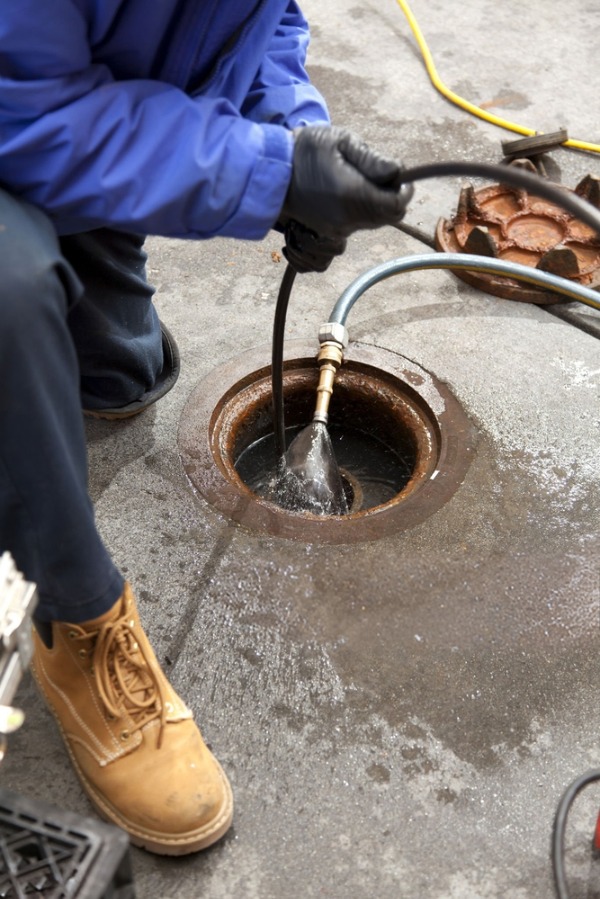
Hydro jetting uses a high-pressure water hose fed through the pipe to break apart and flush out grease, roots, scale, and debris. Professional-grade hydro jetting equipment typically operates in the range of 1,500 to 4,000 pounds per square inch, with pressure and nozzle type adjusted based on the pipe’s material and the type of blockage.
Unlike a cable or auger, which cuts a channel through a clog, sewer hydro jetting scours the entire interior wall of the pipe. This removes buildup along the full diameter of the line rather than punching a narrow path through the center. For shared building laterals that carry waste from many units, this distinction matters. A cabled line can clog again within weeks if grease and scale remain coating the walls. A jetted line starts closer to its original open diameter.
Scheduled Maintenance Versus Emergency Response
Property owners generally need two different types of hydro jetting service.
Scheduled hydro jetting services clear buildup before it becomes a blockage. Many property managers set these visits on a yearly or twice-yearly basis, timed around known problem seasons such as after leaf drop in autumn, when root activity and debris intake both increase.
Emergency hydro jetting responds to an active backup, when wastewater is already surfacing in a unit or common area. Speed matters here. The longer a shared line stays blocked, the more units back up and the more contaminated water needs remediation. Sewer Surgeons offers emergency services for exactly this situation, arriving to clear the line and stop the backup from spreading to additional units.
Local Conditions That Affect Chatham Area Sewer Lines
Chatham and the surrounding Morris County communities include a mix of older housing stock and mature, tree-lined streets. Underground sewer laterals installed decades ago in these neighborhoods are more likely to have the aging joints that allow root intrusion. Mature trees planted close to sidewalks and yards send roots toward any available moisture source, including small gaps in older clay or cast iron pipe.
Seasonal freeze-thaw cycles in North Jersey also stress older pipe joints over years of expansion and contraction. Combined with heavier storm runoff during spring rains, these factors put extra demand on shared building laterals that may already be carrying scale or root buildup. Multi-family properties in this area benefit from periodic high-pressure hydro jetting to keep these older lines clear rather than waiting for a full backup.
Warning Signs Property Owners Should Not Ignore
A shared line rarely blocks without warning. Common signs include:
- Slow drains in more than one unit at the same time
- Gurgling sounds coming from toilets or floor drains
- Sewage odor near basement drains or cleanout access points
- Backups appearing repeatedly in the same low-lying unit or common area
When these signs show up in multiple units around the same time, the shared lateral is the most likely source, not an individual unit’s plumbing.
What to Look for in Hydro Jetting Contractors
Multi-family properties benefit from contractors who pair hydro jetting with camera inspection, so the technician can see the pipe’s actual condition before and after the service. This confirms whether the blockage was fully cleared and identifies any sections of pipe with damage that jetting alone cannot fix, such as a collapsed or offset joint.
Insurance coverage matters as well. A shared building lateral runs through multiple units and common areas, so any contractor working on that line should carry insurance that covers work in an occupied, multi-tenant building.

Frequently Asked Questions
- How often should a multi-family property schedule hydro jetting?
Many properties benefit from service once or twice a year, though buildings with mature trees nearby or a history of grease buildup may need more frequent visits.
- Is high-pressure hydro jetting safe for older pipes?
Technicians adjust water pressure and nozzle type based on the pipe’s age and material, and a camera inspection beforehand helps confirm the line can handle jetting safely.
- What’s the difference between hydro jetting and snaking a drain?
Snaking cuts a path through a clog, while hydro jetting scours the entire interior wall of the pipe to remove buildup along its full diameter.
- How quickly can emergency hydro jetting stop an active backup?
Response time depends on the severity of the blockage and how much of the line is affected, though clearing the blockage itself typically takes place during the same visit once the technician arrives.
Getting a Shared Line Cleared and Kept That Way
A blocked building lateral affects every unit connected to it, which makes fast, thorough clearing the priority once wastewater starts backing up. Sewer Surgeons provides emergency services for active backups and fully insured technicians for work inside occupied multi-family buildings, backed by a 100% guaranteed satisfaction on every job. Reach out to us to talk through what your building’s line needs, whether that’s an emergency response today or a maintenance plan going forward.