
The Hidden Autumn Threat Beneath Chatham’s Wooded Streets
October brings crisp air and brilliant foliage to the Northeast, but it also triggers a massive, invisible plumbing crisis. If you want to know exactly why autumn leaves in Chatham are your sewer line’s worst enemy, the answer lies just inches beneath your lawn. While most homeowners spend their weekends diligently clearing their roof gutters and raking their yards during the peak fall season, our team at Sewer Surgeons knows that a much more severe threat is accumulating deep underground.
When decomposing organic matter builds up inside your plumbing infrastructure, professional hydro jet drain cleaning is often the only way to restore your home’s wastewater flow.
The sheer volume of deciduous foliage dropping from mature oak, maple, and sycamore trees creates an overwhelming amount of organic debris. Heavy autumn rains act as a vehicle, washing dense, wet leaves directly into vulnerable plumbing systems. Recognizing this hidden infiltration early is the key to preventing a catastrophic backup before winter freezing sets in. Addressing these seasonal clogs requires understanding the precise mechanics of your specific plumbing infrastructure, especially in the older Chatham neighborhoods where our crews spend most of their time.
The Unseen Journey from Lawn to Pipe
It is easy to assume that leaves simply decompose on the grass or blow into the street. However, the reality of gravity and water flow paints a different picture. Your property has multiple access points to the underground sewer system, many of which sit flush with the ground or are exposed to the elements. When a heavy storm rolls through, it sweeps up hundreds of pounds of wet foliage, carrying it toward the lowest points on your property. This relentless flow forces debris into places it was never meant to go, setting the stage for severe blockages.
How Fallen Leaves Infiltrate Underground Sewer Laterals
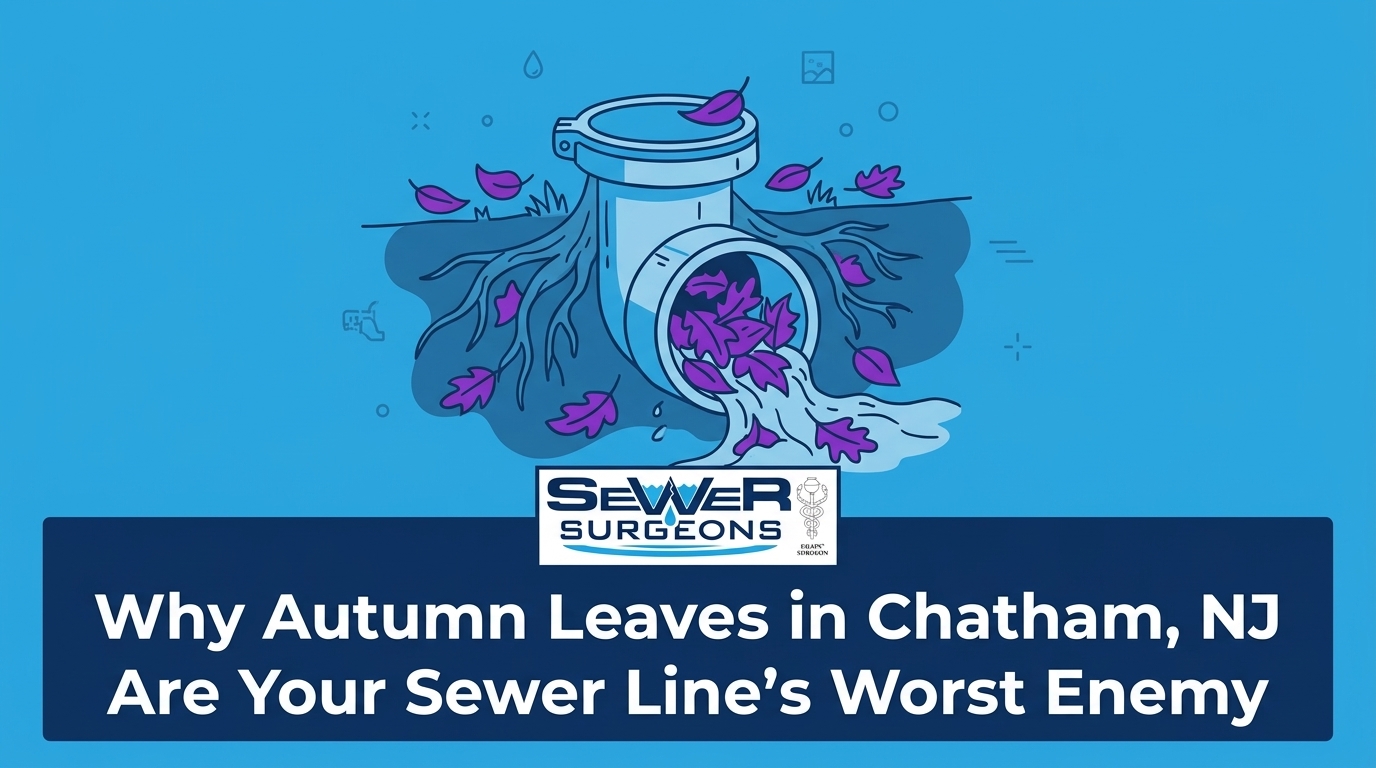
Leaves do not simply vanish into the soil; heavy seasonal rain washes them into uncovered cleanouts, compromised vents, and municipal storm drains. Once wet, leaves undergo a physical transformation. They stop being light, individual pieces of debris and become a dense, heavy, interconnected mat. This wet blanket effect allows them to easily bypass standard drain grates and slip through narrow openings.
Many homeowners we assist are often surprised to learn exactly where their property line ends and the city’s infrastructure begins when these blockages occur. Understanding sewer lateral responsibility is crucial, because the primary blockage usually forms in the section of pipe that connects your home to the municipal main—a section that you, the homeowner, are required to maintain.
The Role of Heavy Autumn Rain
The combination of heavy deciduous leaf fall and seasonal autumn rain specifically impacts older wooded neighborhoods. Dry leaves blow away with a stiff breeze, but wet leaves clump together, forming an impenetrable barrier. Runoff from severe autumn storms forces these clumps deep into the lateral lines.
Common Entry Points for Leaf Debris:
- Missing cleanout caps: The white PVC or cast-iron pipes in your yard provide direct access to the main sewer line if the cap is broken or missing.
- Compromised yard drains: Surface drains designed to handle rainwater often lack the proper grates to filter out small, wet leaf fragments.
- Cracked vent stacks: Low-sitting plumbing vents can collect blowing leaves, which eventually wash down into the main drain.
- Municipal storm runoff: In some older combined sewer systems, heavy street flooding can push organic debris back into residential laterals.
Why Chatham’s Aging Clay Pipes Act as Underground Traps
In our years of repairing local underground plumbing, Sewer Surgeons consistently finds that many older homes in the area still rely on original vitrified clay pipes (VCP) for their main sewer laterals. When these homes were built decades ago, clay was the standard material because it was abundant and highly resistant to chemical degradation. However, it has one major flaw: the joints.
Over decades, the ground shifts, settles, and freezes. This movement causes the mortar or early rubber gaskets connecting these clay pipes to deteriorate, creating small gaps. These gaps invite minor root intrusions. Trees and large shrubs are constantly seeking water, and the nutrient-rich moisture inside a sewer line is a powerful draw. Once roots breach the pipe, they act like a net, catching leaves and organic debris as they flow past. Learning how tree roots cause major sewer line problems is the first step in understanding why autumn leaves are so destructive.
The Perfect Storm of Debris and Roots
Without these root catch-points, a few stray leaves might simply flush through the system and into the city main. But a pattern we see often is the combination of aging clay sewer pipes, thousands of wet leaves, and a network of tiny, hair-like tree roots resulting in an immovable blockage. The roots trap the first layer of leaves, which then slows down the water flow, allowing the next layer of leaves to settle. Within weeks, the pipe’s diameter is choked off entirely.

What October Service Call Logs Reveal About Leaf Blockages
This isn’t a theoretical plumbing issue; it is a documented, recurring seasonal crisis. When we look at Sewer Surgeons’ actual October hydro-jetting service call logs, the data proves just how severe this localized threat is. Our dispatch records consistently show a sharp spike in severe sewer blockages during mid-fall.
The calls shift rapidly from standard clogs—like grease buildup or flushed wipes—to massive, compacted organic sludge blockages right as the leaves peak. This localized data proves that proactive maintenance is required for homes situated in heavily wooded neighborhoods. When mid-fall arrives, the sheer volume of organic matter overwhelming the underground infrastructure is staggering.
The Shift in Emergency Plumber Calls
During the summer months, most sewer backups are isolated incidents caused by indoor habits. But as October rolls in, the nature of the emergencies changes entirely. We see entire neighborhoods in Chatham experiencing similar issues at the exact same time, directly correlating with heavy rainstorms following major leaf drops. This pattern confirms that the outdoor environment is actively invading the indoor plumbing system.
Recognizing the Early Symptoms of a Leaf-Clogged Sewer Line
A leaf clog doesn’t happen overnight; it builds up layer by layer as more foliage washes in. Because the blockage forms slowly, your plumbing system will give you several warning signs before a catastrophic backup occurs. Knowing these warning signs your sewer line needs professional attention can save you from dealing with raw sewage in your basement.
Watch for these early symptoms:
- Simultaneous slow drains: If your kitchen sink, shower, and bathroom sink are all draining slowly at the same time, the issue is deep in the main lateral, not in a single fixture.
- Gurgling toilets: Listen for distinct gurgling or bubbling sounds from the toilet when you run a sink or empty a washing machine in another room. This happens because trapped air is being forced backward through the water trap.
- Foul, swampy odors: Pay attention to smells emanating from floor drains. Decomposing leaves create a distinct, swamp-like methane odor as they rot inside the pipe.
- Water backing up into the lowest fixtures: If flushing an upstairs toilet causes water to rise in a basement shower or floor drain, the main line is severely restricted.
Why the Basement is Always the First Victim
Water follows the path of least resistance and the lowest point of gravity. When a leaf sludge blockage restricts the main sewer lateral out in the yard, wastewater has nowhere to go but backward. The lowest open drain in your home—typically a basement floor drain, utility sink, or downstairs shower—will be the first place this contaminated water surfaces.
Why Standard Snaking Fails Against Decomposing Leaf Sludge
A standard cable auger, commonly known as a drain snake, is designed to hook onto solid obstructions or cut through small root masses. It is highly effective for pulling out wads of hair or breaking up hard calcification. However, when a snake hits wet, compacted leaves, the physics of the blockage render the tool nearly useless.
When a metal auger pushes into a wall of decomposing organic sludge, it simply punches a small hole right through the center of the mass. The water behind the clog might drain temporarily, giving a false sense of success. But as soon as the cable is retracted, the wet organic matter collapses back on itself, resealing the pipe almost immediately.
The Limitations of Mechanical Clearing
Snaking also fails to wash away the sticky, decaying residue left on the walls of older clay pipes. To understand why this method falls short, you have to look at how different tools interact with organic matter.
| Clearing Method | Action on Leaf Sludge | Effect on Tree Roots | Long-Term Result |
|---|---|---|---|
| Standard Snaking | Punches a narrow hole through the center | Tears away large roots, leaves small ones | Sludge collapses and pipe reseals quickly |
| Chemical Cleaners | Sits on top of the dense wet mat | No effect on root intrusions | Damages aging clay joints, fails to clear clog |
| High-Pressure Scouring | Pulverizes leaves and washes them away | Slices away minor roots cleanly | Restores full pipe diameter permanently |
Clearing the Sludge with Professional High-Pressure Scouring
We recommend high-pressure water scouring over traditional snaking because it is required to fully remove compacted organic matter. This method, known as hydro-jetting, utilizes a specialized nozzle attached to a high-pressure hose. The nozzle features forward-facing jets to break up the sludge and rear-facing jets to propel the hose forward while scrubbing the pipe walls.
This method safely scours the entire 360-degree circumference of the pipe walls without damaging the aging clay. It pulverizes the wet leaves and washes them completely out of the lateral into the municipal main. Crucially, it also clears away the minor root intrusions that trapped the leaves in the first place, preventing an immediate recurrence of the problem.
Protecting Aging Infrastructure
One common concern our customers have is whether high-pressure water will damage older vitrified clay pipes. When performed by our trained professionals, the process is incredibly safe. The water pressure is carefully calibrated, and the jets are angled to scour the walls laterally rather than striking them head-on. This gently but forcefully peels away the layers of decomposing leaf sludge, restoring the pipe to its original inner diameter without putting stress on the fragile, decades-old joints.
Protect Your Plumbing Before the Winter Freeze
Do not wait for a complete backup to address slow drains this fall. A sluggish sewer line in October is a ticking time bomb as the temperatures begin to drop. When a pipe is filled with standing water and heavy leaf sludge, the impending winter freeze can turn a nuisance into a disaster.
If the water trapped behind a leaf blockage freezes inside a shallow lateral, the ice will expand and crack the aging clay sewer pipes, turning a routine cleaning appointment into a massive excavation and replacement project. Clearing leaf sludge now prevents severe, frozen pipe emergencies when winter arrives. Talk to our local experts at Sewer Surgeons about assessing your aging sewer lateral today, and ensure your home is fully prepared for the changing seasons.
Frequently Asked Questions
Can autumn leaves really clog underground sewer lines?
Yes, heavy autumn leaf fall is a leading cause of seasonal sewer blockages. When heavy rains wash wet, dense foliage into compromised cleanouts or yard drains, the leaves compact into a thick sludge. This organic matter easily chokes off the main lateral pipe leading away from your home.
Why do my drains gurgle more in the fall?
Gurgling drains indicate that trapped air is being forced backward through your plumbing system. In the fall, this is often the first sign that decomposing leaves and tree roots are beginning to restrict the flow in your main sewer line. As the water struggles to pass the blockage, it displaces air, causing the bubbling sound in your toilets and sinks.
Is high-pressure water scouring safe for old clay pipes?
When performed by a licensed professional, high-pressure water scouring is completely safe for pre-1980s vitrified clay pipes. The specialized nozzles are designed to direct water laterally along the pipe walls, peeling away sludge and roots without striking the fragile joints with blunt force.
How do leaves get into underground pipes in the first place?
Leaves bypass your lawn and enter the plumbing system through multiple vulnerable access points. They are frequently washed by heavy rain into missing or broken cleanout caps, cracked vent stacks, and poorly grated surface yard drains. Once inside, they flow downward until they hit a snag, usually tree roots.
How quickly can leaf sludge cause a complete sewer backup?
A complete backup can happen in a matter of days once the heavy autumn rains begin. While the initial buildup of leaves and roots happens slowly, a severe storm can wash hundreds of wet leaves into the system at once, instantly turning a partial restriction into a total blockage.