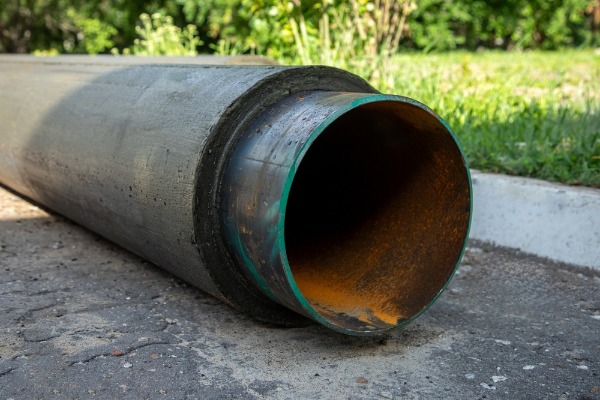
A drain joint doesn’t fail all at once. It starts small: a hairline crack where two pipe sections meet, a bit of corrosion eating through cast iron, a gap opening up as clay pipe shifts with the soil around it. For months, sometimes years, the pipe still carries water. Then one day it doesn’t, and a property owner is looking at a sinkhole in the yard or a backup that won’t clear.
The good news is that a weakened joint doesn’t automatically mean a full pipe replacement. Trenchless pipe coating in Morristown, NJ gives property owners a way to reinforce a failing section from the inside, without tearing up a driveway, lawn, or finished basement to get there. Here’s how the process works, what it fixes, and how to tell if your pipe is a good candidate.
What Causes a Drain Joint to Weaken in the First Place
Every pipe system has joints, the points where two sections connect. These are almost always the first place a pipe fails, because they’re mechanically weaker than the solid pipe wall on either side.
A few things wear down a joint over time:
Cast iron and clay pipe, both common in homes and buildings built before the 1970s, corrode and degrade differently than modern PVC. Cast iron rusts from the inside out, and as the metal thins, the joints are usually the first spot to crack or separate. Clay pipe is brittle by nature. It doesn’t bend, so any shift in the surrounding soil, from tree root growth, freeze-thaw cycles, or ground settling, tends to crack the pipe right at the joint rather than flexing with the movement.
Root intrusion is another major factor. Tree and shrub roots are drawn to the moisture and nutrients inside a sewer line, and they find their way in through the smallest joint gap or hairline crack. Once inside, the roots grow, widen the opening, and speed up the deterioration.
None of this happens overnight. A joint typically weakens gradually, which is actually the reason trenchless repair works so well. Caught early, a compromised joint can be reinforced before it becomes a full collapse.
What Full Collapse Actually Looks Like
A collapsed pipe section is different from a clogged one. A clog is a blockage inside a pipe that’s still structurally sound. A collapse means the pipe itself has lost its shape, either crushed inward from external pressure or broken apart at a joint, and water can no longer pass through no matter how much the line is cleared.
Common warning signs before a full collapse include recurring backups in the same drain, gurgling sounds from fixtures, slow drainage that keeps coming back after cleaning, sewer odor indoors or in the yard, and visible settling or a soft spot in the lawn above the pipe route. Any one of these on its own isn’t necessarily an emergency, but a pattern of them, especially paired with an older pipe system, is worth having inspected with a camera before the situation gets worse.
How Pipe Coating Reinforces a Damaged Section
Pipe coating, sometimes called cured-in-place pipe (CIPP) lining, works by inserting a resin-saturated liner into the existing pipe and curing it in place until it hardens into a new, seamless pipe wall inside the old one. The American Society for Testing and Materials (ASTM) publishes the technical standard for this process, ASTM F1216, which the plumbing and trenchless repair industry has followed for decades.
The process generally involves a few steps. First, a camera inspection confirms the location and extent of the damage. The line is then cleaned to remove debris, roots, and buildup so the liner can bond properly. A flexible tube coated in epoxy resin is inserted through an existing access point and positioned along the damaged section. Once in place, the resin is cured, using heat, UV light, or ambient air depending on the material, until it hardens into a rigid new pipe within the old one.
The result is a smooth, jointless liner that bridges the weak spot and restores structural strength to that section of pipe, all without digging a trench along the pipe’s path.
Where Epoxy Pipe Coating Works Best
Epoxy pipe coating is most effective on pipes that still have their basic shape but have deteriorated joints, small cracks, or corrosion damage. It is not a fix for a pipe that has already fully collapsed or crushed, since the liner needs the original pipe to hold its form during the curing process. This is why a camera inspection before any coating work matters. It tells the technician whether the pipe is a good candidate for lining or whether a section needs to be excavated and replaced instead.
Residential Applications
In a single-family home, residential pipe coating is most often used on the main sewer lateral, the line running from the house to the municipal connection or septic system, since that’s the pipe most exposed to root intrusion and ground shifting. Older homes in established towns often still have the original clay or cast iron laterals installed when the house was built, which makes them reasonable candidates for this kind of inspection as they age.
Because the work is done through existing access points, most residential pipe coating projects don’t require digging up landscaping, walkways, or driveways. That matters for a homeowner who doesn’t want a repair project to turn into a landscaping project as well.
Commercial Applications
Commercial pipe coating serves a different set of pressures. Restaurants, multi-unit residential buildings, and commercial properties often run higher volumes of wastewater through their systems, plus grease, food waste, and other materials that accelerate wear on the interior of a pipe. A property manager dealing with a weakened joint under an occupied building has an added incentive to avoid excavation, since digging up a parking lot or building interior means disrupting tenants or customers during the repair.
Trenchless coating lets commercial pipe coating contractors reinforce these sections with minimal interruption to daily operations, which is often the deciding factor for property owners choosing between lining and traditional dig-and-replace repair.
What to Expect from a Pipe Coating Service Appointment
A typical pipe coating services appointment starts with a camera inspection to map out the damage and confirm the pipe is a candidate for lining. From there, the crew cleans the line, measures and prepares the liner, inserts it through the access point, and cures it in place. Depending on the length and condition of the pipe, the process can often be completed in a single day, though more extensive damage may take longer.
Property owners in Morristown and the surrounding Morris County area dealing with older sewer infrastructure should expect the technician to walk through the camera footage with them before recommending coating, replacement, or another repair method. A reputable pipe coating contractor won’t recommend lining a section that’s too far gone to hold a liner.
Frequently Asked Questions
- How long does a pipe coating repair last?
A properly installed epoxy liner is designed to function as a new pipe wall for decades, since it becomes a rigid structural layer rather than a temporary patch. Actual lifespan depends on the condition of the host pipe and how well it was prepared before lining.
- Can pipe coating fix a fully collapsed pipe?
No. Coating requires the original pipe to hold its shape during the lining process, so a section that has crushed or completely caved in usually needs to be excavated and replaced rather than lined.
- Does pipe coating work on both cast iron and clay pipe?
Yes, coating can reinforce both materials as long as the pipe hasn’t lost its structural shape. A camera inspection determines whether the damage is limited to cracks and joint separation or has progressed further.
- Will pipe coating stop tree roots from coming back?
The liner creates a smooth, jointless surface with no gaps for roots to find, which removes the entry points that let roots intrude in the first place. It doesn’t affect roots already growing near the pipe, but it closes off the openings that let new intrusion start.
Get a Camera Inspection Before a Small Problem Becomes a Big One
A weakened joint gives property owners a window to act before a small crack turns into a collapsed line and a torn-up yard. At Sewer Surgeons, we offer camera inspections to determine whether a section of pipe is a good fit for lining or needs a different approach, and our technicians are fully insured for both residential and commercial work. We also provide emergency service for property owners dealing with an active backup or sudden drainage failure, and we stand behind our repairs with a 100% satisfaction guarantee. Reach out to us to have your line inspected before a weak joint turns into a bigger job.