
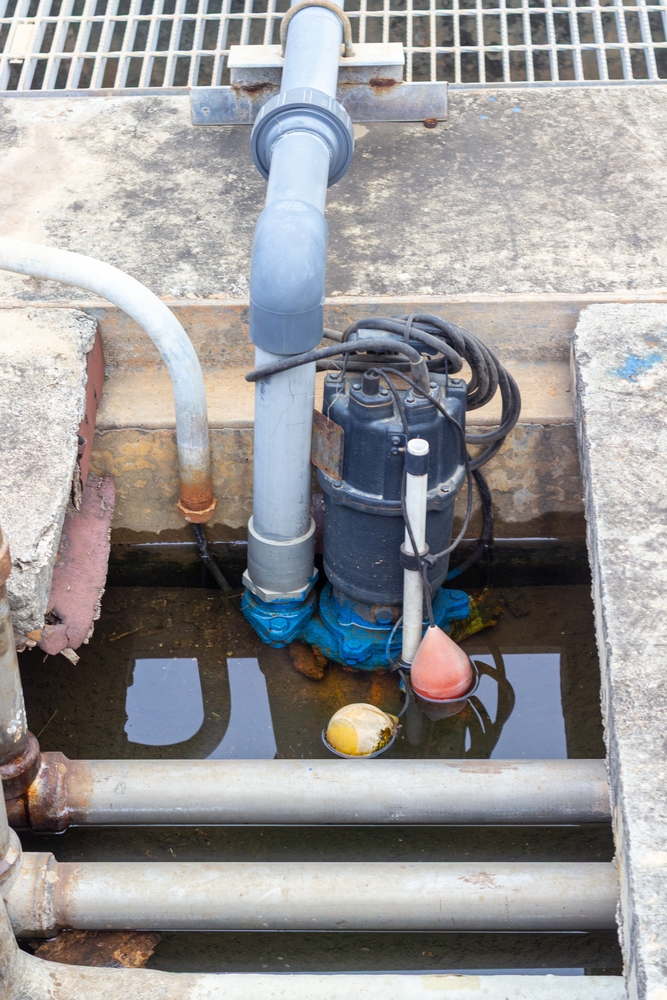
A sump pump that keeps turning on and off in short bursts is not behaving normally, and it is not something that will usually correct itself over time. Short-cycling puts constant stress on the motor, creates unnecessary heat buildup, and accelerates wear on internal components. In many cases, homeowners only notice the problem once the system starts making unusual noises or fails during heavy rainfall.
For properties relying on sump pumps in Chatham Township, NJ, understanding why this happens is important because short cycling often points to an underlying installation or mechanical issue that needs attention rather than a simple reset.
What Short-Cycling Is Really Doing to the Motor
A sump pump is designed to run in controlled cycles, moving water out of a basin and shutting off once the water level drops. When the system repeatedly turns on and off within short intervals, the motor never gets a chance to stabilize at normal operating temperature. That repeated start-stop pattern creates heat spikes inside the motor windings, which is one of the fastest ways to reduce the lifespan of the pump.
According to the U.S. Department of Energy, electric motors experience the most strain during startup, when electrical demand is highest and mechanical components are under maximum load. When that startup phase happens repeatedly in rapid succession, the stress compounds quickly and can lead to premature failure.
The Two Most Common Causes Behind Short-Cycling
Short-cycling usually traces back to one of two core issues: incorrect system sizing or mechanical failure in the float switch. Both problems affect how the pump “reads” water levels and responds to them, which is why the system behaves unpredictably.
Key causes of sump pump short-cycling:
- An undersized or oversized sump basin for the pump capacity
- A float switch that is stuck, misaligned, or overly sensitive
- Rapid water inflow combined with poor basin design
- Debris interfering with float movement
When these issues occur, homeowners often assume they need specialized sump pump repair, but in many cases the root cause is tied to how the system was originally configured.
Why Basin Size Matters More Than Most People Realize
The sump basin acts as the control environment for the entire system. If it is too small, water levels rise and fall too quickly, forcing the pump to activate in rapid bursts. If it is too large but paired with an improperly calibrated float switch, the pump may still cycle inefficiently because it is responding to inconsistent water level readings.
This imbalance creates a situation where the pump is constantly reacting rather than operating on a stable cycle. Over time, that instability is what leads to overheating and mechanical breakdown, often requiring full sump pump replacement rather than a simple adjustment.
Float Switch Problems and False Signals
The float switch is responsible for telling the pump when to turn on and off. When it becomes stuck, partially obstructed, or poorly adjusted, it can send false “on” signals even when water levels do not require pumping. That leads to unnecessary activation cycles that wear down internal components.
In some cases, the float may also be positioned too close to the pump intake, causing turbulence in the basin that triggers premature activation. These issues are often identified during professional sump pump services, especially when systems have not been inspected in several years.
Why Short-Cycling Leads to Overheating
Each time a sump pump starts, it draws a surge of electrical current and generates heat within the motor housing. Under normal conditions, the pump has enough runtime between cycles to dissipate that heat. Short cycling removes that recovery period entirely.
As heat builds, insulation inside the motor begins to degrade, bearings wear more quickly, and internal components lose efficiency. Eventually, the pump may stop responding altogether during the exact moment it is needed most.
When Maintenance Is No Longer Enough
Routine sump pump maintenance can prevent many issues, especially when debris buildup or minor float misalignment is involved. However, once short-cycling becomes frequent, it often indicates a deeper system imbalance rather than routine wear. At that point, inspection is needed to determine whether recalibration, component replacement, or a completely new sump pump installation is the most appropriate solution.
Frequently Asked Questions
Why does my sump pump turn on every few seconds?
This usually happens when the float switch is stuck or when the basin is too small for the pump’s capacity, causing rapid water level changes.
Can short-cycling damage a sump pump?
Yes. Repeated startup cycles generate excess heat and mechanical stress that can shorten motor lifespan significantly.
Do I need a new sump pump if it short-cycles?
Not always. Some issues can be corrected through adjustment or repair, but severe cases may require replacement.
Can debris cause short-cycling?
Yes. Debris can interfere with float movement or water flow, leading to false activation signals.
A System That Cycles Properly Protects the Whole Property
Sump pump performance depends on the balance between basin size, float control, and motor capacity. When that balance is disrupted, short-cycling becomes a warning sign that the system is under stress. Sewer Surgeons provides expert evaluation and repair solutions backed by emergency services, fully insured technicians, and 100% guaranteed satisfaction. If your sump pump is cycling too often or showing signs of strain, our team can diagnose the issue and restore proper system function before failure occurs. Contact us today to schedule a service!