
Slow drains, gurgling toilets, and sewage odors in the yard all point to one thing: something is wrong somewhere along your main sewer line. What they don’t tell you is where. That line can run 50 to 100 feet or more from your house to the street connection, buried under lawns, driveways, patios, and mature trees. Without knowing the exact location and cause of a blockage or break, a repair crew is left guessing, and guessing means digging.
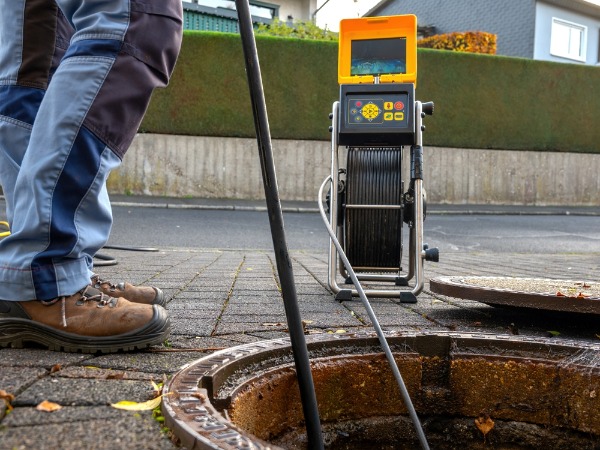
That’s the problem a sewer video inspection solves. A small waterproof camera, mounted on a flexible cable, gets fed directly into the pipe. The technician watches a live video feed on a monitor as the camera moves through the line, and can see cracks, root intrusion, pipe misalignment, corrosion, or blockages in real time. The footage also shows exactly how far into the line the problem sits, which means the crew can mark the precise dig spot on the surface instead of trenching the whole yard to find it.
We handle sewer video inspection in Morristown, NJ at Sewer Surgeons, and this article covers what the process actually involves, what it can and can’t tell you, and how to decide if it’s the right first step before any repair work begins.
What a Sewer Camera Inspection Actually Shows
A sewer pipe video inspection isn’t just a peek inside the pipe. It’s a diagnostic tool that identifies the type of damage, its severity, and its exact location along the line. The camera head includes a light source and often a built-in distance counter, so the technician can log how many feet into the pipe a defect appears, measured from the cleanout or access point.
Common findings include:
- Root intrusion, where tree roots have grown through pipe joints or small cracks seeking moisture
- Pipe bellies, where a section has sunk and now holds standing water and waste
- Cracked, crushed, or collapsed sections, often from ground shifting or old, brittle pipe material
- Corrosion in older metal pipes, which thins pipe walls over time and reduces flow
- Misaligned joints between pipe sections, common in properties that have settled over decades
- Grease or debris buildup narrowing the pipe’s usable diameter
Each of these has a different fix. Root intrusion might be cleared with cutting equipment and prevented going forward, while a collapsed section usually needs full replacement of that segment. This is why the inspection has to come before any repair decision, not after.
Why This Step Gets Skipped, and What It Costs When It Does
Some property owners try to save money by skipping the inspection and going straight to excavation once a sewer problem is suspected. Without camera footage, a crew has to dig based on general knowledge of where lines typically run and where problems typically occur. That approach means opening up more ground than necessary, and there’s a real chance the first dig site misses the actual damage entirely.
The National Association of Sewer Service Companies (NASSCO), which sets industry standards for pipeline assessment, developed its Pipeline Assessment and Certification Program specifically because visual inspection data reduces guesswork in underground repair decisions. The standard exists because accurately locating and classifying pipe defects before excavation consistently produces better repair outcomes than blind digging.
For a property owner, the practical version of this is simple: a $300 to $500 camera inspection can prevent thousands of dollars in unnecessary excavation, landscaping repair, and driveway or patio replacement. It also prevents the frustration of a repair crew digging in the wrong spot and having to relocate.
How Sewer Line Camera Inspection Works From Start to Finish
The process is more straightforward than most homeowners expect, and understanding each step helps set realistic expectations.
Locating an Access Point
The technician starts by finding an existing cleanout, a capped pipe fitting that gives direct access to the sewer line without removing a toilet or opening the roof vent stack. Many older homes in the Northeast were built before cleanouts were standard, so if one isn’t present, the technician may need to access the line through a toilet flange or roof vent instead.
Feeding the Camera Through the Line
The camera cable is pushed through the pipe by hand, following the natural path of the line toward the street or septic connection. The technician watches the monitor continuously, noting anything unusual and logging the footage counter at each point of interest.
Recording Distance and Condition
As the camera passes a defect, the footage counter shows how far it is from the access point. This measurement gets cross-referenced with an above-ground locator signal (a small transmitter in the camera head that a handheld receiver can detect from the surface) to mark the exact dig location if excavation turns out to be necessary.
Reviewing Findings With the Property Owner
After the inspection, the technician should walk through what the footage showed: what kind of damage is present, roughly how severe it is, and what repair options apply. This is the point where a property owner can ask questions and get a clear picture before committing to any repair work.
Video Sewer Line Inspection for Older Properties and Mature Landscaping
Morristown has a mix of older housing stock with mature trees, and tree roots are one of the most common causes of sewer line damage in established residential areas. Roots are drawn to the moisture and nutrients inside a sewer pipe and will exploit even hairline cracks or loose joints to get in. Once inside, a root mass can expand until it partially or fully blocks flow.
A camera inspection distinguishes between a line that has isolated root intrusion at a single joint versus one with widespread root damage across multiple sections. That distinction matters for the repair recommendation. A single problem joint might be treated with root cutting and a localized repair. A pipe with root damage in several spots along its length is a stronger candidate for full replacement, since repeated spot repairs on a deteriorating line tend to need to be redone.
For commercial properties with larger sewer lines serving multiple units or high-volume plumbing fixtures, inspection frequency matters more. A camera check every year or two can catch developing problems, like a slowly growing belly or early corrosion, before they turn into a backup that affects tenants or customers.
Sewer Inspection Contractors: What to Expect From the Report
A sewer camera inspection should produce more than a verbal summary. Ask whether the company provides recorded footage or a written report noting the location, type, and severity of each issue found. This documentation is useful for a few reasons beyond the immediate repair decision. It gives a baseline record of the pipe’s condition, which matters if a dispute comes up with a property insurer, a home sale inspection, or a municipal sewer connection question. It also gives a second contractor something concrete to review if a property owner wants a second opinion on a proposed repair.
Frequently Asked Questions
- How long does a sewer camera inspection take?
Most residential inspections take 30 to 60 minutes, depending on the length of the line and how many access points are available.
- Can a sewer camera inspection be done without digging first?
Yes. The camera is fed through an existing cleanout, toilet flange, or vent stack, so no excavation is needed just to see inside the pipe.
- Will the inspection tell me if I need trenchless repair or a full dig?
The footage shows the type, location, and severity of damage, which determines whether a trenchless method like pipe lining is suitable or whether the section needs to be excavated and replaced.
- What if the camera can’t get through the line?
If a blockage is too severe for the camera to pass, the technician typically needs to clear it first with cutting or jetting equipment, then re-inspect once the line is passable.
Get an Accurate Picture Before Anyone Touches Your Yard
A clear view of what’s happening inside your sewer line is the difference between a targeted repair and an afternoon of unnecessary digging. We offer emergency services when a backup can’t wait, and every technician we send out is fully insured, so you’re covered from the first inspection through any repair that follows. Sewer Surgeons stands behind every job with 100% guaranteed satisfaction. Reach out to us to get your line inspected before deciding on next steps.