The November Urgency: Facing a Collapsed Pipe Before Winter
Before the first hard freeze hits the Northeast, our team at Sewer Surgeons knows there is a narrow window to secure your home’s critical plumbing infrastructure. If you are weighing Spot Repair vs. Full Sewer Line Replacement After Root Intrusion, the impending late fall and November pre-winter ground freeze makes this decision incredibly time-sensitive. Discovering a collapsed pipe section during a late fall camera inspection is a stressful experience for any homeowner. The immediate instinct is often to patch the problem as quickly as possible, but understanding the long-term implications of that choice is vital.
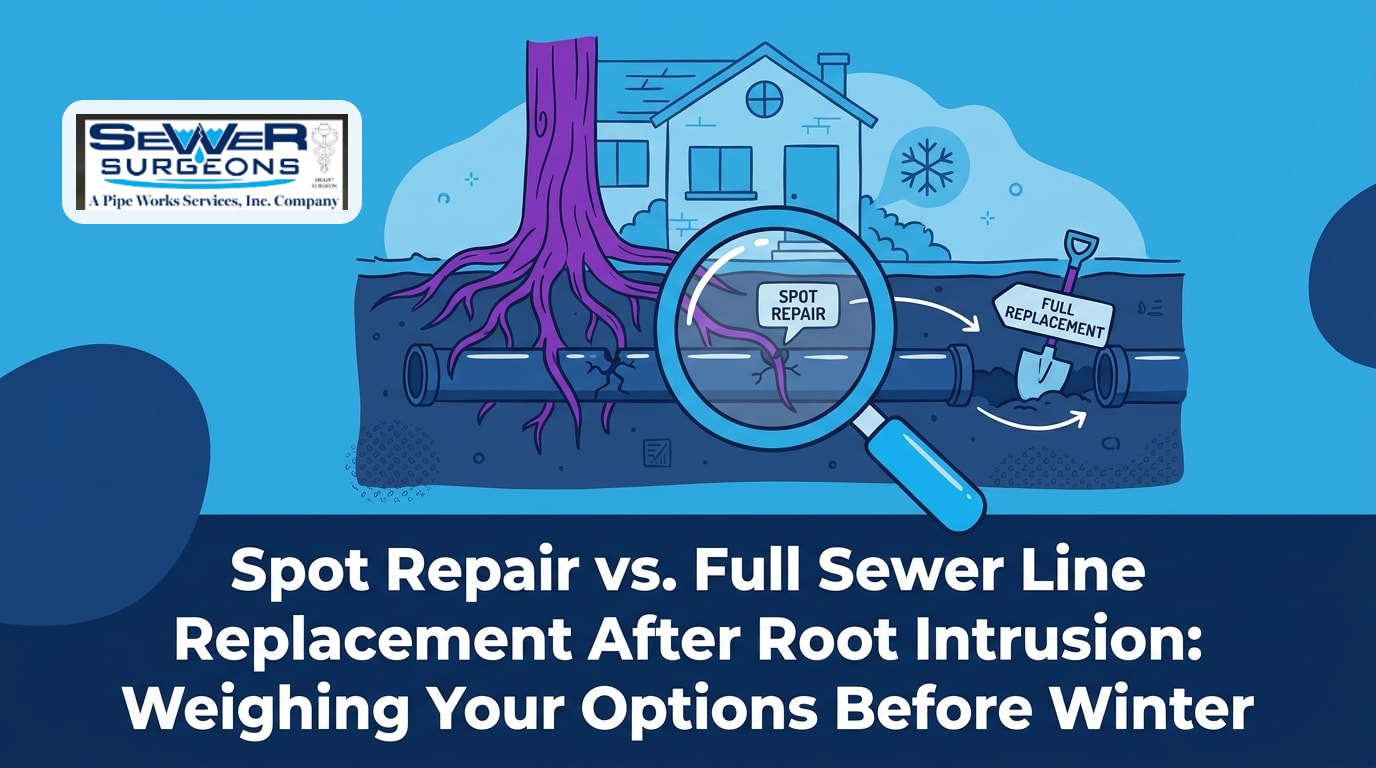
The core decision comes down to choosing between a localized spot repair—which addresses only the immediate break—and a comprehensive full replacement that upgrades the entire system. Because the ground is about to freeze solid, the risk profile of this decision shifts dramatically. A temporary fix that fails in January is a much larger crisis than a proactive replacement in November. To help you make the best choice for your property, our experts want to help you decide between spot repair and full sewer line replacement based on an objective look at long-term reliability versus short-term fixes.
How Mature Roots Target Weak Points in Vintage Pipes
To understand why sewer lines fail, you have to look at the relentless mechanics of nature. Tree roots are highly efficient seekers of moisture, oxygen, and nutrients—all of which flow abundantly through your underground plumbing. Through a process called hydrotropism, roots naturally grow toward the condensation escaping from microscopic cracks in older pipes. Once they find a way in, these roots can exert hundreds of pounds of pressure per square inch, easily crushing weakened or aging pipe walls.
In our years of inspecting underground utilities, we’ve found this is a particularly common issue in older Chatham NJ tree-lined properties. Many homes built in the 1940s and 1950s still rely on their original plumbing infrastructure. Chatham’s mature, tree-lined neighborhoods, combined with seasonal weather shifts, encourage aggressive spring and fall root growth. As the trees prepare for dormancy, their root systems expand aggressively in search of water. When these mature roots encounter aging cast iron pipes or older clay systems, they target the degrading joints. A single collapsed section is rarely an isolated incident; our crews almost always find it to be an indicator of systemic weakness throughout the entire line.
The Lifespan Reality of Clay and Cast Iron
According to EPA guidelines regarding aging water infrastructure, materials like vitrified clay and cast iron have an expected functional lifespan of about 50 to 75 years. If your home was built in the mid-20th century, your original sewer line has already exceeded this window. The joints connecting these pipe segments degrade over time, crumbling away and creating wide-open doors for root systems. Patching a 70-year-old pipe is often a temporary bridge rather than a permanent cure, as the remaining sections of the pipe are just as frail as the section that just collapsed.
Spot Repair: Understanding the Scope of a Localized Patch
A spot repair is exactly what it sounds like: excavating and replacing only the specific segment of the pipe that has collapsed or suffered severe root damage. This method is designed to restore flow quickly by cutting out the worst of the damage and splicing in a new piece of modern pipe, usually PVC, to bridge the gap. While it is a valid plumbing technique, our technicians want you to understand its precise scope and inherent limitations when dealing with aggressive root systems.
When performed by licensed professionals, the spot repair process generally follows these specific steps:
- Camera Isolation: A technician runs a specialized fiber-optic camera down the line to pinpoint the exact location and depth of the collapsed section.
- Targeted Excavation: A crew digs a focused hole in the yard directly above the broken pipe, minimizing the immediate digging footprint.
- Section Removal: The shattered clay or rusted cast iron segment is carefully cut out of the line.
- Patch Installation: A new section of PVC pipe is inserted and secured to the old, existing pipe using heavy-duty rubber couplings (often called Ferncos) tightened with stainless steel bands.
- Backfilling: The hole is filled back in, and the immediate blockage is resolved.
While this process solves the immediate crisis, it carries a significant limitation: a spot repair does not prevent roots from finding the next weakest joint in the remaining old pipe. A recurring pattern we see at Sewer Surgeons is that homeowners who opt for a spot repair often face identical issues just a few feet down the line shortly after the patch is completed. The roots simply migrate to the next vulnerable seam, leading to recurring root intrusion backups that require another round of excavation.
Full Sewer Line Replacement: The Path to Permanent Peace of Mind
When our experts evaluate a sewer system fundamentally compromised by age and systemic root invasion, we almost always recommend a full sewer line replacement as the most definitive solution. This process involves the complete removal or bypassing of the vulnerable, aging pipe system, replacing it entirely from the house foundation out to the municipal connection at the street. Rather than playing a game of whack-a-mole with failing joints, a full replacement upgrades the entire infrastructure to modern standards.
Today’s full replacements utilize modern, seamless materials like High-Density Polyethylene (HDPE). HDPE pipes are often fused together using thermal welding, creating a single, continuous pipe with absolutely no joints or seams for roots to exploit. Because the material is highly resistant to root penetration and structural shifting, addressing the entire line eliminates the anxiety of waiting for the next joint to fail in older Chatham NJ tree-lined properties.
Furthermore, upgrading the entire line does not necessarily mean destroying your entire landscape. Homeowners can often choose between trenchless vs traditional excavation methods. Trenchless techniques, such as pipe bursting or slip lining, require only small access pits rather than a massive trench across your lawn. This significantly reduces the excavation footprint while still delivering a brand-new, root-proof system that will last for decades.
Head-to-Head Comparison: Weighing Risks, Longevity, and Disruption
When deciding how to handle a collapsed pipe, looking at a side-by-side comparison helps clarify the long-term value of each option. The goal is to evaluate reliability, risk, and property disruption objectively, keeping in mind that the cheapest immediate option is not always the most cost-effective solution over a ten-year horizon.
| Decision Factor | Localized Spot Repair | Full Sewer Line Replacement |
|---|---|---|
| Expected Longevity | The new patch will last, but the surrounding old pipe remains past its lifespan and highly vulnerable. | Provides a brand-new system designed to last 50 to 100 years without structural degradation. |
| Risk of Future Roots | High. Roots will naturally migrate to the next failing joint in the vintage pipe. | Virtually zero. Seamless HDPE materials eliminate the joints that roots use to enter the system. |
| Property Disruption | Requires a single, localized hole, but may require repeated digging as other sections fail. | Comprehensive initial work, but modern trenchless methods keep surface disruption to a minimum. |
| Peace of Mind | Low. Homeowners often worry about when the next section of old pipe will collapse. | High. The entire line is secured, eliminating the anxiety of unexpected sewage backups. |
When Does a Spot Repair Make Sense?
Our team finds that a spot repair is a highly effective solution under specific circumstances. If the rest of your sewer line is relatively new or made of modern materials (like PVC installed in the last 20 years), and the damage was caused by a distinct, isolated physical impact—such as a utility company accidentally striking the pipe during digging—a spot repair is the logical choice. It is also viable if a single joint failed due to ground settling while the rest of the line remains structurally sound.
When is Full Replacement the Clear Choice?
Full replacement becomes the clear, objective choice when the pipe is past its 50-year lifespan and made of obsolete materials like clay, Orangeburg, or cast iron. If our camera inspection reveals severe, recurring root intrusion visible throughout multiple joints, or if the pipe has lost its structural integrity and is beginning to belly or collapse in several areas, patching one spot is merely delaying the inevitable. Securing the entire line is the only way to permanently stop recurring root intrusion backups.

The Frost Line Threat: Why January Emergency Excavations Are a Nightmare
In Northern New Jersey, our crews know firsthand how the changing seasons dictate how and when home maintenance should be performed. The late fall and November pre-winter ground freeze is a hard deadline for major exterior plumbing work. During the peak of winter, ground frost lines in Northern NJ can reach up to 36 inches deep. This means the top three feet of soil turn into a solid, concrete-like barrier of ice and dirt.
Frozen ground severely complicates excavation. Digging through a 36-inch frost line requires specialized heavy machinery equipped with frost teeth, or the use of ground-thawing blankets that take days to work. This makes emergency repairs exponentially more disruptive, time-consuming, and difficult to execute. If you opt for a spot repair in November and the remaining old pipe suffers a new root blockage or collapse in January, you are facing a massive logistical nightmare.
Securing the plumbing infrastructure before the ground freezes prevents these mid-winter disasters. By choosing a permanent replacement while the soil is still workable, you eliminate the risk of a spot-repaired joint failing when the weather is at its most unforgiving. Proactive replacement is about controlling the environment and timing of the work, rather than letting a winter emergency dictate the terms.
Avoiding the Psychological Toll of Holiday Plumbing Emergencies
Beyond the physical mechanics of pipes and frozen dirt, there is a significant human element to plumbing failures. A heartbreaking pattern our emergency dispatchers see is a homeowner opting for a temporary patch in early fall, only for that patch to hold just long enough to fail during peak holiday hosting. The psychological toll of dealing with a major plumbing crisis when your home is full of family and friends cannot be overstated.
The stress of dealing with raw sewage backups when guests are visiting ruins holidays and creates massive sanitation hazards. When recurring tree root intrusion strikes on Thanksgiving morning or Christmas Eve, emergency service calls are necessary, and the disruption to your home is absolute. You cannot use the toilets, run the dishwasher, or take showers until the line is cleared or excavated.
True home comfort comes from knowing the infrastructure is sound and reliable. You should not have to cross your fingers every time someone flushes a toilet. Positioning a full replacement as an investment in a stress-free winter and holiday season allows you to host with confidence. Eliminating the threat of recurring root intrusion backups means you can focus on enjoying your home, rather than worrying about what is happening underground.
Frequently Asked Questions About Root Intrusion and Pipe Damage
Is spot repair for tree roots a permanent fix?
No, our team generally does not consider a spot repair to be a permanent fix for systemic tree root intrusion. While it permanently fixes the specific few feet of pipe that were replaced, it leaves the rest of the aging clay or cast iron pipe in the ground. Roots will simply continue to grow and seek out the next degrading joint in the old pipe, often leading to new blockages within a year or two.
When is full sewer replacement necessary?
Full sewer replacement is necessary when the existing pipe has exceeded its functional lifespan and exhibits multiple points of failure. If a camera inspection in older Chatham NJ tree-lined properties reveals severe root intrusion at multiple joints, widespread cracking, or significant bellies (sags) in the line, a full replacement is the only way to restore reliable flow. It is also highly recommended before major landscaping or driveway paving projects.
How do freezing temperatures affect damaged sewer lines?
Freezing temperatures cause the ground surrounding the sewer line to freeze, expand, and shift, a process known as frost heave. If a sewer line is already cracked or weakened by root intrusion, this shifting soil can put immense pressure on the pipe, causing it to collapse completely. Furthermore, if a backup occurs and water sits stagnant in a shallow pipe during a freeze, the water itself can freeze and shatter the line.
Can tree roots completely destroy an older sewer line?
Yes, mature tree roots can absolutely destroy older sewer lines. Roots exert tremendous hydrostatic pressure as they grow, easily crushing vitrified clay, Orangeburg, and even deteriorating cast iron pipes. Once inside, the root mass acts like a net, catching toilet paper and waste until the pipe is completely blocked and structurally compromised.
How long does a typical sewer spot repair last?
The materials used in a spot repair (typically PVC and heavy-duty Fernco couplings) can last for decades, but the repair is only as good as the pipe it attaches to. If a spot repair is grafted onto a 70-year-old crumbling clay pipe, the surrounding old pipe will likely fail long before the patched section does. Therefore, the effective lifespan of the repair is limited by the condition of the remaining vintage infrastructure.
Why are older cast iron and clay pipes so vulnerable to root intrusion?
Older cast iron and clay pipes are vulnerable primarily due to how they were joined together and their natural degradation over time. Clay pipes were often laid in short segments (usually 3 to 4 feet long) with joints packed with oakum and concrete, which crumbles over decades. Cast iron corrodes and scales, weakening the pipe walls. These deteriorating joints and weakened walls provide zero resistance to aggressive root systems seeking water.
Make a Confident, Long-Term Choice for Your Home’s Plumbing
Ultimately, while spot repairs offer immediate relief for a localized break, full replacements provide the permanent defense that older homes desperately need against aggressive root systems. Upgrading to a seamless system eliminates the weak points that roots exploit, protecting your property from the unsanitary and stressful reality of recurring backups.
With the late fall and November pre-winter ground freeze rapidly approaching, the urgency to secure your plumbing infrastructure has never been higher. Do not wait for a patched pipe to fail in the dead of winter when excavations are a logistical nightmare. Our team at Sewer Surgeons encourages you to schedule a professional consultation to review your camera inspection, explore options like trenchless pipe lining, and weigh your choices safely before the frost sets in.