
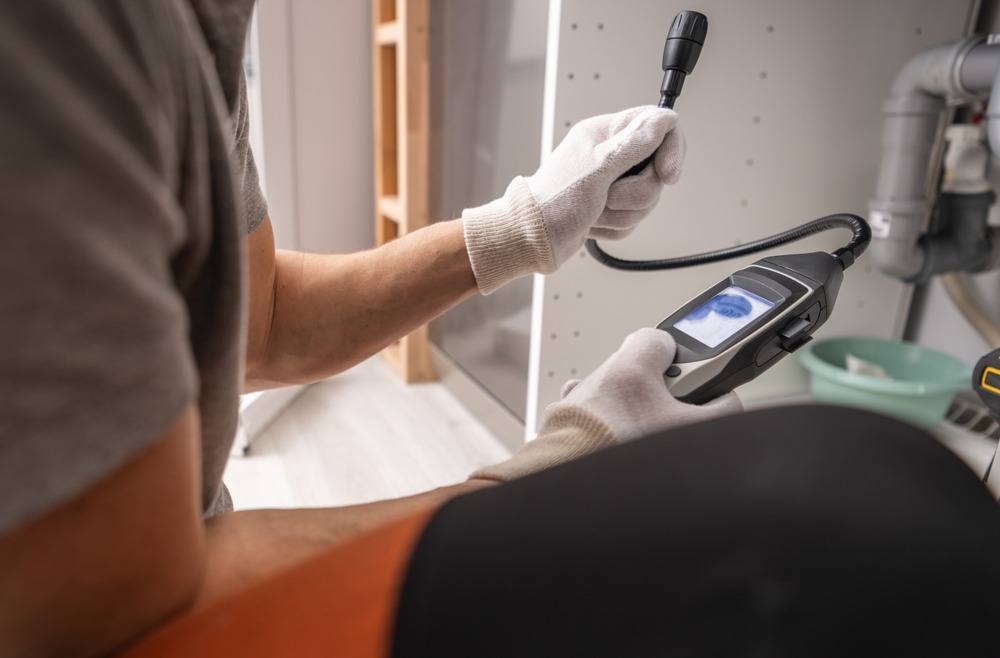
A wall can hide a lot before it ever shows a stain. Paint stays smooth, drywall stays flat, and a soaked stud can sit behind that surface for weeks without a visible sign. This is the gap that infrared thermography closes for the technicians at Sewer Surgeons, a way to read temperature differences on a wall’s surface that the human eye cannot register on its own. For homeowners searching for water leak detection in Chatham, NJ, that gap between what a wall looks like and what is actually happening inside it is exactly what this technology is built to close.
How Does Infrared Thermography Actually Find Water Behind a Wall?
Infrared cameras do not see through drywall. No sensor on the market does. What these cameras capture is the radiant heat leaving a surface, translated into a color-coded map of temperature values across that surface. A technician trained in plumber leak detection reads that map for patterns, small clusters of cooler pixels, that point toward what is happening inside the wall cavity.
The camera itself only captures surface information. Interpreting that data correctly, and tracing it back to a specific pipe joint, takes the added step of physical inspection once thermal readings flag a likely zone. The scan narrows the search area; the technician confirms the source.
What Is Evaporative Cooling and Why Does a Leak Show Up as a Cold Spot?
Water changes temperature as it evaporates, and it pulls heat from whatever surface it sits on to do so. When a pipe joint leaks slowly behind a wall, moisture soaks into the wood framing and the back of the drywall. As that moisture evaporates, it draws warmth out of the surrounding material.
The temperature drop involved is small, often a fraction of a degree measured in micro-Kelvin increments, far below what a hand pressed against the wall could ever detect. A radiometric camera calibrated for pipe leak detection registers that shift and displays it as a distinct cool zone against the surrounding wall temperature.
A few variables shape how strong that cool zone appears on camera:
- How long the leak has been active
- The type of insulation or backing material inside the wall
- Room humidity and HVAC airflow near the affected surface
- The distance between the leak source and the visible wall surface
How Do Technicians Trace a Cold Spot Back to the Actual Pipe?
A single cool patch on a thermal scan rarely marks the leak’s exact origin. Water often travels along a stud, a joist, or a section of subfloor before gravity pulls it to the lowest available point, so the visible cold zone can sit several feet from the actual pipe joint.
Effective water pipe leak detection works backward from that pattern. Technicians follow the shape and gradient of the thermal anomaly, cooler nearest the moisture source and tapering outward, to narrow down where water is entering the wall cavity. Moisture meters and, when needed, a small inspection opening confirm the reading before any repair work begins.
What Happens After a Thermal Scan Identifies a Leak?
Once a scan narrows the problem to a specific section of wall, the next steps depend on what is actually happening inside the pipe. A slow pinhole leak calls for different work than a burst pipe repair, where water pressure has already forced a rupture in the line and the priority shifts to stopping flow and drying the structure quickly.
For active flooding situations, emergency leak detection moves ahead of any other diagnostic work. Locating the source fast limits how far water travels through framing, insulation, and flooring before repairs can begin.
Typical next steps include:
- Confirming the leak location with a moisture meter or small access cut
- Shutting off water to the affected line
- Repairing or replacing the damaged pipe section
- Drying the wall cavity fully before closing it back up
Frequently Asked Questions
Can infrared thermography detect a leak through tile or exterior siding?
Thermal imaging works well on most interior wall surfaces. Exterior siding, tile, and stone store and release heat differently than drywall, which can interfere with an accurate reading. Technicians typically pair exterior scans with additional moisture testing before recommending water leak repair.
Does a thermal scan work on a leak that started days ago?
Yes, though the size of the detectable cool zone often depends on how much moisture has accumulated and how humid the room is. A very fresh leak and an old, dried-out one can both be harder to read than a leak that has been active for a day or two.
Is infrared scanning something a homeowner can do with a phone attachment?
Consumer-grade thermal attachments can flag general temperature differences. They lack the sensitivity to register micro-Kelvin shifts and the calibration needed to rule out false positives from sunlight, HVAC vents, or wiring inside the wall.
A wall’s surface temperature holds information most homeowners never think to read, and closing that gap is what keeps a small leak from turning into a major repair bill. Sewer Surgeons pairs thermal imaging with fully insured technicians who back their findings with 100% guaranteed satisfaction on every job. Whether the situation calls for routine leak detection services or emergency services after a pipe has already failed, reaching out early gives a wall the best chance of a clean, contained repair before further damage spreads. From slow drips to full-blown burst pipe lines, a quick call puts a trained eye and a calibrated camera on the problem right away.
Ready to see what’s happening inside your walls? Call Sewer Surgeons today to schedule a thermal scan.