Facing a Deep Sewer Line Failure Under Established Landscaping?
Is your property facing a critical decision between Trenchless Pipe Lining vs. Traditional Excavation for Deep Sewer Lines? When a main sewer line fails beneath a beloved custom patio, an expansive driveway, or the root system of a century-old tree, the stress of the repair goes far beyond the plumbing itself. At Sewer Surgeons, we frequently see homeowners forced to weigh the mechanical reality of fixing a buried pipe against the devastating surface-level destruction required to reach it. This choice becomes even more urgent as the October pre-winter ground freeze approaches, drastically shrinking the window for extensive soil work. Understanding the fundamental differences in these approaches is essential before heavy machinery arrives on your lawn. To make the best choice for your property, you need to understand how trenchless pipe repair works compared to conventional digging, and whether modern structural pipe lining services are the right fit for your situation.
The Physical Reality of Traditional Deep Excavation
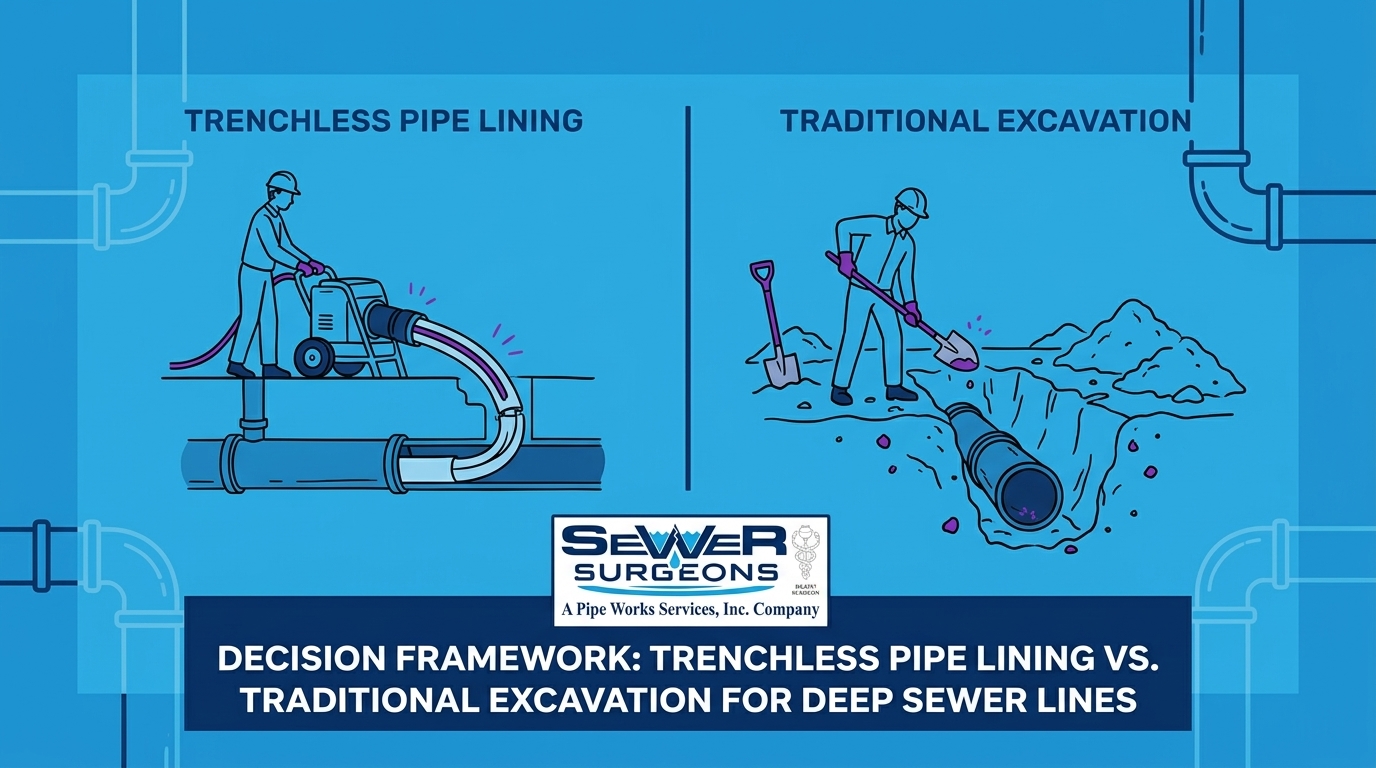
When a sewer line sits just below the surface, digging it up is a relatively straightforward, albeit messy, process. However, when dealing with deep sewer lines—those buried six, eight, or even ten feet underground—the physical reality of traditional excavation changes dramatically. The process shifts from a simple trench to a major earth-moving operation that impacts the entire surrounding environment.
The OSHA Shoring Requirement
Safety regulations mandate wider trenches: Once an excavation reaches a depth of five feet, OSHA regulations require specialized protective systems, such as trench boxes or extensive shoring, to prevent fatal cave-ins. To accommodate this safety equipment, the trench cannot simply be the width of the pipe. Excavators must dig a significantly wider and longer hole, removing massive volumes of soil. This requirement exponentially increases the physical footprint of the workspace, turning a localized plumbing issue into a major construction zone.
The Footprint of Heavy Machinery
Blunt destruction is unavoidable: Moving that volume of earth requires heavy-duty excavators, backhoes, and dump trucks. These machines need wide access paths, a staging area for removed soil, and room to maneuver. On Chatham NJ properties with mature landscaping, our crews know firsthand that finding this space without causing collateral damage is nearly impossible. The sheer weight of the machinery can crack adjacent sidewalks, compact delicate topsoil, and crush shallow irrigation lines that aren’t even near the actual dig site.
Extended Project Timelines
A compounding schedule of delays: Because of the extensive digging, shoring, and soil management required, deep excavations take significantly longer than shallow digs. What might be a one-day job for a surface line can easily stretch into a multi-week ordeal. If you are researching the differences between trenchless and traditional sewer repairs, the timeline is often the most striking contrast. The longer the trench remains open, the higher the risk of weather delays, wall collapses, and prolonged disruption to your daily life.
Surgical Precision: The Mechanics of Trenchless Repair
Modern sewer rehabilitation offers an alternative to blunt destruction. Rather than tearing open the earth to reach the pipe, trenchless technology uses the existing pipeline as a conduit for its own repair. This approach acts as a surgical intervention—aligning perfectly with our methodology here at Sewer Surgeons—that precisely targets the pipe failure while sparing the host property’s anatomy from unnecessary trauma.
How the Trenchless Process Works
When executing a trenchless sewer repair nj homeowners can rely on, our technicians follow a highly controlled procedure that requires only a small access point, such as an existing cleanout or a minor entry pit.
- High-Definition Camera Inspection: The process begins with a robotic camera navigating the deep line to pinpoint the exact location and severity of the damage, ensuring the pipe is a viable candidate for lining.
- Hydro-Jetting and Descaling: The interior of the old pipe is thoroughly cleaned. High-pressure water and specialized mechanical chains strip away roots, scale, and buildup, restoring the pipe to its original diameter.
- Liner Preparation: A flexible, felt-like tube is custom-measured and saturated (wet out) with a specialized two-part epoxy resin.
- Inversion or Pull-in: The resin-soaked liner is inserted into the damaged pipe. Using air or water pressure, the liner is inverted (turned inside out) so the epoxy firmly presses against the inner walls of the old pipe.
- Curing and Final Inspection: The epoxy cures over several hours, hardening into a structural, jointless pipe within a pipe. A final camera inspection verifies the integrity of the new installation.
Long-Term Structural Integrity
Built to last for decades: One common misconception we hear is that a liner is merely a temporary patch. In reality, trenchless epoxy liners offer a 50-year design life. Once cured, the new inner pipe is highly resistant to chemical erosion, temperature fluctuations, and future root intrusion, matching or even exceeding the lifespan of traditional replacement materials.
Protecting Mature Oak Trees and Expensive Hardscaping
When evaluating repair methods for deep lines, the conversation must extend beyond the pipe itself. The secondary impacts of the project—what must be destroyed and rebuilt to access the plumbing—often outweigh the complexity of the repair. For Chatham NJ properties with mature landscaping, preserving the surface environment is a primary concern.
The Threat to Old-Growth Root Systems
Why trenching kills mature trees: A mature oak tree’s root system extends far beyond its canopy drip line. In our years of repairing lines across Chatham, we’ve seen how a backhoe cutting a deep trench through a yard severs major structural and feeder roots. Even if the tree doesn’t immediately fall, this blunt trauma can destabilize the tree and lead to a slow, irreversible decline over the following years. Trenchless methods bypass these obstacles entirely. By navigating beneath the root systems through the existing pipe, the technology clears out intrusive roots from the inside without harming the tree’s vital underground network.
The Hidden Costs of Surface Restoration
Calculating the holistic impact: The true burden of traditional excavation is often realized after the plumbing contractor leaves. Homeowners are left to manage the restoration of their property, which can be extensive and highly disruptive.
- Custom Patios and Walkways: Stamped concrete, intricate paver designs, and natural stone walkways cannot simply be patched. They often require complete replacement to ensure matching aesthetics and proper grading.
- Driveway Repaving: Cutting through an asphalt or concrete driveway leaves a permanent scar. Over time, the disturbed soil beneath the patch will settle, leading to sinkholes and structural cracking.
- Specialized Landscaping: Replacing retaining walls, custom garden beds, and mature shrubs requires specialized contractors and significant time to re-establish.
Conceptual cost savings: While the specialized equipment and epoxy materials make trenchless technology a significant upfront investment, avoiding surface destruction conceptually offsets these costs. When you factor in the expense of hiring masons, landscapers, and paving companies to rebuild your yard, we consistently find that trenchless lining emerges as the more economical holistic choice.
Seasonal Timelines: Beating the Ground Freeze
The local climate plays a massive, often underappreciated role in the feasibility of deep sewer repairs. In northern climates, the transition from fall to winter dictates strict construction schedules, making the method of repair highly dependent on the calendar.
The Fall Window for Excavation
Racing against the frost line: Every October, our team races against the frost line, as it marks a critical window for deep sewer repairs. As late autumn progresses, the October pre-winter ground freeze begins to set in. Once the ground hardens, traditional excavation becomes exponentially more difficult, time-consuming, and disruptive. Heavy machinery must break through the frost layer, and the excavated soil often freezes into unusable boulders. Furthermore, proper soil compaction—essential for preventing future sinkholes—is nearly impossible with frozen earth.
The Spring Thaw Complication
Mud and severe delays: Delaying a traditional dig until the spring thaw presents its own set of severe challenges. Wet spring conditions turn deep excavations into muddy, unstable hazards. Trench walls become highly susceptible to collapse, and heavy machinery sinks into the saturated lawn, causing even more collateral damage to the property.
Year-Round Viability of Trenchless Methods
Bypassing weather delays: Trenchless lining is highly advantageous year-round precisely because it bypasses the need for massive soil removal and replacement. Since the work is contained within the existing pipe and accessed via small entry points, our technicians can successfully rehabilitate deep lines regardless of frozen topsoil or wet spring mud. Contrast the holistic timeline: a trenchless project finishes in days, allowing you to return to normal life immediately, whereas traditional excavation restoration can easily be delayed until the spring thaw allows for proper landscaping.
Decision Factors: Trenchless Pipe Lining vs. Traditional Excavation for Deep Sewer Lines Side-by-Side
Making the right choice for your property requires an objective look at how these two methods stack up against each other. While trenchless technology is generally superior for preserving landscapes, there are specific scenarios where traditional digging is the only viable path forward.
When Excavation is Mandatory
Recognizing structural limits: A pattern we see often is that trenchless technology requires a host pipe to act as a mold for the new epoxy liner. If a deep sewer line has completely collapsed, is severely crushed, or has a massive belly (sag) that holds standing water, a liner cannot fix the structural geometry. In these extreme cases of total failure, our team must recommend a full sewer line replacement via traditional excavation to restore proper slope and function.
Objective Comparison Table
For standard deep-line deterioration—such as root intrusion, cracking, and minor offsets—the comparison heavily favors minimally invasive methods. Here is how a trenchless sewer line replacement compares to traditional digging across key project metrics:
| Decision Factor | Trenchless Pipe Lining | Traditional Excavation |
|---|---|---|
| Project Duration | Typically completed in 1 to 2 days. | Can take several weeks, including restoration. |
| Landscape Impact | Minimal; requires only small access pits or existing cleanouts. | Total removal of soil, plants, and hardscaping along the pipe path. |
| Weather Dependency | Year-round viability; unaffected by frozen ground. | Highly delayed by frozen winter soil or wet spring mud. |
| Root System Preservation | Keeps mature tree roots intact by working inside the pipe. | Severs roots, often destabilizing or killing mature trees. |
| Material Lifespan | 50-year design life for the cured epoxy liner. | 50+ years for new PVC or high-density polyethylene piping. |

Common Questions About Deep Sewer Line Repairs
How deep can trenchless pipe lining go?
Trenchless technology can rehabilitate pipes at virtually any standard residential depth. Because the equipment is fed through the interior of the pipe rather than dug from above, the depth of the line does not restrict the repair process. This eliminates the need for the dangerous, deep trench shoring that makes traditional excavation so disruptive.
Can trenchless repair save tree roots?
Yes, by utilizing the existing pipe as a host, trenchless repair completely avoids slicing through mature root systems in your yard. Before the new liner is installed, specialized cutting tools are sent through the pipe to clear out any internal root intrusion. The resulting jointless epoxy liner then prevents those roots from ever penetrating the pipe again, all while leaving the tree’s vital underground network unharmed.
Is trenchless sewer repair better than traditional?
For deep lines located under valuable hardscaping or mature landscaping, we generally recommend trenchless repair as the superior option due to preserved property features and exponentially faster timelines. It allows homeowners to bypass the massive secondary costs of rebuilding patios and driveways. Traditional excavation is only considered “better”—or rather, necessary—when the pipe has physically collapsed and lost all structural integrity.
What are the disadvantages of trenchless sewer repair?
The primary disadvantage of trenchless sewer repair is that it requires the host pipe to be somewhat intact to serve as a mold for the epoxy. It cannot fix severe bellies (sags) where the ground has sunk, nor can it repair a line that has completely collapsed. Additionally, if the pipe has lost its proper downward slope, a liner will simply conform to that improper slope, meaning traditional excavation would be required to physically realign the pipe.
Does cold weather prevent sewer repairs?
Traditional excavation becomes highly difficult and disruptive as the ground freezes, often forcing delays or resulting in poorly compacted soil during the backfill process. Trenchless methods, however, are far more adaptable to cold-weather schedules. Since they require minimal digging and utilize localized heating methods to cure the epoxy, our team successfully executes trenchless repairs year-round, even in the dead of winter.
Make an Informed Decision for Your Property
Navigating a major plumbing failure is stressful, but understanding your options empowers you to protect your home’s exterior. Preserving mature landscaping, avoiding the destruction of custom hardscaping, and bypassing severe winter weather delays makes minimally invasive technology the ideal choice for most deep lines. A professional camera inspection can quickly confirm if your system is a viable candidate for this surgical approach. If you are currently evaluating Trenchless Pipe Lining vs. Traditional Excavation for Deep Sewer Lines, reach out to our team to schedule an objective assessment. Explore how our structural pipe lining services can deliver a clear, objective solution that addresses your timeline and landscape-preservation goals, enabling you to make an informed decision with complete confidence.