
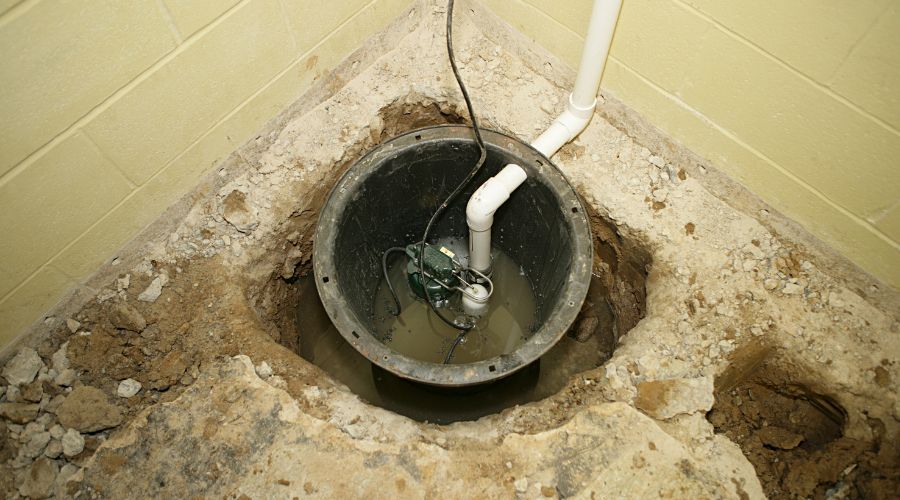
What Is a Sump Pump?
The term “sump pump” is a contraction of the phrase “submersible pump.” A sump pump is a specialized equipment designed to sit in a special basin where water can collect. Once the basin is full, the sump pump cycles on and off, emptying the basin by pumping the water away from structures. What makes sump pumps different from other pumps is that they operate in an open system.
A sump pump is often part of a system of drains around a piece of property that shunts rainwater to a central basin. Within the basin, the sump pump sits idle until the basin is full. The sump pump discharge often runs to the nearest street to remove rainwater, but it may also simply dump water a certain distance from the home so it can drain away.
Flooding and water damage are major risks when a sump pump does not protect property. By installing and maintaining a sump pump system, owners can help protect their property from damage.
When and Why to Install Sump Pumps
 Only some homes have a sump pump system. Most often, sump pumps are found in homes with:
 - Basements
- Crawlspaces
- Poor site development
- Soil with bad drainage
- Uneven landscaping
In most cases, sump pumps and drain systems are installed as a part of the construction process. In most cases, homeowners will not have to determine if they need a sump pump; one will already be in place. However, there are certain signs that a sump pump may be beneficial or a system may need repairs. These can include:
- Water backs up against the foundation
- Flooding around the home
- Damp basements
- High humidity
- Mold problems
- Insect infestations
In such cases, a home may benefit from a sump pump to stay safe and structurally sound.
Types of Sump Pumps
Two types of sump pumps are commonly found in homes that need them. First, a submersible sump pump is the classic choice. With a submersible sump pump, the owner can put the entire unit, motor, and pump into the basin. This allows for quiet operation, but it also means that it is more difficult to inspect or repair.
Conversely, a home may be protected by a pedestal sump pump. These units have a motor and shaft that turn a pump. The motor sits above the basin while the shaft and pump sit in the water. Pedestal sump pumps are louder, easier to inspect and repair, and usually cheaper.
Backup Sump Pumps
 A backup sump pump may be a good idea on sites subject to flooding with rainwater. Most often, heavy rain that causes flooding coincides with weather that knocks out the power grid, leaving homes unprotected from flooding. A backup sump pump has a battery backup so that it is available to take over if the main sump pump loses power. In some cases, using a primary sump pump with a battery backup is the best idea to prevent the need for two separate units. However, this removes the redundancy of having two pumps.
 About Sewer Surgeons
Sewer Surgeons helps residential and commercial customers manage heavy rainfall with sump pump installation and repair. They also offer full sewer and drain services, including hydro jetting and trenchless repairs. Call today for sump pump services in Chatham, NJ.